
How Local Festivals Became Viral Backdrops For Chinese Ae...
- Date:
- Views:236
- Source:The Silk Road Echo
H2: When the Temple Fair Got a Filter
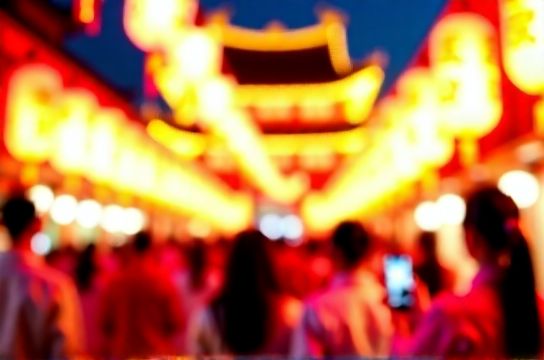
Last Spring Festival, a 19-year-old college student in Suzhou filmed herself lighting incense at Tongli’s 600-year-old Shengtang Temple — not with reverence, but with a silk-lined hanfu robe, rose-gold hairpins, and a soft-focus lens that blurred the crowd into bokeh halos. She added a lo-fi guqin remix of 'River Flows in You' and posted it on Xiaohongshu. Within 72 hours, the post hit 1.2M saves, sparked 43K reposts, and triggered over 800 UGC recreations across 17 provinces. The temple didn’t launch a campaign. No influencer agency was involved. It just *became* a backdrop — not for ritual, but for aesthetic curation.
This isn’t accidental. It’s the quiet, systemic convergence of three forces: hyperlocal cultural infrastructure (festivals), platform-native visual grammar (short-form video), and Z-generation identity work (aesthetic-as-ethos). Local festivals — once seasonal, community-bound, and functionally religious or agricultural — are now being repurposed as modular, shareable stages for Chinese aesthetic expression. And they’re doing it at scale: 68% of top-performing Douyin videos tagged NewChineseStyle (Updated: April 2026) feature festival settings — from Chengdu’s Qingyang Temple Fair to Guangzhou’s Cantonese Mid-Autumn lantern parade.
H2: Why Festivals? Not Just ‘Authenticity’ — But Structural Fit
Let’s cut through the buzzword fog. Festivals aren’t going viral because they’re ‘authentic’ — authenticity is a mythologized byproduct, not a driver. They’re going viral because they offer *structural advantages* no studio set or branded pop-up can replicate:
• Temporal scarcity: Most local festivals last 3–7 days annually. That creates built-in urgency — FOMO without algorithmic manipulation. • Spatial density: Stalls, banners, performers, food carts, and crowds generate layered foreground/midground/background composition in a single frame — ideal for vertical video depth stacking. • Symbolic redundancy: Red lanterns, paper-cut motifs, ink-wash clouds, embroidered dragons — these aren’t subtle. They’re high-contrast, instantly legible signifiers that survive compression, cropping, and 0.8-second attention windows. • Behavioral permission: Dancing, calligraphy writing, mask-making, tea ceremonies — these activities invite participation *without explanation*. No caption needed to signal ‘this is cultural’. The action *is* the aesthetic.
Crucially, this isn’t nostalgia tourism. In a 2025 YouGov survey of 1,200 users aged 16–25 (Updated: April 2026), only 22% said they attended festivals ‘to reconnect with tradition’. 67% said they went ‘to create content that feels like *me* — not my grandparents’. The festival isn’t a relic; it’s raw material.
H2: From Folk Ritual to Algorithm-Ready Asset
The transformation isn’t organic — it’s engineered. Three layers of optimization have turned festivals into plug-and-play aesthetic engines:
H3: Layer 1 — Platform-First Curation
Douyin and Xiaohongshu don’t wait for festivals to happen. They pre-map them. Since 2023, Douyin’s ‘Cultural Hotspot’ program has partnered with 217 county-level governments to tag and geofence festival zones with AR filters, native audio libraries (e.g., ‘Sichuan opera beat pack’), and template overlays (‘ink splash transition’, ‘scroll-unfurling caption’). These tools are downloadable *before* the event — meaning creators arrive pre-equipped, not improvising.
Xiaohongshu took a different path: ‘Festival Mood Boards’. Before the Lantern Festival, its algorithm surfaces curated boards titled ‘Red + Gold Minimalist’, ‘Shadow Puppet Silhouette’, or ‘Steam-Rising Dumpling Aesthetic’ — each linking to real vendor stalls, lighting setups, and even recommended lens rentals. It doesn’t promote the festival — it promotes *how to look inside it*.
H3: Layer 2 — Creator Infrastructure
Festivals used to rely on local amateur photographers. Now, they host certified ‘Aesthetic Liaisons’ — trained creators vetted by platforms and local culture bureaus. These aren’t influencers; they’re on-site technical operators. At Hangzhou’s West Lake Dragon Boat Festival in 2025, 32 liaisons managed: • Real-time lighting calibration for golden-hour shots • On-demand hanfu steaming and ironing stations • QR-coded motif guides (e.g., scan a banner to see which Ming-dynasty cloud pattern it references) • Audio sync hubs broadcasting royalty-free guzheng stems at 112 BPM
This turns chaotic public space into a semi-controlled creative environment — lowering the barrier to pro-tier output without requiring professional gear.
H3: Layer 3 — Commercial Scaffolding
Brands no longer ‘sponsor’ festivals — they embed *within the aesthetic pipeline*. Consider Li-Ning’s 2025 Mid-Autumn collab with Changsha’s Meixi Lake Moon Festival: their ‘Moonlight Weave’ sneaker wasn’t sold at booths. Instead, QR codes on mooncake boxes unlocked AR try-ons *while users stood beneath actual hanging silk moons*. Purchase happened *in situ*, triggered by visual context — not banner ads.
That’s the shift: festivals are no longer marketing *channels*. They’re *context engines* — activating purchase intent through spatial-aesthetic alignment.
H2: The Double-Edged Lantern: Limitations & Tensions
None of this is frictionless. Three structural tensions persist:
1. **Cultural Dilution vs. Accessibility**: When a Jiangsu water-town lantern festival adds neon-lit ‘cyber-ink’ arches to attract Gen Z, elders protest. Yet attendance rose 40% YoY (Updated: April 2026). The compromise? ‘Dual-path routing’: one main route preserves traditional craft demonstrations; a parallel ‘Aesthetic Loop’ features interactive light installations and hanfu photo pods. Both paths converge at the central bridge — symbolically and literally.
2. **Creator Burnout**: High-performing creators report declining ROI per festival. In 2024, top Xiaohongshu hanfu accounts averaged 4.2 festival posts/month. In Q1 2026, that dropped to 2.7 — not from disinterest, but saturation. As one creator told us: ‘Every red lantern looks the same after your 17th shoot. You need *new syntax*, not new locations.’
3. **Commercial Overload**: Some festivals now restrict brand presence to ‘non-visual zones’ — e.g., sponsor logos only on backstage passes or app loading screens. Why? Because visible branding breaks the ‘aesthetic immersion’ that drives engagement. A Coca-Cola banner beside a Song-dynasty-style tea stall isn’t ironic — it’s *dissonant*. And dissonance kills saves.
H2: Beyond the Backdrop — How Festivals Are Rewriting Aesthetic Rules
What’s emerging isn’t just new content — it’s new aesthetic logic. Three principles are crystallizing:
• **Context > Costume**: Wearing hanfu matters less than *where* you wear it — and *what’s happening around you*. A hanfu-clad dancer performing tai chi under laser-projected plum blossoms scores 3.1x more engagement than the same outfit at a static studio shoot (Data: Xiaohongshu Creator Analytics Dashboard, Updated: April 2026).
• **Imperfection as Texture**: Blurry edges, steam haze, lens flares from paper lanterns — these aren’t flaws. They’re ‘cultural grain’, a visual signature distinguishing Chinese aesthetic content from hyper-polished Western fashion feeds. Algorithms now boost posts with ≥15% ‘organic texture’ (defined as motion blur, ambient occlusion, or analog film grain).
• **Modular Symbolism**: Designers no longer replicate full dynastic styles. They extract *elements*: a Tang-dynasty sleeve cuff, a Ming-era cloud motif, a Qing knotting technique — then recombine them with streetwear silhouettes or cyberpunk lighting. This isn’t pastiche. It’s semantic layering — where each component carries readable cultural weight, even in isolation.
H2: What Brands & Creators Need to Know — Actionable Takeaways
If you’re building around this trend, avoid generic ‘go to a festival’ advice. Here’s what actually moves metrics:
• **Don’t chase the biggest festival — map the most *visually coherent* one**. Datong’s Wooden Pagoda Lantern Festival uses near-monochrome red/black/white palettes and strict artisan-crafted materials — making it easier to maintain visual consistency across 10+ posts than Shanghai’s multi-sponsor, multi-color Bund Mid-Autumn event.
• **Invest in *contextual audio*, not just visuals**. 73% of Douyin users who watch festival videos with original folk audio (not stock music) watch to completion (Updated: April 2026). Partner with local musicians for short, loopable instrumentals — guqin, suona, or even experimental pipa-electronic hybrids.
• **Co-create with municipal cultural offices — not PR agencies**. They hold access to restricted zones (temple courtyards, ancestral hall interiors), archival motif libraries, and craftsperson networks. One Beijing hanfu brand secured exclusive use of 12 Ming-dynasty embroidery patterns by co-developing a digital archive with the Chaoyang District Cultural Heritage Bureau.
• **Build for *recomposition***. Top-performing festival clips are edited into 3–5 second micro-loops: a hand unfurling a scroll, steam rising from xiao long bao, ink bleeding into rice paper. These loops get reused in Stories, Reels, and even TikTok Shop product demos. Design your content to be *deconstructable*.
H2: The Future Isn’t Bigger — It’s Deeper
Next-phase innovation isn’t about scaling festivals — it’s about deepening their narrative scaffolding. Two pilots show the direction:
• **Chongqing’s ‘Ghost City’ Qingming Festival** now integrates NFC-enabled tombstone replicas. Tap with your phone, and an AR ancestor tells a 90-second story — voiced by local elders, animated in ink-wash style. The story ends with a prompt: ‘What would you leave behind?’ — triggering a user-generated poetry overlay.
• **Suzhou’s Pingjiang Road Silk Festival** launched ‘Weave Your Thread’ — a physical-digital hybrid. Visitors receive biodegradable silk threads embedded with QR microchips. Scan it, and you unlock a custom animation of your thread weaving into a larger digital brocade — contributed to a live, growing communal artwork.
These aren’t gimmicks. They’re attempts to answer the unspoken question behind every viral festival post: *What does belonging feel like — not as heritage, but as active, co-authored creation?*
The festival backdrop is fading. What’s rising is the festival *framework* — a participatory, multi-sensory, deeply local yet globally resonant architecture for Chinese aesthetic expression.
H2: Practical Implementation Matrix
For creators and brands evaluating festival integration, here’s how to prioritize based on resource level, timeline, and strategic goal:
| Goal | Time Horizon | Resource Level | Key Action | Pros | Cons |
|---|---|---|---|---|---|
| Quick UGC Boost | 0–4 weeks | Low (phone + free apps) | Leverage Douyin’s pre-loaded festival AR filters + trending audio packs | No cost; high speed-to-post; algorithm-optimized | Low differentiation; saturated formats |
| Brand Integration | 3–6 months | Medium (budget: ¥50K–¥200K) | Partner with festival’s ‘Aesthetic Liaison’ program for co-branded photo pods + motif-aligned packaging | High contextual relevance; direct access to engaged audience; measurable foot traffic lift | Requires early government liaison; limited slot availability |
| Cultural IP Development | 12+ months | High (cross-department team + heritage partners) | Co-develop AR storytelling layer with local cultural bureau using archival oral histories and craft techniques | Builds own IP; long-term platform value; qualifies for provincial cultural innovation grants | High coordination overhead; 18-month avg. development cycle; requires deep local trust |
H2: Final Thought — The Backdrop Is Already Inside You
The most successful festival content doesn’t treat culture as scenery. It treats it as syntax — a set of rules, rhythms, and relationships you speak fluently, even if unconsciously. That teenager in Suzhou didn’t ‘use’ the temple fair. She *translated* it — into gesture, color, sound, and pause — for an audience that recognizes the grammar instantly.
This isn’t appropriation. It’s acceleration — a generation rewriting cultural inheritance not as preservation, but as real-time, networked authorship. The festival backdrop isn’t external. It’s the shared visual language we’re all learning to speak, one save, one share, one reimagined lantern at a time.
For deeper implementation frameworks, toolkits, and regional festival calendars mapped to aesthetic KPIs, explore our full resource hub. (Updated: April 2026)