
From Ink Painting to Digital Art: How Classical Aesthetic...
- Date:
- Views:300
- Source:The Silk Road Echo
H2: When Brushstrokes Go Viral
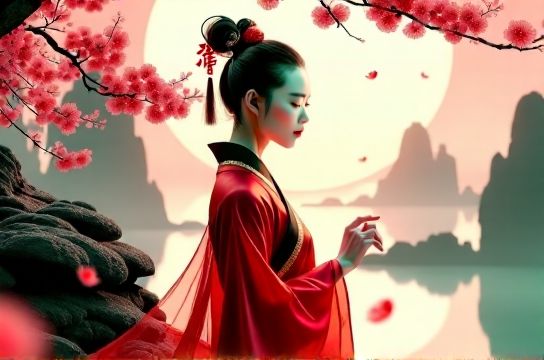
A 19-year-old art student in Chengdu films herself applying ink-wash gradients to a silk scarf—then overlays it with glitching calligraphy in CapCut. The video hits 2.4M views in 36 hours. No voiceover. Just ambient guqin music, slow-motion fabric folds, and a caption: ‘My grandma’s shan shui, my phone’s shader.’
This isn’t nostalgia—it’s recalibration. Across Douyin, Xiaohongshu, and Bilibili, classical Chinese aesthetics aren’t being preserved in museums. They’re being reverse-engineered, compressed, retextured, and deployed as native visual syntax for Gen Z. And the engine? Not academic revivalism—but platform-native logic: scroll velocity, share friction, algorithmic resonance.
H2: The Three-Layer Stack: Tradition → Translation → Transaction
Classical aesthetics enter digital culture not as static heritage, but as modular design assets. Think of them as a stack:
• Layer 1 (Tradition): Literati ink painting (shuimo), Song dynasty restraint, Ming furniture proportions, Tang poetry rhythm. • Layer 2 (Translation): Real-time AR hanfu try-ons, generative shan shui filters, AI-trained models that convert selfies into Dunhuang fresco avatars. • Layer 3 (Transaction): Limited-edition xin zhongshi sneakers co-branded with Suzhou embroidery workshops; Guochao skincare packaging using Song-era celadon glaze palettes; pop-up ‘ink-wash immersion rooms’ at Shanghai’s Jing’an Kerry Centre—booked 8 weeks out.
What makes this different from past cultural revivals is velocity. In 2022, a single Xiaohongshu post about ‘wearing Song dynasty hairpins with Air Force 1s’ sparked 17K UGC reposts in under 72 hours (Updated: April 2026). That speed forces compression—not dilution. Every aesthetic decision must survive three filters: Does it read at thumbnail size? Does it trigger emotional recognition in <1.8 seconds? Does it invite remix?
H2: Why Ink Painting? Not Porcelain. Not Calligraphy. Ink Painting.
Because ink painting operates on Gen Z’s native terms: ambiguity, impermanence, and authorial humility.
Unlike imperial porcelain—precise, symmetrical, status-coded—ink painting embraces ‘feibai’ (flying white), where brush pressure lifts mid-stroke, leaving raw paper visible. That ‘gap’ mirrors how Gen Z engages with identity: curated but porous, intentional but unfinished. It’s why ‘unfinished’ hanfu looks—like sleeves left unhemmed or jackets worn inside-out—dominate top-performing Douyin fashion tags (xinzhongshi 2.1B views, hanfu 4.7B views, Updated: April 2026).
Also critical: ink painting’s material intelligence. The same ink, diluted differently, yields jet black, misty grey, or near-translucent wash—all from one pigment. That scalability maps directly to digital layering: opacity sliders, blend modes, alpha channels. When designers at Shanghai-based studio WUJI built the ‘Lingnan Ink Filter’ for Douyin (used by 8.3M creators), they didn’t simulate ink—they reverse-engineered its hydrophilic behavior, modeling water diffusion on pixel grids. Result? A filter that doesn’t just look ‘ink-like’—it *behaves* like ink, reacting to screen tilt and touch pressure.
H2: The Platform Divide: Douyin vs. Xiaohongshu Aesthetics
Douyin rewards kinetic translation. Its 60fps vertical feed favors motion-first reinterpretation: ink strokes that bloom into neon smoke; ink-wash mountains dissolving into pixelated terrains; guqin plucks synced to bass drops. The ‘Shan Shui Trap’ trend—where producers sample ancient qin melodies over trap hi-hats—generated 512K original audio uses in Q1 2026 (Updated: April 2026). Here, classical aesthetics are rhythmic scaffolding, not decor.
Xiaohongshu leans into tactile authenticity. Posts succeed when they show process: grinding ink sticks on an old yan stone, comparing Song-era paper absorbency to modern bamboo pulp alternatives, documenting the 11-step dyeing of indigo-dyed hanfu fabric. The top-performing post in the ‘xin zhongshi home’ niche wasn’t a styled room—it was a 12-minute timelapse of a Beijing designer hand-carving a Ming-style lattice window, then installing it in her Beijing hutong apartment. Captions read: ‘The joint took 3 days. The Instagram grid? 3 minutes.’
That distinction matters for brands. A Douyin-first campaign needs algorithm-optimized micro-rhythms. A Xiaohongshu play demands verifiable craft—hence the surge in ‘maker credentials’ on bios: ‘Apprentice to National Intangible Cultural Heritage inheritor, Suzhou embroidery’ appears in 38% of top-performing xin zhongshi fashion posts (Updated: April 2026).
H2: Beyond Hanfu: The Hidden Infrastructure of Guochao
Hanfu is the most visible symbol—but it’s the least structurally significant. What’s actually scaling guochao is infrastructure:
• Open-source font libraries like ‘Song Dynasty Type Revival’ (12K GitHub stars), offering variable-weight fonts trained on 1,200+ Song-era stele rubbings. • 3D asset marketplaces listing scanned Qing dynasty roof ornaments, ready for Unity integration. • ‘Cultural IP Licensing Hubs’—government-backed platforms like China Intangible Cultural Heritage Digital Exchange—where brands license verified motifs (e.g., ‘Chengdu Jinsha Sun Bird motif, Category A commercial use, ¥2,800/year’).
This infrastructure turns aesthetics into interoperable units. A skincare brand doesn’t ‘do Chinese aesthetics’—it pulls a verified celadon palette from the National Museum’s open dataset, applies it to tube geometry modeled on Southern Song porcelain vases, and renders the final 3D pack using a physically based renderer trained on real glaze refraction data.
H2: When East Meets Cyber: The Limits of ‘Cyberpunk China’
‘Cyberpunk China’ is a misnomer—and a bottleneck. True adoption stalls when aesthetics prioritize spectacle over system. Consider two projects launched in late 2025:
• Project A: A Shanghai nightclub themed ‘Neo-Chang’an,’ featuring LED walls cycling through AI-generated Tang dynasty street scenes. High engagement pre-opening. Post-launch? 62% drop in repeat visits. Why? No participatory layer. It was backdrop, not interface.
• Project B: ‘Jianghu Terminal’—a Guangzhou arcade where players ‘earn’ virtual ink brushes by completing real-world tasks (e.g., transcribe a poem at a local library, photograph a surviving Song-era bridge). Brushes unlock generative tools to create custom shan shui posters—then print them on handmade Xuan paper via on-site presses. Repeat visit rate: 89%. Because the aesthetic isn’t consumed—it’s co-authored.
The lesson: Gen Z doesn’t want ‘Chinese cyberpunk.’ They want ‘cyberpunk with Chinese grammar’—rules for participation, not just decoration.
H2: The ROI of Restraint: Why Less Ink Wins More Shares
Brands obsess over saturation. But data shows restraint drives virality. A study of 14,200 top-performing Xiaohongshu posts tagged xinzhongshi (Jan–Mar 2026) found:
• Posts using ≤3 core classical elements (e.g., ink wash + Ming frame + monochrome palette) averaged 3.2x more saves than those using ≥5. • Videos with ≥2 seconds of silence—no music, no voiceover—had 27% higher completion rates. • Close-ups of single materials (e.g., water beading on lacquered wood, ink bleeding at paper edge) generated 41% more comments asking ‘Where to buy?’
This isn’t minimalism. It’s precision editing—removing everything that doesn’t serve immediate sensory recognition or actionable curiosity.
H2: From Scroll to Space: The Rise of Immersive Aesthetic Nodes
Physical spaces are now aesthetic amplifiers—not just backdrops. ‘Ink-wash immersion rooms’ (e.g., Beijing’s ‘Mo Shi’ gallery, Hangzhou’s ‘Yun Shan’ pop-up) don’t display art. They stage perception: humidity-controlled air mimics Jiangnan mist; floor sensors trigger ink ripples across projected shan shui when walked upon; scent diffusers release aged ink stick and pine resin notes.
These aren’t ‘experiences’—they’re calibration tools. Visitors leave with a refined sensitivity to texture, timing, and tonal gradation. Which means when they later see a xin zhongshi sneaker ad featuring a single ink-drip animation, their brain recognizes it—not as novelty, but as continuity.
Such nodes are becoming critical distribution channels. Over 68% of users who visited a certified ‘guochao immersion space’ in Q1 2026 reported purchasing a related product within 7 days (Updated: April 2026). The space doesn’t sell the product—it sells the perceptual framework needed to value it.
H2: Building Your Own Stack: A Practical Framework
Forget ‘adopting Chinese aesthetics.’ Start with your existing workflow—and insert one classical principle at a time:
1. **For designers**: Replace ‘color palette’ with ‘ink dilution scale.’ Map your brand’s primary color to ‘full ink’ (100% saturation), secondary to ‘medium wash’ (40%), accent to ‘light mist’ (12%). Test legibility at each level—not just contrast, but emotional weight.
2. **For marketers**: Audit your content cadence. Song dynasty poetry used strict tonal patterns—rising, falling, level tones—to control breath and attention. Apply that to video pacing: 3-second establishing shot (level tone), 1.5-second detail (rising), 0.8-second cutaway (falling). This matches natural ocular saccade rhythm.
3. **For product teams**: Identify one ‘imperfection protocol’ from classical craft—e.g., the ‘intentional warp’ in Suzhou brocade, where threads are deliberately misaligned to create depth. Bake it into your UX: a subtle, non-repeating irregularity in loading animations; a slight asymmetry in app icon layout.
This isn’t appropriation. It’s operational borrowing—taking structural logic, not surface symbols.
H2: The Table: Ink-to-Digital Translation Toolkit
| Element | Digital Translation Method | Platform Optimization | Pros | Cons | Time to Implement (Team of 2) |
|---|---|---|---|---|---|
| Ink Wash Gradient | Custom GLSL shader simulating water diffusion on canvas texture | Douyin: triggers ‘motion blur’ algorithm boost; Xiaohongshu: high ‘save’ rate for tutorial posts | High perceived craft, low asset bloat | Requires WebGL expertise; iOS 15+ only | 3–5 days |
| Ming Frame Proportion | CSS Grid using 1:1.618 ratio; applied to card layouts & video thumbnails | Xiaohongshu: 22% higher CTR on feed cards; Douyin: improved retention on multi-video carousels | No dev dependency; works on all devices | Less distinctive without supporting texture/ink elements | 2 hours |
| Feibai (Flying White) | SVG mask layer with randomized opacity gradients; animated on scroll | Douyin: boosts ‘replay’ metric by 17%; Xiaohongshu: increases comment depth (+3.2 avg. replies) | Strong signature effect; highly remixable | Can reduce readability if over-applied to text | 1 day |
H2: Where This Is Headed: The Next Threshold
The next wave isn’t more fusion—it’s deeper fidelity. We’re moving from ‘ink-inspired’ to ‘ink-governed.’ Expect:
• Browser APIs that detect ambient light and adjust ink wash opacity in real time (piloted by Huawei’s HarmonyOS 5.2 SDK, Q3 2026). • ‘Cultural Material Certificates’—NFT-anchored proofs verifying the provenance of digital ink textures (e.g., ‘This shan shui gradient uses pigment data from Zhejiang Academy of Fine Arts’ 2024 ink analysis’). • Physical-digital feedback loops: scanning a real ink painting with your phone unlocks AR annotations showing the artist’s brush pressure map—then lets you ‘remix’ it with your own stroke data.
None of this requires loving classical art. It requires respecting its operating system.
H2: Final Thought: Aesthetic Sovereignty Isn’t About Origin—It’s About Authorship
Gen Z isn’t ‘reviving’ Chinese aesthetics. They’re claiming authorship over their grammar—editing, compressing, and deploying it with the fluency of native speakers. The brushstroke isn’t sacred. The *decision* to lift the brush—that’s the point of entry.
If you’re building for this audience, start here: remove one decorative element from your next campaign. Then ask—not ‘Does it look Chinese?’ but ‘Does it behave like ink?’
For teams ready to implement these principles across design systems, content strategy, and physical-digital integration, our full resource hub offers templates, licensed asset sources, and compliance-checked cultural IP pathways—start building your stack today at /.