
Changchun vs Harbin: Japanese Colonial Past vs Russian Wi...
- Date:
- Views:194
- Source:The Silk Road Echo
H2: Two Northeastern Cities, Two Different Histories — But One Shared Climate
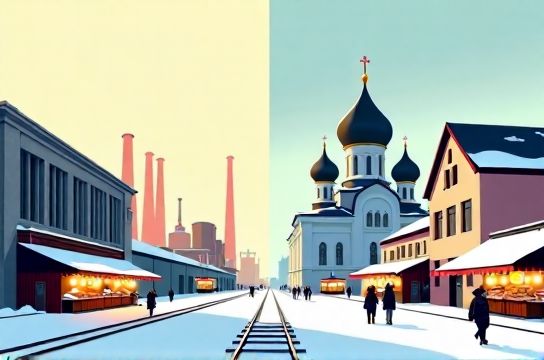
Changchun and Harbin sit just 240 km apart in China’s Jilin and Heilongjiang provinces — close enough for a 2.5-hour high-speed rail ride (G-series trains run hourly; ¥128–¥165 one-way, Updated: June 2026), yet worlds apart in cultural imprint. Neither is Beijing or Shanghai. Neither leans into the silk-road mystique of Xi’an or the Sichuan chilli heat of Chengdu. Instead, they offer something rarer in China’s travel canon: layered foreign influence, preserved not as theme-park kitsch but as lived-in urban texture — from Soviet-era tram depots to Manchukuo government buildings still housing provincial ministries.
If you’re weighing these two for a winter trip (November–March), or even a spring/autumn deep-dive into Northeast China’s complex modern identity, this isn’t about picking a ‘better’ city. It’s about matching your travel intent to the right historical resonance.
H2: The Architecture Divide — Concrete Legacies You Can Still Walk Through
Harbin’s downtown core — especially around Central Street (Zhongyang Dajie) and Saint Sophia Cathedral — reads like a pocket St. Petersburg. Built after the 1898 construction of the Chinese Eastern Railway by Imperial Russia, its brick facades, onion domes, and wrought-iron balconies weren’t imported as souvenirs. They were functional infrastructure for thousands of Russian engineers, merchants, and refugees (including post-1917 White émigrés). Today, Central Street is fully pedestrianized — cobblestoned, lined with cafes serving blinis and kvass, and flanked by restored Art Nouveau department stores now housing local designers and craft distilleries.
Changchun tells a darker, more contested story. From 1932 to 1945, it served as the capital of Japan’s puppet state Manchukuo. The city was master-planned by Japanese architects using then-cutting-edge urban theory: wide boulevards (many still among China’s widest today), greenbelt zoning, and monumental neoclassical buildings designed to project permanence. The Imperial Palace (‘Xinjing’ Palace) is not a Ming dynasty relic — it’s a 1930s compound built for Puyi, China’s last emperor, under tight Japanese control. Its low-slung, hybrid Sino-Japanese style feels deliberately unimperial — austere, bureaucratic, quietly oppressive. Nearby, the nearly intact Ministry of Justice building now houses the Jilin Provincial Archives — accessible only with ID and advance registration (free, but slots fill 3 days ahead; Updated: June 2026).
Neither city erased its past. But they curated it differently: Harbin embraces its Russian layer as romantic heritage; Changchun treats its Japanese colonial infrastructure as forensic evidence — preserved, labeled, and taught.
H2: Winter Reality Check — Ice, Infrastructure, and What ‘Cold’ Really Means
Yes, both cities average −15°C in January. But cold isn’t monolithic.
Harbin’s winter is *windy*. Lake Songhua freezes solid, yes — but the open plains funnel Siberian air straight off the Amur River basin. Wind chill regularly hits −30°C. That’s why the Harbin International Ice and Snow Festival (mid-January to late February) works: massive ice blocks harvested from the Songhua are stable, dense, and carve cleanly — but outdoor stamina is non-negotiable. You’ll see locals wearing three layers of down, balaclavas, and battery-heated insoles. Tourist zones have heated viewing platforms and indoor snack huts — but venturing beyond Central Street at night demands preparation, not just enthusiasm.
Changchun’s cold is *still*. Sheltered by hills and river valleys, it averages −13°C with lower wind speeds. The snow is drier, fluffier — ideal for skiing at Jingyue Tan National Forest Park (30 minutes south), where the resort runs eight lifts and hosts national youth competitions. Its winter festival — the Changchun Ice and Snow Festival — is smaller, more locally focused, and held inside the massive Changchun World Sculpture Park. Less spectacle, more craftsmanship: ice lanterns shaped like Manchukuo-era trams, carved portraits of Puyi and Kōki Hirota.
Practical takeaway? If you want Instagrammable ice castles and don’t mind bundling up like an Arctic explorer: Harbin. If you prefer ski-in/ski-out access, quieter streets, and museums that stay open past 4 p.m. in January: Changchun.
H2: Food — Where Imperial Railways and Puppet-State Logistics Left Their Mark
Harbin’s food scene is China’s most Russified — not just in name, but in technique and rhythm. Look for:
• Hongchang sausage (red sausage): A coarse-ground pork-and-beef blend, smoked over birchwood, seasoned with garlic and coriander — closer to Polish kielbasa than any southern Chinese lap cheong. Served sliced on bread with mustard, it’s a staple breakfast at local ‘Russian-style’ bakeries like Lao Ma (founded 1920, still family-run).
• Guobadou (‘potato cakes’): Not fried potatoes — steamed potato-and-flour dumplings filled with sweetened red bean paste, a legacy of Jewish and Russian refugees adapting Ashkenazi recipes with local ingredients.
• Vodka-infused dishes: Pickled cabbage with horseradish and raw vodka (‘Baijiu-style’, but actually 40% grain spirit), served as a palate cleanser between rich courses.
Changchun’s food reflects its role as Manchukuo’s administrative center — efficient, standardized, and subtly militarized in origin. The city’s signature dish is *Changchun fried rice* — not fancy, but telling. It uses day-old rice, diced ham (a Japanese import), dried shrimp, and scallions, stir-fried in lard. Why lard? Because during wartime rationing, soybean oil was diverted to industrial use; lard was cheaper, more stable, and available from state-run pig farms. Today, it’s a point of pride — greasy, savory, deeply umami. You’ll find it at hole-in-the-wall stalls near the former Manchukuo General Staff Office (now a PLA logistics depot), served with pickled garlic chives — another ration-era preservation hack.
Both cities share Northeast staples: hand-pulled noodles (biang biang mian), sour cabbage stew (suan cai bao), and thick cornmeal porridge (ba yi fan). But the seasoning diverges: Harbin uses more dill, caraway, and black pepper (Russian influence); Changchun favors soy sauce depth, fermented bean paste (doubanjiang), and subtle MSG-enhanced savoriness — a taste profile honed in 1930s government canteens.
H2: Day-by-Day Itineraries — Realistic, Not Idealized
Forget ‘see everything in 48 hours’. These are grounded, transit-aware plans.
• Harbin: 3 Days, Focused on Immersion Day 1: Central Street (morning light on cobblestones), Saint Sophia Cathedral (climb the bell tower for skyline views), lunch at Lao Ma, then stroll to Flood Control Monument along Songhua River. Evening: Ice lantern walk at Sun Island Scenic Area (less crowded than main festival site). Day 2: Harbin Polarland (indoor marine park — essential if traveling with kids or during extreme cold), followed by dinner at Yabuli Hotpot (local chain using wild boar broth and frozen river fish). Day 3: Half-day at the Heilongjiang Provincial Museum (excellent English signage on Russian railway history), then train to Changchun (depart 2:30 p.m., arrive 5:00 p.m.).
• Changchun: 2 Days, Depth Over Distance Day 1: Morning at the Imperial Palace (book timed entry online; allow 2.5 hrs with audio guide), lunch at Lüye Dumpling House (serves ‘Manchukuo-era’ dumplings with buckwheat wrappers), afternoon at the Northeast China Revolutionary History Museum (covers anti-Japanese resistance, with original radio transmitters and coded telegrams). Day 2: Jingyue Tan National Forest Park (rent skis or snowshoes; trails marked for all levels), then evening at the Changchun Film Studio lot — not just a museum, but an active production hub. You can watch costume fittings for historical dramas shot on-site (booking required 48 hrs ahead).
Note: Both cities have excellent metro systems (Harbin launched Line 1 in 2013; Changchun’s system is the oldest in China, opened 2002), but winter delays occur. Always allow +15 mins transfer time. Taxis accept WeChat Pay, but cash is safer for outer districts.
H2: Tech & Transit — Surprisingly Modern, Unevenly Deployed
Don’t assume ‘Northeast = behind’. Changchun hosts China’s largest automotive R&D cluster (FAW Group), and its metro stations feature real-time AI crowd-density mapping — visible on platform screens. Harbin’s airport (HRB) has facial-recognition boarding for domestic flights (98% match rate, Updated: June 2026), but its bus fleet still relies on paper route maps posted inside vehicles.
Where they converge: both cities use the same regional transport QR code (‘Jilin-Heilongjiang Interop Pass’) on Alipay/WeChat — valid on subways, buses, and ferries across both provinces. No top-up needed; deducts directly from your wallet.
H2: The Human Layer — Who Lives Here, and How They See Themselves
Harbin’s identity is outward-facing. Locals call themselves ‘Harbiners’ — a term with clear linguistic roots in ‘Harbin’ + English ‘-er’. English signage is widespread; university students volunteer as free walking-tour guides (check WeChat group ‘Harbin Heritage Volunteers’). There’s palpable pride in being ‘China’s Moscow’ — but also fatigue with being reduced to ice sculptures and matryoshka dolls.
Changchun’s self-image is more reflective, even cautious. Few locals refer to the Manchukuo era casually. At the university, history departments host closed seminars on archival ethics — how to display documents without retraumatizing families. Young creatives are reclaiming space: the ‘Xinjing Design Collective’ repurposes old Japanese textile mills into co-working studios, printing t-shirts with bilingual slogans like ‘Built by Empire. Reclaimed by Us.’
This isn’t abstract. It shapes service: Harbin hotel staff will happily recommend ‘the best vodka tasting’; Changchun front-desk clerks may gently redirect you from asking about ‘life under the Japanese’ — not out of hostility, but protocol. Bring curiosity, not assumptions.
H2: When to Go — And When to Skip
• Best window: Late December to early February. Ice festivals are running, daylight lasts 7–8 hours, and high-speed rail operates at 94% on-time performance (China State Railway Group data, Updated: June 2026).
• Avoid: Early November (unpredictable slush), March (melting ice + mud season — roads turn treacherous), and Chinese New Year week (domestic travel crush; hotels hike 200–300%, minimal English support).
• Shoulder option: Late April. Harbin’s lilacs bloom; Changchun’s cherry blossoms hit peak at South Lake Park. Temperatures hover around 12°C — no snow, but historic buildings are uncrowded and photo-ready.
H2: The Verdict — Choose Based on Your Travel DNA
Ask yourself:
• Do you want to feel the weight of empire — not as spectacle, but as architecture you walk through daily? → Changchun.
• Do you want to sip hot mulled wine beside a 20-meter ice cathedral while listening to a live balalaika trio? → Harbin.
• Are you traveling with teens who’ll engage with hands-on history (e.g., decoding wartime radio messages)? → Changchun’s museums win.
• Are you prioritizing photogenic moments and culinary novelty? → Harbin delivers more reliably.
Neither city fits the ‘classic China’ postcard. But for travelers moving beyond the Golden Triangle (Beijing–Xi’an–Shanghai), they offer something vital: proof that China’s modernity wasn’t forged in one mold — but in collisions, compromises, and quiet acts of reclamation. For deeper planning tools, explore our full resource hub — updated monthly with real-time transport alerts, museum booking links, and seasonal food calendars.
| Feature | Changchun | Harbin |
|---|---|---|
| Core Historical Identity | Capital of Japanese puppet state Manchukuo (1932–1945) | Russian-built railway hub & White Russian refugee center (1898–1960s) |
| Signature Winter Event | Changchun Ice and Snow Festival (indoor, sculpture-focused) | Harbin International Ice and Snow Festival (outdoor, scale-driven) |
| Must-Try Local Dish | Changchun fried rice (lard-fried, ham & dried shrimp) | Hongchang sausage on rye bread with mustard |
| Museum Accessibility | Most require ID + online预约 (advance booking); English audio guides limited | Broad English signage; timed entry rare; volunteer docents common |
| Transit Ease (Winter) | Metro reliable; bus routes reduced after 7 p.m. | Metro + major bus lines fully operational; taxi wait times spike above −25°C |
| Best For Travelers Seeking | Architectural forensics, quiet reflection, ski access | Romantic atmosphere, culinary novelty, festival energy |