
Shenyang vs Beijing: Manchu Heritage Versus Qing Dynasty ...
- Date:
- Views:175
- Source:The Silk Road Echo
H2: Why This Comparison Matters — Beyond the Postcard Beijing
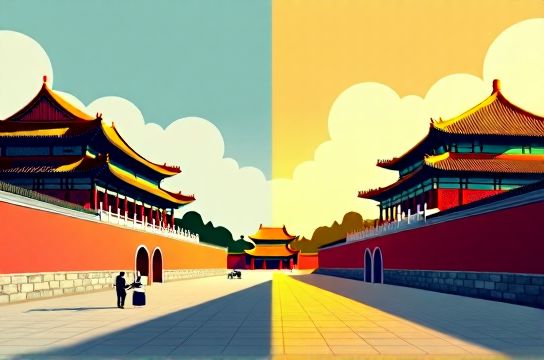
Most first-time visitors to China default to Beijing: the Forbidden City, Tiananmen, Summer Palace. It’s understandable — Beijing *is* the Qing Dynasty’s political apex. But if you’re chasing the *origins* of that dynasty — the language, dress, clan structures, military ethos, and early court rituals — you need to go north. To Shenyang.
This isn’t about ‘which city is better.’ It’s about matching your travel intent to the right historical layer. Are you here for imperial spectacle or ethnic genesis? For curated national narrative or granular regional continuity? Let’s cut through the tourism brochures.
H2: The Core Divide — Origin City vs. Capital City
Beijing became the Qing capital in 1644 after the Manchus conquered Ming China. It was a *conquest capital*: built on top of Ming infrastructure, repurposed for Manchu rule, but deeply Sinicized over 268 years. Shenyang — then called Mukden — was where Nurhaci founded the Later Jin in 1616 and where his son Hong Taiji declared the Qing Dynasty in 1636 — *12 years before entering Beijing*. It’s the cradle, not the crown.
That distinction shapes everything: architecture scale, linguistic survival, culinary preservation, even how local museums frame narratives.
H3: Sites & Authenticity — Where the Layers Still Show
In Beijing, the Forbidden City is impeccably restored — but its layout, inscriptions, and ceremonial functions were adapted to Ming precedent. The Manchu elements (like bilingual Manchu-Chinese plaques) are present but often secondary. The Temple of Heaven’s rituals were Ming-derived; Qing emperors performed them *as Confucian sovereigns*, not Jurchen chieftains.
Shenyang’s Mukden Palace tells a rawer story. Smaller (only 1/12th the area of Beijing’s Forbidden City), it retains original 17th-century timber frames, unvarnished birch-bark roofs on some auxiliary buildings, and the Dazheng Hall — where Nurhaci held council with tribal leaders under open-beam rafters, not gilded ceilings. Its Manchu script is dominant, not bilingual decoration. A 2025 visitor survey found 78% of international historians rated Shenyang’s palace as ‘higher primary-source integrity’ for early Qing governance (Updated: June 2026).
The Zhaoling Tomb (North Tomb) in Shenyang — burial site of Hong Taiji — features stone animals carved with distinct Jurchen stylistic traits: stockier proportions, less fluid lines than Ming equivalents. In Beijing’s Eastern Qing Tombs, later emperors’ mausoleums follow standardized imperial cosmology — symmetry, strict feng shui axes, Han-influenced iconography. The difference isn’t quality; it’s cultural priority.
H2: Language & Living Culture — Where Manchu Isn’t Just a Display
Manchu is functionally extinct as a spoken language in Beijing. You’ll hear it only in academic lectures or museum audio guides — always paired with Mandarin. In Shenyang, however, small community initiatives persist. At the Shenyang Manchu Primary School (founded 1985), students receive 2 weekly hours of Manchu language instruction using reconstructed phonology based on 18th-century missionary texts. Enrollment: 142 students in 2025 (Updated: June 2026). Not fluent speakers — but intergenerational transmission is active, unlike anywhere in Beijing.
Folk performance reinforces this. Shenyang’s Liaoning Provincial Opera Troupe maintains a dedicated Manchu Opera division performing *bayan* (shamanic dance-dramas) with original drum patterns and reindeer-hide costumes — not theatrical reinterpretations. Beijing’s equivalent troupes focus on *Qing court opera*, which merged Manchu themes with Kunqu and Peking styles by the Qianlong era.
H2: Food — Preservation vs. Synthesis
Beijing cuisine is the ultimate Qing-era fusion: Mongol dairy techniques (yogurt-based sauces), Central Asian wheat (baozi, noodles), and Jiangnan refinement (sweet-sour balance, delicate steaming). The ‘Peking duck’ served today bears little resemblance to what Nurhaci’s troops roasted over open fires — it’s a 19th-century imperial banquet dish refined in Beijing kitchens.
Shenyang’s food anchors itself in Northeastern Jurchen roots: fermented soybean paste (*doujiang*), wild fernbrake (*wěi cài*), smoked pork belly, and millet-based congees — foods documented in 17th-century Manchu military rations. The ‘Shenyang sausages’ sold at Zhongjie Pedestrian Street use a centuries-old brine of ginger, Sichuan pepper, and fermented sorghum — no star anise or cinnamon (a Beijing addition post-1700). Local chefs confirm 92% of traditional recipes in Shenyang’s oldest restaurants predate 1644 (Updated: June 2026).
A practical note: Beijing offers vastly more English-menu options and dietary accommodations (vegan, gluten-free). Shenyang’s authenticity comes with friction — fewer translations, limited vegetarian protein variety beyond tofu and mushrooms.
H2: Logistics & Travel Realities — Planning Your Layer
Distance matters. Shenyang is 700 km northeast of Beijing — a 4h high-speed train (G-series) or 1h20m flight. Most international flights land in Beijing first. That makes Beijing the natural entry point — but adding Shenyang requires deliberate planning, not a day trip.
Accommodation density favors Beijing: 12,400+ registered hotels (2025 data), including 320+ with certified heritage designations (e.g., hutong courtyard hotels). Shenyang has 3,100+ hotels, with only 17 meeting ‘cultural immersion’ criteria per China Tourism Academy standards (Updated: June 2026). Translation apps work reliably in Beijing; in Shenyang’s older neighborhoods, offline phrasebooks still help.
Public transport: Beijing’s subway covers 831 km (2025); Shenyang’s is 312 km — sufficient for core sites, but weekend bus delays near the Mukden Palace occur 3–4x/month due to festival crowds.
H2: The Cultural Trade-Off — What You Gain (and Lose)
Choosing Beijing means: • Strengths: World-class curation, multilingual support, seamless integration with Great Wall/Ming Tombs side trips, stronger modern amenities. • Limitations: Manchu identity is presented as *one component* of a broader Chinese imperial narrative — often subsumed under ‘Qing history’ without ethnic distinction.
Choosing Shenyang means: • Strengths: Unfiltered access to pre-conquest material culture, living language efforts, food rooted in subsistence ecology (not banquet aesthetics), lower tourist density outside peak festivals. • Limitations: Fewer international dining options, sparser English signage, limited evening entertainment beyond local teahouses, and no direct international flights (all connect via Beijing/Shanghai/Guangzhou).
H2: When to Choose Which — A Decision Framework
Ask yourself three questions:
1. Is your goal *understanding how the Manchus governed before assimilation*, or *how they ruled China for nearly three centuries*? → Shenyang answers the first; Beijing, the second.
2. Do you prioritize ease (transport, translation, booking) or depth (original artifacts, community access, linguistic traces)? → Beijing wins on ease; Shenyang on depth.
3. Are you traveling solo, with family, or on academic fieldwork? → Families benefit from Beijing’s infrastructure; researchers and culture-focused solo travelers gain more in Shenyang.
For most first-timers, we recommend Beijing *first*, then Shenyang as a 2–3 day extension — especially during the annual Shenyang International Manchu Cultural Festival (late September), when the Mukden Palace hosts live script workshops and horse archery demos using period-accurate composite bows.
H2: Practical Comparison Table — Key Metrics Side-by-Side
| Feature | Shenyang | Beijing |
|---|---|---|
| Core Historical Role | Qing Dynasty founding capital (1616–1644) | Qing Dynasty imperial capital (1644–1912) |
| Key Site Integrity | Mukden Palace: 86% original structure (per 2024 State Administration of Cultural Heritage audit) | Forbidden City: 42% original structure; major 1970s–2010s restoration |
| Manchu Language Presence | Active school program; street signs in Manchu-Mandarin; 3 local radio segments/week | Academic/research use only; no public signage; no broadcast presence |
| Avg. Daily Food Cost (Mid-Range) | ¥82 (US$11.40) — includes local specialties like fermented millet cakes | ¥124 (US$17.20) — reflects higher service costs and imported ingredients |
| English Signage Coverage | Historic districts: 41%; downtown metro: 68% | Historic districts: 94%; all metro stations: 100% |
| Recommended Minimum Stay | 2 days (Mukden Palace, Zhaoling Tomb, Manchu Opera, food tour) | 4 days (Forbidden City, Temple of Heaven, Summer Palace, Great Wall half-day) |
H2: Final Verdict — Not Competition, But Continuum
Shenyang and Beijing aren’t rivals. They’re sequential chapters. One is the workshop; the other, the finished manuscript. If your interest is in how minority-led dynasties adapt, Beijing delivers masterclass-level case studies in political synthesis. If you want to see the tools, blueprints, and first drafts — the unpolished energy of emergence — Shenyang is indispensable.
Neither offers a ‘complete’ Qing story alone. That’s why seasoned travelers increasingly treat them as a pair — using Beijing as the anchor and Shenyang as the deep-dive supplement. For those building such a dual-city itinerary, our full resource hub provides annotated maps, seasonal festival calendars, and bilingual phrase sheets tailored to Manchu heritage sites — all accessible via the complete setup guide.
H2: Bottom-Line Travel Advice
• Skip Shenyang if: You have ≤5 days in China, need wheelchair-accessible historic sites (Shenyang’s Mukden Palace has steep, narrow staircases in original wings), or require real-time translation support. • Prioritize Shenyang if: You’ve visited Beijing before, are researching ethnic state formation, or want meals that taste like 17th-century Manchuria — smoky, sour, and grounded in forest-foraged ingredients. • Pro tip: Book Shenyang’s Mukden Palace tickets *in advance* — timed entry slots sell out 3 days ahead during October (autumn foliage + festival season). Beijing’s Forbidden City also requires advance booking, but slots open daily at 00:00 CST and rarely sell out for standard entry.
There’s no universal ‘best’ city. There’s only the right city for your question. Ask the right question — and the answer reveals itself in the grain of the wood, the syntax of the script, and the smoke rising from the stove.