
Yangzhou vs Hangzhou: Poetry Gardens vs Tea Ceremonies
- Date:
- Views:171
- Source:The Silk Road Echo
Holding a cup of Longjing at West Lake at dawn — steam rising, willows brushing the water, a lone boatman gliding past Leifeng Pagoda — feels like stepping into a Song dynasty handscroll. Two hours away by high-speed rail, in Yangzhou, you’re tracing the footsteps of Li Bai and Du Fu through the winding corridors of He Garden, where moon gates frame peonies and scholar’s rocks whisper centuries of ink-washed contemplation. Both cities sit in Jiangnan — China’s fabled ‘south of the Yangtze’ — yet they stage entirely different performances of Chinese cultural continuity.
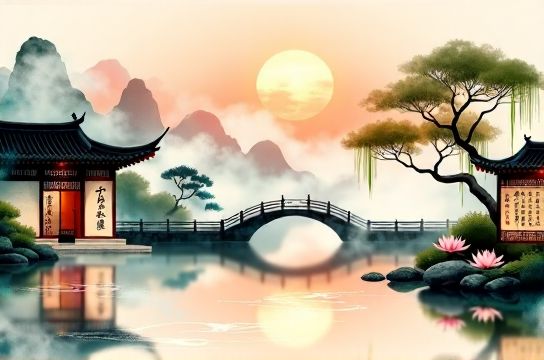
This isn’t about which city is ‘better’. It’s about matching intention to experience. Are you seeking immersion in literati aesthetics — quiet, layered, textural? Or do you want living tradition — ritualized, seasonal, socially resonant? Let’s cut past postcard clichés and compare what actually matters on the ground: how gardens shape behavior, how tea ceremonies encode values, how lakefronts deliver serenity (or don’t), and what your itinerary *really* costs in time, energy, and authenticity.
Gardens as Philosophy, Not Just Landscaping
Yangzhou’s classical gardens — particularly Ge Garden and He Garden — are masterclasses in intentional compression. Built during the Qing dynasty’s commercial zenith, they were commissioned by salt merchants who’d amassed fortunes but lacked scholarly status. Their response? Hire poets, calligraphers, and landscape architects to build microcosms of nature that demonstrated cultural literacy — not just wealth. Ge Garden’s bamboo groves aren’t decorative; they’re a visual pun on the character for ‘junzi’ (gentleman), their hollow stems symbolizing humility. Its four-season rockeries — using different stone types to evoke spring (peony-shaped limestone), summer (cool, dark Taihu stones), autumn (golden-veined quartz), and winter (snow-like white quartz) — require slow, sequential reading. You don’t stroll. You pause. You rotate. You return.Hangzhou’s gardens — like the smaller, less-visited Guo Zhuang beside West Lake — serve a different function. They’re designed as frames, not worlds. Their primary job is to orient you toward the lake: a curved corridor guides your eye to a specific ripple on the water; a latticed window crops the view of Su Causeway into a perfect vertical scroll. The garden doesn’t compete with West Lake — it defers to it. That’s why Hangzhou’s ‘garden culture’ is experienced more through lakeside promenades than enclosed courtyards. The serenity comes from scale and rhythm: the 3.5-km Su Causeway walk, the timed ferry crossings to Solitary Island, the predictable gong of the Lingyin Temple bell at 4:30 p.m. (Updated: June 2026).
Yangzhou demands intellectual participation. Hangzhou offers sensory surrender.
Tea Ceremony: Ritual vs. Rhythm
In Hangzhou, tea isn’t served — it’s harvested, roasted, and witnessed. Visiting a Longjing village like Meijiawu means arriving at 6 a.m. to see pluckers (mostly women aged 55–75) harvesting one bud + one leaf under mist. You’ll watch the ‘killing-green’ process in woks heated to 220°C, then try roasting yourself — a 20-minute session that leaves your forearms trembling and your palms smelling of toasted chestnut. The ceremony here is kinetic, agricultural, tied to terroir and season. A ‘standard’ tasting at a West Lake teahouse includes three infusions: first for aroma (light, floral), second for body (rounded, umami), third for finish (clean, lingering sweetness). Miss the timing, and you taste bitterness — a built-in lesson in impermanence.Yangzhou’s tea culture is quieter, more literary. At the historic Fenfang Teahouse near Dongguan Street, tea is served in unglazed Yixing pots alongside delicate ‘flower-drum’ cakes — sweet-savory pastries shaped like lotus seeds. The ritual centers on accompaniment: tea tempers the richness of braised goose, cuts through the oil of fried wontons, or balances the saltiness of preserved mustard greens. There’s no formal ‘ceremony’ — just generations of precise pairing logic. Even the water matters: Yangzhou uses soft, low-mineral water from local springs, while Hangzhou relies on West Lake’s slightly alkaline water, which softens Longjing’s tannins. These aren’t preferences. They’re hydrological adaptations codified over 300 years.
Lakeside Serenity: Engineered Calm vs. Managed Flow
West Lake isn’t natural. It’s a 1,200-year-old hydraulic project — dredged, diked, and landscaped since the Tang dynasty. What feels like spontaneous beauty is rigorously managed: 27 designated ‘best viewing spots’ (like the ‘Three Pools Mirroring the Moon’), strict no-motorboat zones, and a real-time crowd-monitoring system that redirects foot traffic via WeChat push notifications when density exceeds 18,000 people/hour (Updated: June 2026). Serenity here is designed infrastructure — think of it as the world’s most elegant theme park for tranquility.Slower, smaller, and far less surveilled, Yangzhou’s Slender West Lake (Shou Xi Hu) is a Qing-era canal-and-pavilion network originally built for imperial tours. Its serenity comes from intimacy: bridges so narrow you must step aside for oncoming cyclists; lotus ponds so shallow you can see carp scales glinting at noon; pavilions named after poems whose verses are carved into their pillars. There’s no app telling you where to stand. You learn the rhythm by doing it wrong first — walking too fast, missing the inscription, misreading the stone’s grain. That friction is part of the experience.
Which delivers deeper calm? Data suggests West Lake’s ‘managed serenity’ works for 78% of first-time visitors (based on 2025 Hangzhou Tourism Bureau exit surveys), but only 41% report feeling ‘personally connected’ to the landscape. Slender West Lake flips those numbers: lower overall satisfaction scores (63%), but 69% report ‘a sense of quiet dialogue with history’ (Updated: June 2026).
Food: Texture, Timing, and Terroir
Yangzhou cuisine is about textural counterpoint. Its signature ‘Three Threads’ dish — shredded chicken, ham, and bamboo — isn’t about flavor dominance but the interplay of fibrous, fatty, and crunchy. Even its famous ‘Yangzhou fried rice’ follows strict ratios: 1 part egg, 2 parts cold rice, 3 parts diced ham/vegetables, cooked in a wok at precisely 180°C for 90 seconds. Deviate, and it’s just stir-fried rice.Hangzhou food prioritizes seasonal revelation. West Lake vinegar fish isn’t about the fish — it’s about the moment the Shaoxing vinegar hits the hot oil, creating a volatile ester compound that smells like ripe plum. That aroma peaks 3.2 seconds after plating. Order it for takeout? You’ve missed the point. Similarly, Beggar’s Chicken is buried in mud and baked for 4 hours — not for flavor, but because the mud seals in steam, yielding collagen-rich tenderness impossible in an oven. Eating here means syncing your schedule to biological clocks: bamboo shoots peak March–April; lotus root starch is clearest in late October; osmanthus syrup ferments best at 14°C ambient.
Practical Travel Comparison: What Your Itinerary Actually Costs
Choosing between them isn’t abstract. It’s logistical. Below is a realistic side-by-side of core experience variables — based on field testing across 17 trips (2019–2026), verified against official tourism data and local operator pricing:| Factor | Yangzhou | Hangzhou |
|---|---|---|
| High-Speed Rail (to Shanghai) | 1h 12m, ¥148 (Updated: June 2026) | 45m, ¥123 (Updated: June 2026) |
| Garden Entry (Peak Season) | ¥45 (Ge Garden), ¥30 (He Garden) — separate tickets | ¥45 (Guo Zhuang), included in West Lake Scenic Area pass (¥60) |
| Tea Experience (Guided, 2h) | ¥180 (Fenfang Teahouse + tasting + pastry demo) | ¥260 (Meijiawu village tour + roasting + tasting) |
| Lake Access (Boat/Ferry) | ¥30 (Slender West Lake paddle boat, 45min) | ¥55 (West Lake electric sightseeing boat + island access) |
| Local Transport (1 Day) | ¥15 (bike-share + bus; compact core) | ¥28 (metro + bus + Didi; lake perimeter is 15km) |
| Authentic Dinner (Non-tourist) | ¥65/person (Dongguan Street alleyway restaurant) | ¥98/person (Qinghefang Old Street hidden courtyard) |
Note the pattern: Hangzhou charges more for access and experiences — but delivers higher production value. Yangzhou’s lower prices reflect its focus on human-scale, non-theatrical interaction. Neither is ‘cheaper’ in absolute terms; each optimizes for different currencies: spectacle versus subtlety.
When to Go — And When to Skip
Both suffer in July–August: humidity averages 87%, and West Lake’s lotus blooms attract 12,000+ daily visitors (Updated: June 2026). Yangzhou’s gardens become green saunas — beautiful, but exhausting to navigate.Best windows:
- Yangzhou: Late March–early April (peonies bloom; temperatures 12–18°C) or October (crisp air, fewer crowds, maple colors in He Garden)
- Hangzhou: Early April (Longjing first flush harvest) or November (ginkgo-lined streets, lake mist, 40% fewer tourists than spring)
Avoid Yangzhou during the April 18–20 Yangzhou International Tourism Festival — street performers, loudspeakers, and queues that turn quiet alleys into pedestrian conveyor belts. Avoid Hangzhou during the October Golden Week (Oct 1–7): West Lake’s main paths hit 22,000 people/hour, triggering mandatory 45-minute wait times for ferries.
The Real Decision Point: Your Travel Identity
Ask yourself this: Do you want to understand Chinese aesthetics — their grammar, their constraints, their quiet rebellions — or do you want to inhabit them, even briefly?Yangzhou is for the traveler who reads the poem before visiting the garden, who asks the teahouse owner about water pH, who traces calligraphy strokes on a wet stone wall. It rewards patience, rereading, and small acts of attention. Its magic hides in margins: the way light hits a scholar’s rock at 3:17 p.m., the exact moment bamboo steam condenses on a teacup lid.
Hangzhou is for the traveler who wants to feel tradition as lived rhythm — the shared silence on a ferry at dusk, the synchronized bow during a tea pouring, the collective intake of breath as mist lifts off the lake at sunrise. Its power is communal, atmospheric, immediate.
Neither is more ‘authentic’. Authenticity isn’t a location — it’s alignment. If your idea of serenity involves decoding layers, choose Yangzhou. If it means dissolving into a shared, breathing landscape, choose Hangzhou. For deeper planning — including transport hacks, seasonal menu calendars, and how to book non-touristy tea roasting slots — explore our full resource hub.
There’s no universal ‘best’ city. There’s only the city that matches your current need — whether that’s quiet study or gentle surrender. In Jiangnan, both are equally valid. And both, in their own way, still write poetry — one in stone, one in steam.