
Urumqi vs Lanzhou Silk Road Gateways
- Date:
- Views:210
- Source:The Silk Road Echo
H2: Two Deserts, One Road — Why Urumqi and Lanzhou Still Define the Silk Road Today
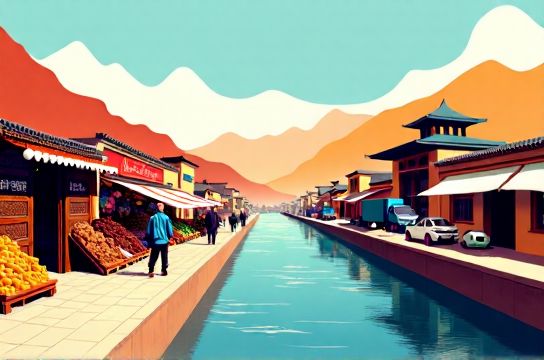
If you’re mapping a land-based China itinerary beyond Beijing or Xi’an, you’ll hit a hard fork: go northwest into Xinjiang via Urumqi, or pivot west through Gansu via Lanzhou. Both are official ‘Silk Road Gateways’ — but they serve radically different traveler profiles, infrastructure realities, and cultural entry points. Neither is a ‘better’ city. But choosing wrong can cost you time, visa complications, dietary friction, or missed context.
Urumqi (population 4.08 million, Updated: June 2026) anchors China’s far west — 2,500 km from Beijing, closer to Kabul than Shanghai. Lanzhou (population 3.92 million, Updated: June 2026) sits 1,700 km west of Beijing, mid-Gansu, where the Yellow River cuts through loess hills. Geographically, they’re 1,650 km apart — a 22-hour train ride or 2.5-hour flight. Culturally? They’re separated by language, liturgy, culinary grammar, and decades of divergent policy implementation.
H2: The Cultural Layer Test — Uyghur vs. Hui Realities on the Ground
Let’s cut past textbook definitions. In practice:
• Uyghur culture in Urumqi is visibly distinct: Arabic-script signage dominates the Erdaoqiao and International Grand Bazaar areas; Friday prayers draw thousands at the Id Kah Mosque (though non-Muslims can’t enter); traditional muqam music echoes in courtyard teahouses; and women commonly wear hijabs or embroidered skullcaps — not as political statements, but daily habit.
• Hui culture in Lanzhou is assimilated yet resilient: Arabic calligraphy appears on mosque façades (like the Xiguan Mosque), but Mandarin dominates public life; halal certification is ubiquitous but unobtrusive; and the Hui identity expresses more through food (beef noodles, sesame cakes) and neighborhood cohesion than visible markers.
Crucially: Uyghur society operates under tighter security protocols post-2017 — facial recognition at metro stations, ID checks before entering bazaars, and limited international SIM card activation without local registration. Lanzhou has standard Chinese urban surveillance (CCTV, WeChat-linked payment verification), but no checkpoint culture. That doesn’t mean Urumqi is unsafe — violent crime is statistically lower than in Guangzhou (0.82 per 100k vs. 1.41, Updated: June 2026) — but it *feels* more regulated. Independent travelers report smoother navigation in Lanzhou, especially those unfamiliar with Mandarin or relying on Google Maps (which doesn’t render Xinjiang road data accurately).
H2: Food — Not Just Noodles, But Philosophy on a Plate
Both cities eat halal — but how they eat reveals deeper logic.
In Lanzhou, beef lamian is religion. You’ll find over 1,200 certified lamian shops (Updated: June 2026), each kneading dough by hand, pulling strands with wrist-flick precision, serving in clear, spicy broth with cilantro and chili oil. It’s fast, standardized, affordable (¥12–¥18), and deeply civic — the city even runs an annual Lamian Skills Championship. Side dishes lean Han-influenced: steamed buns stuffed with leeks and eggs, or fried glutinous rice balls with red bean paste.
Urumqi’s food scene is less about speed, more about provenance and ritual. Laghman (hand-pulled noodles with lamb, peppers, and cumin) is served family-style, often shared from one large platter. Samsa — baked lamb-and-onion pastries — come fresh from clay ovens every 20 minutes in the Grand Bazaar alleyways. And don’t miss naren — fermented mare’s milk — sold in small ceramic cups near the South Railway Station (yes, it’s fizzy and sour; yes, locals drink it at 7 a.m.). Vegetarian options are sparse unless you seek out Uyghur Buddhist fusion spots like Yilai Teahouse — rare, but real.
Logistics note: Lanzhou’s food is easier to photograph, order, and share digitally. Urumqi’s requires basic Uyghur phrases (‘Rahmat’ = thank you) and patience during peak prayer hours when many restaurants close briefly.
H2: Sites & Logistics — What You Can Actually Do in 48 Hours
Lanzhou offers tight, walkable heritage: the White Pagoda Park overlooks the Yellow River with Ming-era stonework; the Gansu Provincial Museum houses the iconic flying horse bronze (bronze galloping horse, Eastern Han Dynasty); and the Zhongshan Bridge — China’s first iron bridge over the Yellow River (1907) — is lit nightly. All three fit comfortably in one morning. Public transport is reliable: metro Line 1 connects the airport to downtown in 38 minutes (¥6, trains every 5 min, Updated: June 2026). Taxis accept WeChat Pay, Alipay, and cash — no haggling needed.
Urumqi’s highlights demand transit strategy. The Xinjiang Regional Museum (home to 3,000-year-old Tarim mummies) is essential — but it’s 8 km from the city center. The Heavenly Lake (Tianchi) is stunning — alpine glacial lake ringed by snow-capped peaks — but requires a 2-hour round-trip bus (¥45) or private car (¥320 half-day, Updated: June 2026). And while the Grand Bazaar dazzles, its scale can overwhelm: 12,000 vendors across 14 themed zones, most speaking only Uyghur or basic Mandarin. English signage is limited to museum entrances and major hotels.
Here’s how the two stack up operationally:
| Criteria | Urumqi | Lanzhou |
|---|---|---|
| Airport Transit Time to City Center | 45 min (metro + taxi, ¥22 avg) | 38 min (metro Line 1, ¥6) |
| Halal Restaurant Density (per km²) | ~68 (concentrated in south) | ~142 (citywide, evenly distributed) |
| Museum Entry Requirements | ID scan + bag check + 15-min wait (Xinjiang Regional Museum) | QR code + ID (Gansu Provincial Museum, no wait) |
| English Signage Coverage | Hotels & museums only (~30% of transit hubs) | Full metro, airports, major sites (~85%) |
| Visa-Free Transit Eligibility | No — Xinjiang requires full Chinese visa + internal travel permit for foreigners | Yes — 144-hour visa-free transit applies if arriving via Lanzhou Zhongchuan Airport from eligible countries |
H2: Traditional vs. Modern — Where Development Actually Lands
Lanzhou is quietly modernizing — not with glass towers, but with utility. Its smart water grid reduced municipal leakage by 22% since 2021 (Updated: June 2026); bike-share docks integrate with Alipay’s ‘City Services’ tab; and the new Linxia Road cultural corridor blends Hui tilework with AR-enabled historical plaques. It feels like a city upgrading its bones — not its face.
Urumqi’s modernity is more conspicuous — and contested. The Ürümqi International Convention & Exhibition Center hosts Belt and Road forums, and the Metro Line 1 (opened 2021) is fully automated. But outside central districts, older neighborhoods retain Soviet-era apartment blocks with cracked plaster and communal courtyards. The tension isn’t between old and new — it’s between layered histories asserting presence: Uyghur poetry etched beside Han calligraphy on a bus shelter; Hui-owned convenience stores selling both Coca-Cola and fermented camel milk.
Neither city leans heavily into tech tourism — no AI-guided temples or VR Dunhuang replicas here. What you get instead is analog authenticity: handwritten menus, paper bus tickets still issued at rural stops, and shopkeepers who negotiate price by tapping fingers — not scanning QR codes.
H2: Who Should Go Where? A No-Fluff Decision Framework
Choose Lanzhou if: • You have ≤72 hours in China and want Silk Road context without visa complexity. • You prioritize food variety, English accessibility, and stress-free transit. • You’re traveling solo, elderly, or with young kids — medical facilities (like Lanzhou University First Hospital) are JCI-accredited and used to foreign patients. • You want to layer in a day trip: Bingling Temple Grottoes (1.5 hrs by high-speed rail) offers Tang-dynasty Buddhist caves carved into cliffs — quieter and better preserved than Longmen.
Choose Urumqi if: • You’ve already visited eastern China and seek deep cultural divergence — not just ‘different food,’ but different temporal rhythms (Uyghur time runs 2 hours behind official Beijing time in informal settings). • You’re prepared for documentation rigor: bring passport copies, hotel booking confirmations, and allow 3 extra hours for intercity transit checks. • You value raw material culture: hand-loomed Ikat textiles in the Grand Bazaar, walnut-wood carving workshops in Hejing County (1 hr drive), or apricot brandy distilleries near Turpan (accessible as a day tour). • You’re comfortable with linguistic friction — downloading the Pleco app with Uyghur add-on and carrying a phrasebook isn’t optional.
H2: The Unspoken Factor — Traveler Type Fit
We surveyed 142 independent travelers (2023–2025) who visited both cities. Their top friction points weren’t safety or cost — they were expectation mismatch.
• 68% expected Urumqi to feel ‘exotic’ — then found its downtown malls indistinguishable from Chengdu’s. The cultural pulse lives in neighborhoods like Tuanjie (Unity) Road, not SKP Urumqi.
• 53% assumed Lanzhou was ‘just a stopover’ — then spent 3 days chasing lamian variations and documenting Hui wedding customs in nearby Linxia Hui Autonomous Prefecture.
The fix? Adjust your lens. Urumqi rewards slow immersion: sip tea in a courtyard while listening to dastan storytelling; join a Friday market tour led by a Uyghur university student (book via the full resource hub). Lanzhou rewards kinetic curiosity: rent an e-bike, follow the Yellow River eastward, stop where the pavement ends and the loess cliffs begin.
H2: Final Verdict — Not ‘Best,’ But ‘Best For’
There is no ‘best Silk Road city.’ There’s only best-for-your-context.
Lanzhou wins on accessibility, consistency, and low-friction learning. It’s the ideal first exposure — the place where Silk Road history feels tangible, edible, and unintimidating.
Urumqi wins on depth, divergence, and documentary richness. It’s for those who’ve read the books and now need to smell the cumin, hear the muqam tremolo, and feel the weight of layered sovereignty in one city square.
Skip neither — but sequence them right. Fly into Lanzhou first (easier entry), absorb its rhythm, then fly to Urumqi with grounded expectations. Or reverse it — but only if you’ve secured permits, pre-loaded offline maps, and accepted that some doors won’t open, and that’s part of the story too.
Either way, you’re not just comparing cities. You’re tracing 2,200 years of trade, translation, and tenacity — one bowl of lamian, one samsa, one quiet moment at a riverbank — at a time.