
Lhasa vs Xi'an: Tibetan Buddhism Versus Han Chinese Imper...
- Date:
- Views:188
- Source:The Silk Road Echo
H2: Two Capitals of Belief — Not Geography
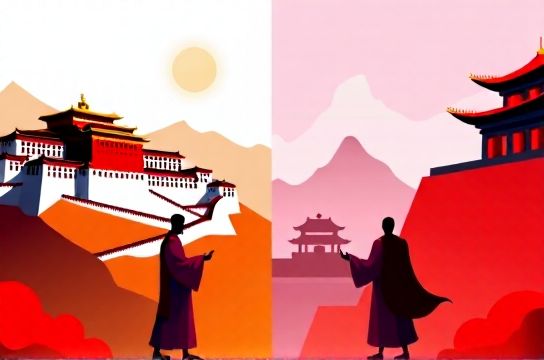
Lhasa and Xi’an aren’t just cities on a map. They’re living archives of divergent spiritual architectures: one rooted in Vajrayana Buddhist cosmology, the other in Confucian-bureaucratic state ritual and Daoist cosmology. If you’re planning a trip to China and want more than photo ops — if you want to *feel* how belief shapes urban space, daily rhythm, and even air quality — this isn’t about picking a ‘better’ city. It’s about choosing which kind of resonance you need right now.
Let’s be clear: neither is ‘easy’. Lhasa requires advance permits (Tibet Travel Permit + PSB registration), altitude acclimatization (3,650 m), and respectful engagement with monastic life that remains politically sensitive. Xi’an is logistically frictionless — direct high-speed rail from Beijing (4h 10m), no permits, oxygen-rich air — but its spirituality is curated, commodified, and often flattened into heritage branding. That tension — authenticity versus access — defines the entire comparison.
H2: Spiritual DNA — What You’re Actually Experiencing
In Xi’an, imperial spirituality is architectural and performative. The Temple of Confucius (Wenshu Miao) hosts civil service exam reenactments; the Great Mosque blends Persian tilework with Ming-dynasty timber framing — a testament to syncretic Han-Muslim coexistence under imperial patronage. But the dominant spiritual gravity comes from the Terracotta Army pits: not worship, but ancestor veneration scaled to empire. You stand where Qin Shi Huang’s afterlife bureaucracy was literally buried — a state project of cosmic insurance.
In Lhasa, spirituality is embodied and iterative. At Jokhang Temple, pilgrims prostrate full-length along stone-paved alleys worn smooth by centuries of foreheads and palms. The air smells of yak butter lamps and incense; monks chant in low, resonant frequencies you feel in your molars. This isn’t historical reenactment — it’s ongoing practice. The Potala Palace isn’t a museum first; it’s the former winter residence of the Dalai Lama and still functions as an active religious center (though public access to inner chapels is restricted). Its whitewashed walls and red-maroon dzong-style towers aren’t decorative — they encode mandalic geometry meant to mirror Mount Meru, the axis mundi of Buddhist cosmology.
Crucially: both cities confront modernity head-on. Xi’an’s Muslim Quarter now has WeChat Pay QR codes plastered over Qing-dynasty shopfronts. Lhasa’s Barkhor Street features solar-charged prayer wheels and bilingual (Tibetan/Chinese) signage mandated since 2022 (Updated: June 2026). Neither is frozen in time — but the *direction* of change differs. Xi’an absorbs modernity; Lhasa negotiates it.
H2: Travel Logistics — Where Reality Hits Hard
Forget ‘convenience’ metrics like flight frequency or hotel star ratings. Real friction lies elsewhere:
• Altitude: Lhasa sits at 3,650 meters. Roughly 60% of first-time visitors report mild AMS (acute mountain sickness) — headache, fatigue, shortness of breath — within 24 hours (Updated: June 2026). Medical oxygen is available in hotels and pharmacies, but acclimatization *requires* 48–72 hours of low exertion. Rushing to Potala Palace on Day 1 risks nausea mid-staircase — and violates local guidance.
• Permits: Xi’an needs only your passport and train ticket. Lhasa requires three documents: Tibet Travel Permit (issued by authorized agencies only, 10–15 business days pre-arrival), Alien’s Travel Permit (for areas outside Lhasa city), and PSB registration (completed upon check-in at your Lhasa hotel). DIY applications are rejected. You *must* book through a registered Tibet tour operator — no exceptions. This adds ~¥800–¥1,200 ($110–$165) to baseline costs.
• Connectivity: Wi-Fi in Xi’an’s boutique hotels is reliable (avg. 85 Mbps down); in Lhasa, expect 15–30 Mbps in central hotels, with frequent outages in monasteries or rural outskirts. WeChat Pay works in both, but Alipay acceptance drops sharply beyond Barkhor’s core stalls.
H2: Food — Ritual Fuel vs. Imperial Banquet
Xi’an’s food is history you chew. Roujiamo — ‘Chinese hamburger’ — dates to the Qin dynasty, its flatbread baked in clay ovens identical to those used for terracotta figures. Biangbiang noodles (named for the sound of dough slapping the counter) are thick, belt-like ribbons served with chili oil and minced pork — a peasant dish elevated by imperial supply chains. Even the dumplings at Defukang Restaurant follow Tang-dynasty folding techniques (18 pleats = 18 layers of auspiciousness).
Lhasa’s cuisine is survival adapted to scarcity and cold. Yak meat — lean, iron-rich, gamey — is dried into jerky (shar) or stewed with turnips and barley. Tsampa (roasted barley flour) mixed with butter tea isn’t breakfast; it’s caloric ballast against hypoxia. Butter tea itself — salty, fatty, fermented — triggers gastric lipase release, aiding digestion at altitude. You won’t find ‘fusion’ here. A ‘yak burger’ at a tourist café is a novelty, not tradition. Authenticity means accepting that flavor serves function first.
Both cities show culinary friction: Xi’an’s Muslim Quarter now offers matcha mochi buns beside lamb skewers; Lhasa’s cafés serve espresso alongside butter tea — but the latter often uses powdered milk and vegetable oil ‘butter’, diluting the ritual’s physiological intent.
H2: Sites & Rhythms — How Time Moves Differently
Xi’an operates on clock time. The Giant Wild Goose Pagoda light show starts precisely at 20:00; the City Wall bike rental kiosks close at 18:00 sharp. Temples open at 8:00, close at 17:30 — timed to maximize visitor throughput. Even the Bell Tower chimes hourly, calibrated to Beijing Standard Time.
Lhasa runs on *karma time*. Jokhang Temple’s main gate opens at dawn (approx. 5:30 AM), but the inner sanctum — housing the Jowo Rinpoche statue — opens only when monks complete morning rituals, sometimes delayed by weather or lunar observances. Photography inside is prohibited not for copyright, but because flash disrupts the sacred light balance believed necessary for deity presence. You wait. You watch elderly women spin hand-held mani wheels while murmuring Om Mani Padme Hum — not for tourism, but because each rotation equals a prayer recited.
That difference cascades into itinerary design. A standard Xi’an 3-day plan fits the Terracotta Army, City Wall, Muslim Quarter, and Big Wild Goose Pagoda with buffer time. A Lhasa 3-day plan must include mandatory rest blocks: Day 1 = arrival + light walk + hydration; Day 2 = Jokhang + Barkhor (morning only, to avoid crowds and heat); Day 3 = Potala (booked 3 days ahead, entry slots at 9:00 or 14:00 only). Trying to ‘do’ Lhasa like Xi’an guarantees physical strain and cultural misstep.
H2: Modernity — Tech, Infrastructure, and Quiet Resistance
Xi’an is China’s ‘Silicon Plains’ hub: 120+ semiconductor firms operate near the High-Tech Zone, and the city’s metro system (Line 14 connects airport to downtown in 28 minutes) uses facial recognition for fare payment. Yet its ‘modern’ temples install QR codes linking to English-language sutra apps — a digital layer grafted onto ancient stone.
Lhasa’s tech integration is pragmatic, not promotional. Solar panels power 85% of rural monasteries (Updated: June 2026); mobile network coverage expanded to 92% of prefecture-level townships in 2025, but 4G remains spotty above 4,500m. Crucially, Lhasa’s youth use WeChat not for memes, but to share digitized versions of banned texts — a quiet act of preservation. You won’t see this in brochures. You sense it in the way a young monk glances at his phone screen before tucking it away during puja.
H2: The Unspoken Divide — Tourism as Cultural Interface
Xi’an sells history as spectacle. The Terracotta Warriors are lit with theatrical precision; audio guides emphasize military tactics, not funerary theology. This works — it’s accessible, scalable, and aligns with national ‘cultural confidence’ narratives.
Lhasa sells reverence — but only to those who demonstrate it. Entry to certain temple courtyards requires removing hats and sunglasses. Monks may decline photos. A ‘selfie with a monk’ isn’t just rude; it breaches vinaya (monastic code) and can trigger security intervention. Tour operators enforce strict briefing sessions — not as formality, but because violations have real consequences (e.g., permit revocation, deportation).
This isn’t ‘hospitality’ — it’s boundary-setting. And it matters: travelers who treat Lhasa as ‘another historic city’ miss why its spirituality endures. It’s not museum-piece resilience. It’s active, negotiated, and guarded.
H2: Which City Fits Your Trip?
Choose Xi’an if: • You have ≤5 days and need high-density, logistically simple cultural exposure. • You prioritize food variety, reliable connectivity, and family-friendly pacing. • You want to understand how imperial ideology physically shaped space — walls, gates, axial alignments.
Choose Lhasa if: • You have ≥7 days, including 3+ for acclimatization and flexible scheduling. • You seek embodied practice — not observation, but participation (even modest: lighting a lamp, walking kora, listening to chant). • You accept that ‘authenticity’ includes discomfort: thin air, bureaucratic friction, linguistic barriers, and ethical ambiguity.
Neither is ‘better’. Xi’an teaches you how power constructs meaning. Lhasa teaches you how meaning constructs endurance.
H2: Practical Comparison Table
| Factor | Lhasa | Xi’an |
|---|---|---|
| Altitude & Health Risk | 3,650 m; AMS risk high (60% first-timers); mandatory acclimatization (48–72 hrs) | 400 m; negligible altitude risk; no medical prep needed |
| Entry Requirements | Tibet Travel Permit + PSB registration + tour operator booking (10–15 days lead time) | Passport only; no permits or pre-approvals |
| Key Spiritual Site Access | Jokhang Temple: open dawn–dusk; inner sanctum timing variable. Potala: timed entry slots, 3-day advance booking. | Great Mosque: open 7:00–18:00 daily. Confucius Temple: 8:00–17:30, fixed hours. |
| Food Culture Anchor | Tsampa, yak meat, butter tea — functional nutrition for high-altitude metabolism | Roujiamo, biangbiang noodles, dumplings — imperial-era street food, preserved technique |
| Modern Integration | Solar power in monasteries (85% coverage); limited 4G above 4,500m; tech used for preservation | Facial-recognition metro; AI-guided temple tours; high-speed rail (Beijing–Xi’an: 4h 10m) |
H2: Final Advice — Pack Accordingly
For Xi’an: Comfortable walking shoes, a portable charger, and curiosity about how bureaucracy becomes beauty. Bring cash — many small vendors still don’t accept digital payments.
For Lhasa: A pulse oximeter (rentable in Chengdu), high-SPF sunscreen (UV index averages 12+ April–September), and patience — not as virtue, but as operational necessity. Download offline maps and phrasebooks *before* arrival; data gaps are real.
And remember: both cities resist easy summary. Xi’an’s grandeur is legible — you see the wall, the army, the pagoda. Lhasa’s power is atmospheric — felt in the weight of silence between chants, the grit of tsampa on your tongue, the way sunlight hits the Potala’s gold roof at 4:47 PM, exactly as it did in 1645. To choose between them isn’t to pick a destination. It’s to declare what kind of truth you’re ready to hold.
If you’re building a multi-city China itinerary and need help sequencing Lhasa and Xi’an with realistic transit windows, visa logic, and seasonal considerations, our full resource hub has route planners updated monthly with real-world permit timelines and altitude advisories.