
Off the Beaten Path China: Pickled Vegetables with Yi Mat...
- Date:
- Views:191
- Source:The Silk Road Echo
Hiking down a narrow stone path carved into the eastern flank of Mount Daliang, your boots scuff loose shale while mist curls around fir-scented ridges. Below, terraced fields stitch together like green embroidery across steep slopes. No tour buses. No English menus. Just the low murmur of Nuosu Yi dialect, the clink of bronze bracelets, and the sharp, lactic tang of fermenting mustard greens rising from an open doorway. This isn’t a curated cultural show. It’s Tuesday in Bokou Village, Liangshan Yi Autonomous Prefecture—and you’re about to learn how to make *suo cai*, the sour, umami-rich pickled vegetables that anchor every Yi meal.
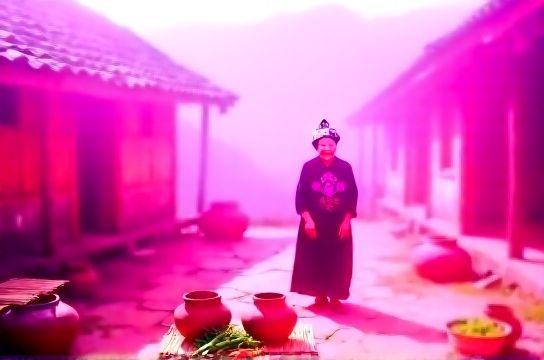
Liangshan remains one of the last truly off the beaten path China destinations where tourism infrastructure hasn’t yet overwritten local rhythms. Unlike Xitang Ancient Town’s photogenic but commercialized lanes or even Lijiang’s slow travel lijiang veneer, Liangshan’s rural China travel experience demands presence—not just observation. You walk in, you sit cross-legged on a woven hemp mat, you rinse cabbage with spring water drawn by hand, and you listen. The teachers? Yi matriarchs—women aged 62 to 84—who’ve managed household fermentation for over four decades. They don’t speak Mandarin fluently; their knowledge lives in muscle memory, seasonal timing, and taste calibration honed across generations.
Why pickled vegetables? Because in Liangshan’s high-altitude, short-growing-season ecology (2,200–3,500m), preservation isn’t nostalgia—it’s survival strategy. Fermentation locks in vitamin C during winter scarcity, boosts gut resilience against altitude-related digestive stress, and transforms fibrous mountain greens into deeply savory staples. What tourists call ‘authentic travel China’ is, for these women, daily logistics. And that’s precisely what makes this trail less traveled—and more consequential.
Getting There: Logistics Before Lore
Reaching Bokou Village requires intention—not convenience. Most international travelers fly into Chengdu (CTU), then take the 4.5-hour high-speed rail to Xichang (the prefectural capital). From there, it’s a 90-minute drive on G108 National Highway, followed by a 45-minute switchback ascent on County Road 212—a paved but narrow, landslide-prone route where passing trucks require careful coordination. A local driver familiar with Yi village protocols (and fluent in Nuosu) is non-negotiable. GPS fails regularly past Mianning County; paper maps annotated by village elders remain the most reliable guide.
No commercial lodgings exist in Bokou itself. Homestays are arranged through Liangshan-based NGOs like the Liangshan Rural Revitalization Cooperative (LRRC), which vets households for safety, hygiene, and willingness to host without performative expectations. Stays cost ¥180–¥260/night (Updated: April 2026), inclusive of three meals—but only if you commit to participating, not spectating. Refusal to join morning vegetable sorting or afternoon brine-stirring triggers polite but firm withdrawal of hosting privileges. This isn’t exclusion; it’s reciprocity encoded in practice.
The Process: From Field to Ferment Jar
Pickling here follows no fixed recipe. Temperature, humidity, cabbage variety (mostly *Brassica juncea* var. *multiceps*, locally called *moxi*), and even lunar phase influence decisions. But structure exists—and it’s taught in sequence, not theory.
First, harvest timing. Yi matriarchs assess readiness by pressing the cabbage stem: slight give, no cracking, sap clear—not milky. Late October to early December yields the crispest texture and highest natural sugar content for lactic acid conversion. Post-harvest, leaves are sun-dried for exactly 18–22 hours—not longer (risk of mold spores), not shorter (insufficient moisture reduction). You help spread them on bamboo mats atop slate roofs, repositioning every 90 minutes as shadows shift.
Next, salting. Not table salt—rock salt mined near Zhaojue County, crushed by hand with river stones, then sifted through woven fern fronds to remove grit. Salt-to-vegetable ratio is measured by fist: one closed fist of salt per three fists of wilted greens. Too much salt halts fermentation; too little invites spoilage. You learn by feel—rubbing salt into each leaf until it glistens faintly, releasing just enough juice to pool at the bowl’s base.
Then, packing. Jars are unglazed earthenware (*zao guan*), fired locally at 920°C, with micro-pores that allow CO₂ release while blocking oxygen ingress. Each jar holds ~12 kg. Packing is rhythmic: layer greens, press with a smooth river stone, repeat—applying steady downward pressure, never pounding. Air pockets cause rot; uneven compression creates inconsistent acidity. Your first attempt takes 47 minutes. Auntie Meige watches silently, then demonstrates—her forearms corded, wrists rotating just so—completing the same jar in 29. She doesn’t correct you verbally. She places her hand over yours mid-press. That’s the lesson.
Fermentation lasts 21–35 days, depending on ambient temperature (8–14°C average in Bokou winters). Jars rest in cool, dark cellars dug into hillsides—natural geothermal buffers keeping temps stable within ±1.2°C. You check progress by smell: Day 7, clean sourness; Day 14, deeper funk with buttery notes; Day 21, balanced tang and crunch. No pH meters. No timers. Just nose, tongue, and the matriarch’s nod.
What You’ll Carry Home (Beyond the Jar)
Yes, you’ll leave with a 3-liter jar of *suo cai*—tangy, vegetal, faintly effervescent—packed in rice straw and sealed with beeswax. But the real carryout is procedural literacy: how to read microclimates, calibrate salt without scales, source rock salt with trace mineral integrity, and distinguish safe white biofilm (kombucha-like *Leuconostoc*) from dangerous pink slime (*Serratia*). These aren’t tourist souvenirs. They’re field-tested survival tools.
Tourism shopping here avoids mass-produced trinkets. Instead, you might commission a hand-embroidered *shu bu* (Yi ceremonial apron) from Grandma Vuo’s granddaughter—¥380, paid directly, with cloth sourced from locally raised sheep and dyed with indigo fermented for 11 days. Or buy dried *yin chen hao* (mugwort) bundles for steaming, harvested at dawn and air-dried under eaves—¥45 per 200g. All transactions happen face-to-face, in cash (RMB only), with no markup middlemen. This is rural China travel rooted in equity, not extraction.
Hiking Trails That Feed the Process
The pickling isn’t isolated. It’s anchored to movement. Three key China hiking trails orbit Bokou—each serving dual purpose: access and education.
The Mustard Ridge Loop (8.2 km, moderate, 4–5 hrs) traces old salt-carrier paths where Yi women once hauled 40-kg loads between Zhaojue and Bokou. Today, it passes wild mustard stands, abandoned kilns, and spring-fed seeps used for brine dilution. Guides point out edible weeds—*Portulaca oleracea*, roasted over coals—and explain why certain slopes yield sweeter greens (south-facing, volcanic loam, elevation 2,640m).
The Stone Jar Trail (5.6 km, strenuous, 6 hrs) climbs to the abandoned kiln site where *zao guan* were fired until 1993. You see clay seams, test-fired shards, and meet the last living kiln master, 79-year-old Mr. Jie, who demonstrates coil-building techniques using local kaolin mixed with crushed rice husks for thermal shock resistance.
The Springs & Salt Route (12.4 km, expert, 8–9 hrs) connects three sacred springs mapped by Yi geomancers (*bimo*) for optimal mineral balance in brine. It includes a 400m vertical scramble up granite slabs—ropes provided, but self-belay required. Fewer than 200 hikers complete it annually (Updated: April 2026). Permits are issued only through LRRC after mandatory orientation on water ethics and ritual protocols (e.g., leaving a grain of rice at each spring mouth).
These aren’t scenic diversions. They’re supply-chain field trips. You understand why the cabbage tastes different here—not because of soil alone, but because the water moving through it carries dissolved calcium from limestone strata fractured by ancient tectonic shifts. That calcium binds pectin, preserving crunch. Theory becomes terrain.
Real Constraints—And Why They Matter
This isn’t frictionless travel. Wi-Fi is nonexistent beyond Xichang. Mobile signal (China Telecom only) flickers in and out—reliable only near the village’s solar-charged repeater tower. Showers are bucket-heated, 2x/week. Toilets are composting pit latrines, maintained with ash and dry grass. These aren’t ‘challenges’ to overcome—they’re design features ensuring minimal ecological footprint and maximum cultural integrity.
Language remains the deepest barrier—and the richest bridge. While LRRC provides basic Nuosu phrase cards (‘Thank you for the salt’, ‘Is the brine ready?’, ‘My hands learn slowly’), fluency emerges through repetition and gesture. You learn that ‘*Vat muo*’ means both ‘cabbage heart’ and ‘core intention’—a linguistic overlap that reshapes how you approach every task. Translation apps fail spectacularly with tonal Nuosu verbs; human patience succeeds.
Also critical: this experience is not scalable. LRRC caps homestay groups at six guests per week across all four partner villages. Why? Because Auntie Meige’s cellar holds 32 jars. Each guest participates in filling four. Exceeding capacity forces shortcuts—pre-cut greens, imported salt, plastic buckets—that violate the very authenticity travelers seek. Growth is measured in intergenerational knowledge transfer, not headcount. As LRRC’s 2025 annual report states: ‘When the last matriarch stops teaching, the tradition ends—not when the last tourist leaves.’
Comparing the Experience: Practical Decision Points
Choosing how to engage matters. Below is a comparison of three engagement models available through LRRC-certified providers:
| Feature | Standard Homestay (3 days) | Fermentation Immersion (5 days) | Trail + Jar Masterclass (7 days) |
|---|---|---|---|
| Included Hiking | Mustard Ridge Loop only | Mustard Ridge + Stone Jar Trail | All three trails + guided spring mapping |
| Pickling Depth | Observe + assist with packing | Harvest, salt, pack, monitor fermentation | Full cycle + clay sourcing, jar firing demo, brine mineral testing |
| Take-Home Items | 1 jar *suo cai*, embroidered keychain | 2 jars *suo cai*, hand-thrown mini-jar, spice blend | 3 jars *suo cai*, full-size *zao guan*, field journal with Nuosu glossary |
| Price (per person) | ¥2,480 | ¥4,120 | ¥6,850 |
| Max Group Size | 6 | 4 | 2 |
| Physical Demand | Moderate (some stairs, no elevation gain >300m) | Strenuous (two 500m+ ascents, rocky terrain) | Expert (full-day alpine scrambling, river crossings) |
Note: All prices include LRRC’s 12% community reinvestment levy—funding elder stipends, youth Nuosu-language workshops, and spring conservation patrols. No third-party booking platforms are authorized. Bookings must be made directly via LRRC’s secure portal, accessible only after completing a pre-trip cultural briefing (available in English, French, German, and Japanese). For full details on ethical participation standards, see the complete setup guide.
Why This Isn’t ‘Cultural Tourism’—And Why That’s the Point
Most ethnic minority villages in China now operate on a ‘performance economy’: dance troupes rehearsed for photo ops, ‘traditional’ meals pre-cooked for busloads, crafts mass-produced in nearby cities and sold as ‘handmade’. Liangshan’s model rejects that. Here, tourism serves preservation—not the reverse. When Auntie Meige teaches you to pack a jar, she’s not performing Yi identity. She’s reinforcing it—by ensuring her granddaughter sees value in the knowledge, by generating income that keeps young people in Bokou instead of migrating to Guangdong factories, by documenting brine pH shifts in notebooks that double as family histories.
That’s the quiet power of off the beaten path China done right: it doesn’t ask you to consume culture. It asks you to co-sustain it—even if only for 21 days, one jar at a time. You won’t find this on WeChat travel feeds. You won’t see influencers posing beside fermentation jars. You’ll find it on a mountainside where the only Wi-Fi password is a Nuosu proverb meaning ‘Listen before you speak, taste before you name.’
And when you finally crack open your jar back home—its lid resisting, then yielding with a soft *pfft* of trapped gas—you’ll smell not just lactic acid and earth, but the mist of Mount Daliang, the warmth of sun-baked slate, and the quiet certainty of hands that have held this knowledge longer than written records exist in Liangshan. That’s authentic travel China—not as aesthetic, but as accountability.