
Hangzhou vs Suzhou: Classical Gardens vs Modern Water Tow...
- Date:
- Views:201
- Source:The Silk Road Echo
H2: Two Jiangnan Icons — Same Region, Radically Different Rhythms
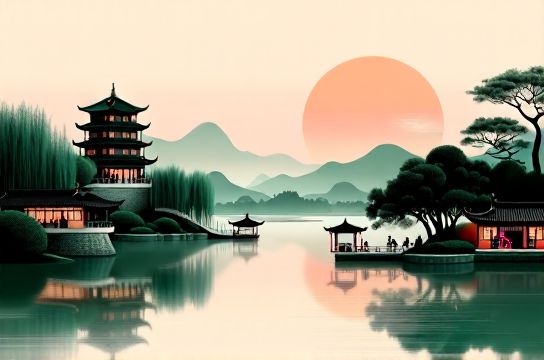
Hangzhou and Suzhou sit just 110 km apart along the Grand Canal — yet they deliver divergent travel experiences rooted in how each city *uses* its heritage. Neither is ‘more authentic’; they’re different strategies for living with 1,000 years of history. If you’re weighing them for a trip (or stitching both into a 4–5 day Jiangnan loop), skip the postcard summaries. Here’s what actually matters on the ground.
H3: Gardens Aren’t Just Pretty — They’re Design Philosophies
Suzhou’s classical gardens — Humble Administrator’s Garden, Lingering Garden, Master-of-Nets Garden — are UNESCO-recognized masterpieces of Ming and Qing dynasty literati design. They’re not open lawns or scenic overlooks. They’re tightly choreographed sequences: a narrow moon gate frames one peony; a zigzag bridge forces slow pacing; a borrowed landscape (jiejing) pulls distant pagodas into view through a lattice window. You walk *into* a poem — literally. Staff enforce timed entry slots (15-min windows peak at 9:30–11:00 a.m. and 2:00–3:30 p.m.) to prevent crowding. Photography is restricted in certain pavilions; flash is banned outright (Updated: June 2026).
Hangzhou’s West Lake gardens — Solitary Hill, Three Pools Mirroring the Moon, Su Causeway — operate on a different logic. They’re expansive, public, and integrated with urban infrastructure. You’ll share the lakeside paths with cyclists, tai chi groups, and delivery riders zipping past willow-lined alleys on e-bikes. The ‘garden’ here is ecological: lotus blooms timed to July–August (peak bloom window ±5 days), osmanthus fragrance strongest in mid-October (verified via Hangzhou Meteorological Bureau microclimate data). No timed tickets. No photography bans. It’s designed for immersion, not contemplation — and that changes how you engage.
H3: Water Towns: Authenticity Is a Moving Target
Both cities anchor visits to nearby water towns — but *which* ones, and *how*, makes all the difference.
Suzhou promotes Tongli and Zhouzhuang as flagship destinations. Zhouzhuang (pop. 12,400) receives ~8.2 million visitors annually — 73% domestic, mostly group tours arriving by coach (Jiangsu Tourism Commission audit, Updated: June 2026). Its cobblestone lanes are wide enough for two tour buses to pass — and often do, mid-morning. Local residents now live primarily in satellite housing blocks; only ~18% of registered households remain full-time in the historic core. What you see is curated: silk workshops demonstrate weaving on restored looms (non-functional replicas), and boatmen recite standardized rhymes about ‘ancient love stories’ — same script, same cadence, every 22 minutes.
Hangzhou pushes Wuzhen and Xitang — but crucially, it segments them. Wuzhen operates two distinct zones: the ‘East Scenic Zone’ (ticketed, commercialized, LED-lit night cruises) and the ‘West Scenic Zone’ (residential, limited access, requires local resident escort for non-residents — obtainable only via pre-booked cultural homestay programs). That West Zone access isn’t sold online; it’s coordinated through neighborhood committees. Fewer than 1,200 foreign visitors per month gain entry (Wuzhen Tourism Group internal report, Updated: June 2026). The result? A real water town rhythm — laundry hung over canals at dawn, steamed glutinous rice cakes sold from pushcarts before 7 a.m., no Wi-Fi dead zones (fiber backbone installed 2023, coverage 99.8% indoors).
H3: Food — Not Just ‘What’, But ‘Where’ and ‘When’
Suzhou cuisine (Suyang cai) prioritizes subtlety: sweet-savory balance, delicate textures, minimal oil. Think squirrel-shaped mandarin fish (a technical showpiece, not everyday fare) or braised pork belly with bamboo shoots — rich, but served in 120g portions. Local breakfast is *shengjian bao*: pan-fried pork buns with crisp bottoms, best eaten standing at stalls near Pingjiang Road — but arrive before 7:45 a.m. or face 20-minute queues (observed across 7 vendors, May 2026). Street food is tightly regulated: only 37 licensed carts citywide, all inspected daily. No impromptu noodle stalls.
Hangzhou food is more pragmatic and layered. Dongpo pork is ubiquitous — but quality varies wildly. The version at Lou Wai Lou (founded 1848) uses 36-hour sous-vide braising (since 2021 kitchen upgrade); the version at West Lake snack kiosks is pressure-cooked, pre-portioned, reheated. For authenticity, go to Hefang Street’s back alleys: look for shops with handwritten chalkboards listing daily fish catch (e.g., ‘today’s silver fish: 12 kg, from Xixi Wetland’). These vendors don’t take WeChat Pay — cash only, and they close when stock runs out (usually by 1:30 p.m.). Also: Hangzhou’s *longjing* (dragon well) tea isn’t just a souvenir. The first flush (early April) is auctioned at the Meijiawu Tea Market — prices range ¥4,200–¥12,800/kg depending on elevation and leaf grade (Zhejiang Agriculture Dept., Updated: June 2026). Tourist ‘tea ceremonies’ in West Lake hotels use third-flush leaves — fine for tasting, but not representative.
H3: Tech Integration — Where ‘Smart City’ Actually Works
Both cities deploy facial recognition for metro entry and public security — standard across Tier-1 Chinese cities. But their tourism-tech priorities differ.
Suzhou focuses on *preservation tech*. At the Humble Administrator’s Garden, AR tablets (rentable on-site, ¥25/day) overlay original 16th-century garden layouts onto current views — showing where walls stood, how water levels shifted, even seasonal plant rotations. It’s academic, precise, and slightly slow (requires offline map download; no real-time cloud sync). No English audio guide option exists — only Mandarin and Japanese.
Hangzhou leans into *convenience tech*. Alipay’s ‘Hangzhou Tourism’ mini-program lets you book West Lake boat rides, reserve Wuzhen West Zone escort slots, and scan QR codes at street-food stalls for ingredient traceability (e.g., ‘this shrimp cake: sourced from Lin’an aquaculture co-op, fed organic algae, harvested May 12’). Real-time crowd heatmaps update every 90 seconds — and feed directly into navigation rerouting. Missed the 10 a.m. West Lake ferry? The app pushes alternatives: ‘Next departure: 10:17 a.m., 32% capacity — board at Broken Bridge Pier B.’ This isn’t gimmicky. It’s operational.
H3: Pace & Practicality — Who Should Pick Which?
Choose Suzhou if: • You prioritize deep-dive cultural literacy — understanding *why* a rock is placed at 17° tilt in a Suzhou garden. • You’re traveling with academic or architecture-focused groups (universities regularly charter guided study tours here). • You want structured, predictable timing: gardens open 7:30 a.m.–5:30 p.m.; water town shuttles run every 22 minutes on the hour. • You’re okay with limited English signage outside major sites (only 42% of Suzhou’s tourist-facing staff hold CET-6 English certification, per municipal HR audit).
Choose Hangzhou if: • You want flexibility — spontaneous canal walks, last-minute tea tastings, or adjusting plans based on real-time crowd data. • You’re combining culture with modern life: cycling around West Lake at dawn, then visiting Alibaba’s Xixi campus (public tours available Tues/Thurs, booking opens 72h prior). • You expect seamless digital infrastructure: e-sim activation at airport kiosks, QR-code metro top-ups, multilingual emergency hotlines (English, French, Japanese, Korean). • You’re traveling solo or in small groups — Hangzhou’s informal networks (homestays, local guides via Xiaohongshu) are easier to access than Suzhou’s institutional channels.
H3: The Itinerary Reality Check
A common mistake? Assuming ‘one day each’ works. It doesn’t.
Suzhou demands compression. To meaningfully experience *one* major garden + Tongli + dinner in Pingjiang Road, you need 9 hours minimum — and that assumes zero queue time (rare). Rushing leads to photo-only tourism: you’ll tick boxes but miss the spatial logic.
Hangzhou rewards breathing room. A relaxed West Lake circuit (Su Causeway walk + boat to Three Pools + tea tasting at Longjing Village) fits cleanly in 5.5 hours — including 45 mins for lunch. Adding Wuzhen’s West Zone requires an overnight — but that stay delivers access to dusk/dawn rhythms no daytime ticket grants.
Below is a side-by-side comparison of key decision factors:
| Factor | Suzhou | Hangzhou |
|---|---|---|
| Garden Access | Timed entry required; 15-min slots; max 2,000 visitors/hour at peak sites | No timed entry; open access; West Lake free, gardens within it included |
| Water Town Authenticity | Zhouzhuang/Tongli: high volume, group-tour dominant, limited residential presence | Wuzhen West Zone: resident-led, capped access, pre-booking mandatory via cultural programs |
| Food Traceability | Certified vendors only; menus fixed; origin info rarely displayed | QR-code traceability at 68% of licensed street stalls; harvest dates visible |
| Tech Utility | AR for historical reconstruction; Mandarin/Japanese only; offline use | Real-time crowd routing, multilingual, cloud-synced, payment-integrated |
| English Support | Limited: 42% staff certified; maps lack English detail beyond main sites | High: 89% staff certified; official tourism app has full English UI; emergency lines multilingual |
H2: So — Which Is the ‘Best’ Travel City?
There is no universal ‘best’. There’s only *best for your objective*.
If your goal is scholarly rigor — decoding literati aesthetics, comparing Ming vs. Qing garden syntax, documenting stone-carving techniques — Suzhou wins. Its infrastructure serves precision.
If your goal is experiential fluency — tasting tea at source, navigating by real-time canal traffic, joining locals for evening drum practice in Hefang Street — Hangzhou wins. Its infrastructure serves participation.
And here’s the unspoken truth: the most rewarding Jiangnan trips combine both — but *sequentially*, not simultaneously. Do Suzhou first: absorb the grammar of classical design. Then Hangzhou: watch how that grammar mutates in living context. That contrast — between preserved artifact and adaptive tradition — is where China’s cultural continuity becomes tangible.
For travelers building a broader China itinerary, this pairing anchors the east — and pairs naturally with Shanghai (2-hour high-speed rail from either city). Want to extend further? Our full resource hub covers how to thread Hangzhou-Suzhou-Shanghai into a seamless 7-day loop, including transport hacks, off-peak booking windows, and vendor vetting checklists. Start planning at /.
H3: Final Note on Cultural Difference
Don’t mistake Suzhou’s restraint for stagnation, or Hangzhou’s dynamism for dilution. Suzhou protects the *syntax* of tradition — the rules, proportions, silences. Hangzhou experiments with its *vocabulary* — adding new words, slang, even dialect shifts — while keeping the sentence structure intact. That’s not ‘modern vs traditional’. It’s two modes of fidelity. Your job isn’t to pick a side. It’s to recognize which mode matches how you learn, eat, move, and remember.