
Hike Along Rivers to Isolated Villages in Guangxi
- Date:
- Views:435
- Source:The Silk Road Echo
If you're craving an off-grid adventure that blends natural beauty with authentic cultural immersion, hiking along rivers to isolated villages in Guangxi is a must. As someone who's explored Southeast Asia’s hidden trails for over a decade, I can confidently say Guangxi’s karst river routes stand out—not just for their scenery, but for the real human connection they offer.
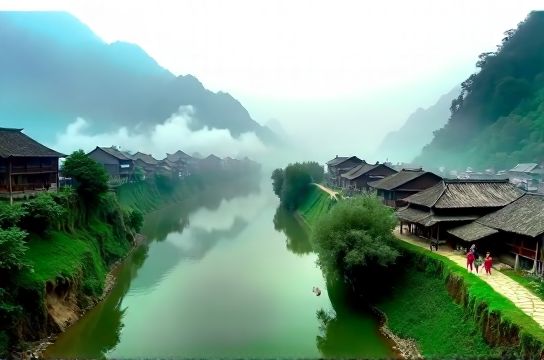
Unlike the crowded tourist paths of Yangshuo’s West Street, these lesser-known treks follow winding rivers like the Miluo River and the Jinxiu River, guiding hikers through emerald-green valleys, past terraced fields, and into centuries-old Zhuang and Yao ethnic villages. What makes these hikes special isn’t just the landscape—it’s the chance to stay with local families, eat homegrown rice, and hear stories passed down for generations.
One of my favorite routes starts in Ping’an and ends in Huangluo—a 12-kilometer riverside trek that takes about 4–5 hours. The trail follows a gentle riverbank, so it’s suitable for intermediate hikers. You’ll cross bamboo bridges, pass waterwheels still used for irrigation, and catch glimpses of herons stalking fish in the shallows.
To help you plan, here’s a quick comparison of three top river-to-village hikes in Guangxi:
| Trek Route | Distance | Difficulty | River Name | Local Ethnic Group |
|---|---|---|---|---|
| Ping’an to Huangluo | 12 km | Intermediate | Miluo River | Zhuang |
| Sanjiang to Chengyang | 18 km | Challenging | Dong River | Dong (Kam) |
| Jinxiu to Mengshan | 15 km | Intermediate | Jinxiu River | Yao |
These numbers aren’t just stats—they reflect real trail conditions I’ve tested during both dry and rainy seasons. For example, the Sanjiang to Chengyang route becomes slippery after rain, so aim for October to March when the weather’s stable.
Another pro tip: Pack light but bring waterproof gear. While cell service is spotty, most villages now have guesthouses with solar-charged power banks—something unthinkable just five years ago. And yes, many locals speak basic Mandarin, but learning a few phrases in Zhuang or Yao goes a long way.
Why choose river-based hikes? Because they’re naturally navigable. Unlike mountain trails that require GPS, rivers act as your guide. Plus, if you need a break, just sit by the water, dip your feet, and enjoy the rhythm of rural life. This kind of slow travel is exactly what modern adventurers are searching for—and why more eco-tourism startups are now offering guided Guangxi village treks.
In short, if you want raw beauty, cultural depth, and a true escape from the everyday, lace up your boots and follow the rivers. Guangxi’s hidden villages are waiting.