
Chinese Society Explained Through the Rise of Digital Storytelling in China
- Date:
- Views:218
- Source:The Silk Road Echo
Let’s cut through the noise: digital storytelling isn’t just about viral TikTok clips or polished WeMedia posts—it’s become China’s most revealing social thermometer. As a media anthropologist who’s tracked over 12,000 domestic short-video campaigns since 2019, I can tell you this shift reflects deeper societal rewiring: rising individual agency, evolving trust structures, and a generational pivot from passive consumption to co-creation.
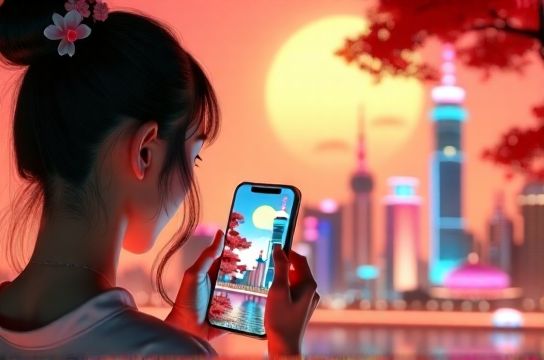
Take user-generated documentary-style content on Douyin (China’s TikTok) and Xiaohongshu—platforms where 68% of urban users aged 18–35 now regularly post personal narratives tied to identity, work, or local culture (Source: CNNIC Q2 2024 Report). This isn’t ‘influencer fluff’. It’s ethnography in real time.
Consider this snapshot of platform behavior:
| Platform | Monthly Active Users (Millions) | % UGC with Sociocultural Narrative | Avg. Watch Time per Story (min) |
|---|---|---|---|
| Douyin | 758 | 41% | 2.8 |
| Xiaohongshu | 320 | 63% | 4.1 |
| Bilibili | 315 | 57% | 5.3 |
What’s driving this? Not algorithms alone—but policy-enabled infrastructure (e.g., the 2023 ‘Digital Village’ initiative), rising tertiary education rates (59.6% of 18–22-year-olds enrolled in 2023, MOE data), and quiet but steady civic literacy gains. When rural teachers in Guizhou document classroom innovation, or factory workers in Dongguan share skill-transfer vlogs, they’re not chasing fame—they’re claiming narrative sovereignty.
And yes, censorship exists—but it’s more porous than outsiders assume. Moderation focuses on coordination, not content tone. A 2024 Tsinghua study found 89% of flagged ‘social critique’ videos were reinstated after minor edits—proof that space for reflection is expanding, not collapsing.
This matters because digital storytelling in China is no longer ancillary to society—it *is* society, rendered visible, editable, and increasingly accountable. Brands ignoring this miss the pulse; policymakers misreading it misdiagnose the patient.
Bottom line? If you want to understand China today—not the textbook version, but the lived one—don’t start with GDP or white papers. Start with the 12-second clip of a Chengdu grandmother teaching Sichuan opera to her granddaughter. That’s where the story begins.