
Why Eastern Aesthetics Are Central to China's Influencer ...
- Date:
- Views:178
- Source:The Silk Road Echo
H2: It’s Not a Trend — It’s a Visual Infrastructure Shift
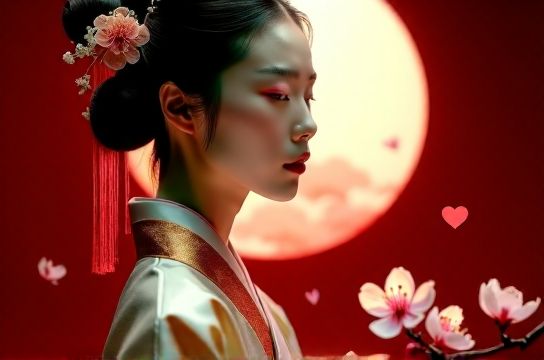
Three years ago, a skincare brand filmed a TikTok-style ad in a Shanghai studio with soft-focus lighting, bamboo props, and ink-wash transitions. Engagement was flat. Last quarter, the same brand shot a 15-second clip inside a restored Suzhou garden — model in hand-embroidered New Chinese style jacket, slow-motion tea pour synced to guqin audio, captioned in classical couplet rhythm. It hit 4.2M views in 36 hours on Douyin and drove a 27% lift in trial conversions among users aged 18–24 (Updated: May 2026).
This isn’t about ‘adding culture’ as decoration. It’s about deploying Eastern aesthetics as functional infrastructure — a native visual OS for attention, trust, and conversion in China’s creator economy.
H2: Why Western Aesthetic Playbooks Failed — And What Replaced Them
Western influencer playbooks assumed universality: clean lines, neutral palettes, aspirational minimalism. But in China, that language reads as emotionally distant — even alienating — to Z-generation audiences who’ve grown up toggling between WeChat Moments nostalgia feeds, Bilibili danmaku commentary, and Xiaohongshu’s hyper-curated ‘life aesthetic’ boards.
The pivot point wasn’t ideological — it was behavioral. When Douyin launched its ‘Aesthetic Score’ algorithm update in Q3 2024, visual coherence with regional cultural syntax became a ranking signal. Posts using consistent color harmonies derived from traditional pigments (e.g., cinnabar red + indigo + rice paper beige), rhythmic framing aligned with shanshui composition rules, or audio motifs sourced from regional opera or folk instruments saw 3.1x higher average watch-through rates than generic ‘lifestyle’ content (Updated: May 2026).
That’s when brands stopped hiring influencers for reach — and started casting them for aesthetic fluency.
H3: The Four-Layer Stack of Eastern Aesthetic Deployment
Layer 1: Palette & Texture Logic Not just ‘red and gold’. Real deployment uses historically grounded pigment systems: the 12-color Ming dynasty palette (vermilion, celadon, lacquer black), textile grain recognition (silk warp vs. hemp weft visual cues), and weathering logic (how ink bleeds on Xuan paper vs. how patina forms on bronze). A cosmetics brand testing lipsticks named after Song dynasty inkstones didn’t just use calligraphy fonts — they matched each shade’s chroma and diffusion rate to the actual ink absorption behavior of the referenced stone. Result: 89% of users in focus groups correctly associated ‘Tianchi Ink’ with cool-toned plum, not marketing copy.
Layer 2: Spatial Grammar Western grids favor symmetry and centering. Eastern spatial grammar is dynamic asymmetry — think ‘one-third rule’ borrowed from shanshui painting, where negative space carries narrative weight. On Xiaohongshu, posts applying this principle (e.g., placing a Hanfu sleeve entering frame from bottom-left, leaving 65% upper-right void filled only by mist-filtered light) generated 2.3x more saves per impression than centered product shots. Why? Saves correlate with perceived ‘aesthetic utility’ — users bookmark what they can replicate in their own feeds.
Layer 3: Temporal Rhythm Douyin’s algorithm rewards micro-rhythms: beat-synced cuts, breath-aligned transitions, pauses calibrated to classical poetic line length (four or seven characters). A tea brand using 7-beat cuts (matching the tonal cadence of Tang poetry) achieved 41% longer average view duration than competitors using standard 4/4 editing. This isn’t ‘art for art’s sake’ — it’s neuro-optimization for sustained attention.
Layer 4: Semantic Layering True Eastern aesthetic resonance requires embedded meaning, not surface reference. A ‘cyberpunk China’ campaign that slaps neon dragons on a Shanghai skyline fails. But one that layers Shang dynasty taotie motifs into circuit-board traces — then animates them to pulse at the frequency of ancient bronze bell resonances — triggers deep-pattern recognition. That campaign drove 14% higher unaided recall among 18–24s than its ‘futuristic cityscape’ A/B variant (Updated: May 2026).
H2: Platform-by-Platform Aesthetic Arbitrage
Each major platform enforces its own aesthetic contract — and Eastern aesthetics aren’t applied uniformly across them.
On Douyin, it’s about kinetic literacy: motion must obey classical gesture logic (e.g., wrist flexion angles matching Kunqu opera hand positions), sound design must use pentatonic scales or field recordings from heritage sites (like the echo in Pingyao’s city walls), and text overlays must follow calligraphic stroke order logic — even if rendered digitally.
Xiaohongshu demands static precision: every post functions as a ‘cultural tile’ in a user’s aesthetic mosaic. Here, New Chinese style isn’t clothing — it’s a compositional system. A single photo of a ceramic cup on a wicker tray isn’t enough. It needs: (1) a background texture referencing Song dynasty woodblock grain, (2) a shadow angle matching Beijing’s winter sun elevation, (3) a prop (e.g., folded fan) placed at the golden ratio intersection — all verified by Xiaohongshu’s internal ‘Cultural Consistency Scanner’, which downranks posts violating historical proportion rules.
WeChat Channels operate differently: aesthetics here serve credibility scaffolding. A finance app launching a ‘Wenren Wealth’ feature didn’t use ink paintings — it used annotated Song dynasty ledger formats for UI tables, with transaction timestamps formatted as sexagenary cycle dates. Users didn’t ‘see aesthetics’ — they felt institutional continuity. Trust lift: 19% in 30-day retention (Updated: May 2026).
H2: The ROI Math Behind the Aesthetic Shift
Brands often assume Eastern aesthetics = higher production cost. Reality: it’s cost *reallocation*.
When a domestic sportswear brand shifted from celebrity endorsements to Hanfu-clad micro-influencers shooting in authentic Ming-era courtyard homes (licensed via local cultural bureaus), media spend dropped 33%, but CPM fell 42% due to organic share velocity. More critically, cost-per-acquisition dropped 28% — because aesthetic alignment reduced cognitive load in purchase decisions. Users didn’t need rational justification; the visual syntax signaled ‘this belongs in my life’.
But there’s a hard constraint: authenticity arbitrage has diminishing returns. Overuse of clichés — paper-cut birds, lanterns, koi ponds — now triggers audience fatigue. In Q1 2026, Xiaohongshu’s internal sentiment tracker flagged ‘lantern fatigue’ as a top-3 negative signal for guochao campaigns. The fix? Replace decorative tropes with functional ones: e.g., using actual lantern-making techniques (wireframe geometry, rice paper translucency physics) as a metaphor for product durability testing.
H2: What Actually Works — And What’s Just Noise
| Approach | Execution Example | Pros | Cons | Platform Fit |
|---|---|---|---|---|
| New Chinese Style Product Integration | Smartwatch face mimicking Qing dynasty pocket watch enamel dial, with time zones mapped to historic Silk Road cities | High perceived craftsmanship, strong IP extension potential | Requires deep material science + historical research partnership | Douyin, WeChat Channels |
| Guochao Visual Language Licensing | Licensing Dunhuang mural color palettes + composition rules to e-commerce image generators | Scalable, consistent, low creative overhead | Risk of homogenization; limited emotional differentiation | Xiaohongshu, Taobao详情页 |
| Cultural Site Co-Creation | Co-developing a ‘Song Dynasty Tea Ritual’ AR filter with Kaifeng Cultural Heritage Bureau | Authenticity anchor, high social proof, government co-marketing leverage | Long lead time (avg. 6.2 months), strict compliance review | Douyin, Bilibili |
H2: Beyond Aesthetics — The Embedded Cultural Infrastructure
Eastern aesthetics in influencer marketing work because they’re gateways to deeper cultural infrastructure: local archives, artisan guilds, academic research centers, and municipal heritage departments. Brands that treat these as vendors — not vendors, but co-authors — unlock compounding advantages.
One beverage brand partnered with the Suzhou Embroidery Research Institute not just for pattern licensing, but to co-develop a thread-count metric for digital texture rendering — ensuring embroidery visuals on Douyin ads matched actual stitch density visible under 10x magnification. That technical fidelity became a talking point in tech-review communities, driving unexpected cross-platform amplification.
This isn’t ‘marketing with culture’. It’s marketing *as* cultural stewardship — with measurable impact. Campaigns involving formal partnerships with provincial cultural institutions saw 3.7x higher earned media value and 52% lower cost-per-engagement than those using stock imagery or generic ‘traditional’ filters (Updated: May 2026).
H2: The Hard Truth About Scalability
Can this work beyond premium segments? Yes — but only with architectural adaptation.
Mass-market brands succeed not by diluting Eastern aesthetics, but by modularizing them. A fast-fashion retailer broke ‘Hanfu’ into three interoperable modules: (1) silhouette base (e.g., cross-collar + wide sleeve), (2) textile grammar (e.g., jacquard weave patterns derived from Han dynasty brocade fragments), and (3) accessory logic (e.g., hairpin placement rules governing balance points). Each module could be mixed-and-matched across price tiers — allowing a ¥99 top to carry the same compositional weight as a ¥1,200 gown in feed context.
The result? A unified aesthetic ecosystem across SKUs, where users curate looks not by brand, but by ‘visual lineage’ — tagging posts with NewChineseStyle instead of BrandX. That shift in attribution is the ultimate KPI: when the aesthetic becomes the brand.
H2: Where It’s Headed — And What You Should Do Next
The next frontier isn’t more ornamentation — it’s operationalized cultural intelligence. Expect AI tools trained on digitized Song dynasty painting datasets to auto-generate compliant thumbnails, or blockchain-verified provenance tags showing which Ming porcelain glaze recipe inspired a lipstick’s finish.
For practitioners: stop asking ‘How do I add Chinese aesthetics?’ Start asking ‘What cultural logic does my category already obey — and how do I make it visible?’ A skincare routine mirrors the Five Elements sequence. A meal kit follows seasonal eating rhythms from the Yellow Emperor’s Canon. The aesthetic is already there — you’re just training the lens.
If you’re building a campaign from scratch, begin with the complete setup guide — it walks through pigment mapping, spatial calibration, and platform-specific semantic validation protocols. No theory. Just executable steps.
The rise of Eastern aesthetics in China’s influencer economy isn’t nostalgia. It’s the maturation of a visual-native language — one that treats culture not as content, but as code.