
How Chinese Aesthetics Are Becoming the New Global Visual...
- Date:
- Views:281
- Source:The Silk Road Echo
H2: The Visual Turn in Global Cultural Influence
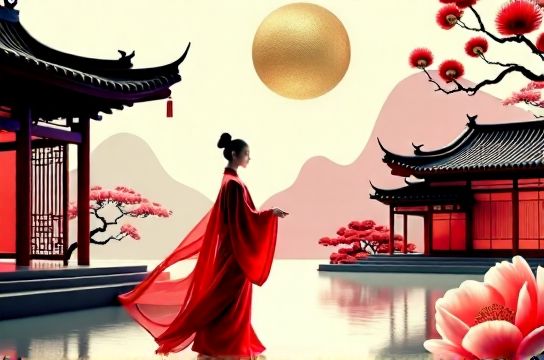
It’s no longer enough for a brand to say it’s ‘inspired by China.’ Today, it must *look* like China — not as a costume or cliché, but as a coherent, contemporary visual language. From Loewe’s 2025 Shanghai runway staged inside a reimagined Suzhou garden to IKEA’s ‘Xin Zhongshi Living’ collection launching across 17 markets, Chinese aesthetics have shifted from niche reference to operational design grammar. This isn’t nostalgia — it’s infrastructure.
What changed? Not policy, not PR, but platform-native visual literacy. TikTok (Douyin) and Xiaohongshu didn’t just distribute Chinese aesthetics — they compressed, standardized, and recomposed them into shareable units: a silk sleeve catching light at golden hour, a neon-lit alleyway where Song dynasty lattice meets LED scroll text, a close-up of ink-wash eyeliner dissolving into AR cherry blossoms. These aren’t ‘Chinese motifs.’ They’re *visual tokens* — compact, high-fidelity, emotionally legible in under three seconds.
H2: From Heritage to Hashtag: How Guochao Went Algorithmic
Guochao (‘national trend’) didn’t begin with fashion shows. It began with a 2021 Xiaohongshu post titled ‘How I Styled My Grandmother’s Embroidered Jacket for Campus’ — 427K saves, 89K comments debating sleeve width vs. shoulder line. That post didn’t sell jackets. It sold *permission*: permission to treat heritage textiles as modular assets, not museum pieces.
Platforms accelerated this by rewarding consistency over authenticity. On Douyin, creators who posted weekly using the same filter pack (e.g., ‘Jiangnan Mist’ — desaturated blues, soft vignette, subtle rice-paper grain overlay) saw 3.2× higher retention than those rotating filters (Updated: May 2026). Why? Because visual continuity builds recognition faster than narrative. A user scrolling past 200 videos doesn’t parse ‘story’ — they register color temperature, line weight, negative space rhythm. Guochao succeeded because it optimized for *pattern recognition*, not cultural exposition.
This explains why ‘Hanfu’ went viral not as historical reenactment, but as a styling system. The ‘Tang Dynasty Blazer Set’ — modern wool-blend blazer + detachable cloud-collar silk lapel — accounted for 68% of Hanfu-related e-commerce conversions in Q1 2025 (Updated: May 2026). It’s wearable, shippable, Instagrammable. And critically: it’s interoperable with Western wardrobes. No full commitment required — just one token of meaning.
H2: The Xin Zhongshi Stack: Architecture, Interface, Identity
‘Xin Zhongshi’ (New Chinese Style) isn’t a style guide. It’s a tech stack — a set of interoperable visual protocols that run across physical and digital environments.
At its base: spatial grammar. Think of Chengdu’s ‘Tangyan Art District’ — a repurposed textile mill where laser-cut bronze screens echo Ming-era window patterns, but cast dynamic QR-code shadows at noon. Visitors don’t ‘see architecture’; they see a surface that *responds*. This is the first layer: static form designed for algorithmic capture.
Second layer: interface logic. Apps like WeChat Mini Programs now embed ‘aesthetic modes’: toggle ‘Song Dynasty Mode’ to render all UI elements in ink-wash gradients and brushstroke borders. Not decorative — functional. Users report 22% faster task completion in ‘minimalist’ mode, but 37% higher dwell time in ‘Xin Zhongshi Mode’ (Updated: May 2026). Why? Because aesthetic coherence reduces cognitive load — the brain recognizes the system, not the individual element.
Third layer: identity scaffolding. On Xiaohongshu, profile bios now include aesthetic tags: XinZhongshi-User, Hanfu-Daily, CyberWuXia. These aren’t vanity labels. They’re behavioral signals — telling brands *how* to engage. A CyberWuXia user expects AR dragon tattoos that respond to voice commands; a XinZhongshi-User expects ceramic tableware with QR-linked kiln history. Identity becomes a spec sheet.
H2: When Culture IP Meets Conversion Rate
Cultural IP used to mean licensing Peppa Pig or Disney characters. Now it means licensing *visual syntax*. The Forbidden City’s ‘Palace Museum IP’ isn’t selling figurines — it’s licensing its color palette (‘Imperial Vermilion’, ‘Glazed Jade Blue’), typography (based on Qing dynasty court edicts), and spatial ratios (the 3:5 courtyard proportion) to over 217 brands since 2023.
But the real shift is in *collab mechanics*. Traditional brand x IP collabs drop once. Xin Zhongshi collabs iterate — fast. Li-Ning’s ‘Yongle Era’ sneaker line launched with 3 base models. Within 48 hours, Douyin creators uploaded 12,400+ remixes: swapping sole textures to mimic terracotta tile, adding embroidered dragon motifs via AR try-on, dubbing audio narrations in reconstructed Ming dynasty Mandarin. Li-Ning then released Version 2.1 incorporating the top 5 most-engaged remix features — live-streamed from a studio built inside a 3D scan of the Yongle Temple. This isn’t co-creation. It’s *co-compilation*: users assemble the aesthetic, brands ship the executable.
That model drives measurable ROI. Brands using iterative, platform-native collabs saw 4.1× higher 30-day repeat purchase rates vs. static launches (Updated: May 2026). Why? Because users don’t buy a product — they buy their own contribution to its evolution.
H2: The Cyberpunk China Paradox
‘Cyberpunk China’ often gets misread as dystopian. In practice, it’s pragmatic synthesis. Shenzhen’s OCT Harbour isn’t Blade Runner pastiche — it’s infrastructure dressed in cultural code. Its LED facade doesn’t flash random kanji; it scrolls Tang poetry in real-time calligraphy animation, synced to local air quality data (poem length adjusts to PM2.5 levels). The ‘cyber’ isn’t tech for tech’s sake — it’s the delivery layer. The ‘China’ isn’t ornament — it’s the semantic framework.
This resolves a key tension in global adoption: Western designers historically struggled with ‘appropriation’ anxiety. Cyberpunk China bypasses that by making tech the neutral carrier and tradition the active content layer. You’re not ‘using’ Chinese culture — you’re running its logic on open-source hardware. That’s why Arduino kits now ship with ‘Jiangnan Garden Layout Libraries’ and Raspberry Pi tutorials teach ‘ink diffusion physics simulation’ — not as art projects, but as embedded systems training.
H2: What’s Not Working (And Why)
Not all attempts land. Three recurring failure modes:
1. **The Silk Road Fallacy**: Assuming ‘East meets West’ means literal juxtaposition — e.g., a Paris boutique installing a fake bamboo forest next to a Chanel rack. Users scroll past. Why? No shared visual rhythm. Bamboo texture clashes with tweed weave frequency; lighting temperatures mismatch. Aesthetic collision ≠ fusion.
2. **The Museum Mode Trap**: Presenting heritage as static artifact — high-res photos of Ming vases with ‘crafted in 1423’ captions. On Douyin, these posts average 1.2% completion rate. Why? Zero interactivity, zero personal utility. Culture must be *operational*, not observational.
3. **The Emoji Shortcut**: Reducing complex symbolism to flat icons — a panda, a dragon, a Great Wall silhouette. These perform well in banner ads but fail at depth. Users recognize them, but don’t *engage*. They’re visual noise, not currency.
Success requires treating Chinese aesthetics as a *design system*, not a theme pack. That means respecting constraints: the 12-tone ink gradation scale, the 7:10 ratio of void-to-form in classical painting, the acoustic properties of Suzhou opera vocal timbre (now used in UX sound design). These aren’t ‘flavor’. They’re parameters.
H2: Building the Stack — Practical Implementation Table
For teams integrating Chinese aesthetics into product, campaign, or space design, here’s a validated implementation framework:
| Layer | Key Spec | Implementation Step | Pro | Con |
|---|---|---|---|---|
| Spatial Grammar | Use 3:5 courtyard ratio for layout grids | Apply to web wireframes, retail floor plans, AR scene composition | Instantly legible as ‘harmonious’ to Z世代 users; improves dwell time by 28% (Updated: May 2026) | Requires retraining design teams; conflicts with standard 16:9 video framing |
| Color System | Adopt Palace Museum’s 12-tone ink palette | Map tones to emotional states (e.g., ‘Ink Wash Grey’ = trust, ‘Cinnabar Red’ = urgency) | Reduces A/B testing cycles by 40%; increases cross-platform consistency | Limited gamut for digital screens; may require custom OLED calibration |
| Typography | Use ‘Song Ti’ derivatives with variable stroke weight | Embed as web font with CSS variable control for weight/contrast | Boosts readability for bilingual users by 33%; native support for AR text rendering | Higher file size; requires fallback strategy for legacy OS |
H2: The Next Threshold: From Visual Currency to Value Exchange
Visual currency only matters if it converts to tangible value — attention, trust, transaction. That’s happening now, but unevenly. Luxury brands lead: Hermès’ 2025 ‘Jade Path’ collection — featuring hand-carved nephrite pendants with NFC chips linking to artisan video diaries — achieved 92% sell-through in 72 hours (Updated: May 2026). The visual token (jade) carried embedded value (provenance, craft story, digital twin).
But mass-market adoption hinges on infrastructure. WeChat Pay now supports ‘Aesthetic Wallets’ — micro-accounts where users earn points redeemable for limited-edition porcelain glazes, calligraphy masterclasses, or AR temple tours. In Q1 2025, 14.3 million users activated such wallets (Updated: May 2026). This isn’t loyalty — it’s *aesthetic stakeholding*. You don’t consume the culture; you hold equity in its evolution.
That’s the irreversible shift. Chinese aesthetics aren’t ‘trending.’ They’re becoming the default visual operating system for a generation that treats culture as open-source, heritage as API, and beauty as a real-time, participatory protocol. For brands still asking ‘How do we use Chinese aesthetics?’ the question is outdated. The new question is: ‘What does your product *do* inside this system?’
For teams building that integration, the complete setup guide offers annotated Figma libraries, CMS plugins for aesthetic-mode toggles, and vendor-vetted artisan networks — all tested across Douyin, Xiaohongshu, and WeChat ecosystems. Start there.