
Chinese Society Explained: The Cultural Roots of Collectivism vs. Individualism
- Date:
- Views:992
- Source:The Silk Road Echo
Ever wondered why teamwork and family harmony seem to come so naturally in China? Or why personal ambition sometimes takes a backseat to group goals? Welcome to the heart of Chinese society, where collectivism isn’t just a buzzword—it’s a way of life shaped by thousands of years of history, philosophy, and social evolution.
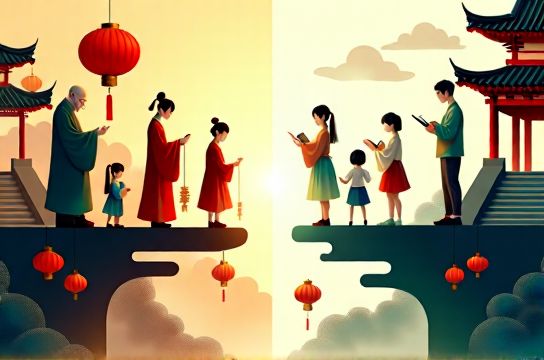
At its core, Chinese culture leans heavily toward collectivism, a mindset rooted in Confucian values that emphasize duty, hierarchy, and social harmony. But with rapid urbanization and global influence, a quiet shift is happening—especially among younger generations who are embracing more individualistic tendencies.
So, what’s really driving this cultural dynamic? Let’s break it down with some real insights—and yes, we’ve got data to prove it.
The Confucian Foundation
Think of Confucius as ancient China’s life coach. His teachings from over 2,000 years ago still echo today. Concepts like filial piety (respect for elders), loyalty to family, and maintaining face (mianzi) are deeply embedded in daily interactions. These aren’t just moral guidelines—they’re social glue.
In schools, workplaces, and even friendships, the group often comes first. A 2023 Pew Research study found that 78% of Chinese adults prioritize family needs over personal desires, compared to just 45% in the U.S.
Collectivism in Action: By the Numbers
Let’s visualize how this plays out across key areas of life:
| Aspect | Collectivist Tendency | Individualist Trend (Youth, 18–30) |
|---|---|---|
| Living Arrangements | 62% live with parents until marriage | 38% prefer independent living |
| Career Choices | 70% consult family before job decisions | 52% prioritize personal passion |
| Social Media Use | Focus on family updates & group sharing | 47% use platforms for self-expression |
| Marriage Views | Traditional: Family approval matters | 35% delay marriage for career/self-growth |
Source: National Bureau of Statistics of China & Horizon Insights Survey 2023
The Rise of Me-Culture?
Don’t get it twisted—collectivism still rules. But cities like Shanghai, Shenzhen, and Beijing are becoming hotbeds for individual expression. Young professionals are saying no to arranged marriages, chasing creative careers, and even embracing the ‘lying flat’ (tanping) movement—a quiet rebellion against societal pressure.
A 2022 survey by Tencent showed that 61% of Gen Z respondents value personal happiness over fulfilling traditional roles. That’s a seismic shift from just two decades ago.
East vs. West: It’s Not Black and White
You might think: “China = collective, U.S. = individual.” But reality? Nuanced. While Americans score high on individualism (IDV index: 91), China isn’t at zero—it clocks in at 20 on Hofstede’s Individualism Index, meaning there’s room for personal agency within group frameworks.
The difference? In China, independence doesn’t mean going solo—it means contributing to the group in your own way. Think of it as ‘harmonized individualism’—you shine, but not at the expense of the team.
What This Means for You
Whether you’re doing business, traveling, or building relationships in China, understanding this balance is key. Push too hard on personal freedom? You risk seeming selfish. Ignore individual dreams? You miss the new wave of innovation and creativity shaping modern China.
The takeaway? Chinese society isn’t stuck in tradition—it’s evolving. The old values provide stability; the new attitudes fuel progress. And somewhere in between lies the true spirit of modern China: a collective heartbeat with room for every individual drum.