
Inside China's 'Involution' Epidemic: How Pressure Shapes Young Lives
- Date:
- Views:594
- Source:The Silk Road Echo
You’ve probably heard the term *involution* floating around online, especially if you’re tuned into what’s going on with young people in China. But what does it really mean? It’s not about plants or biology — we’re talking about a social phenomenon that’s quietly eating away at the mental health and daily lives of millions of Chinese youth.
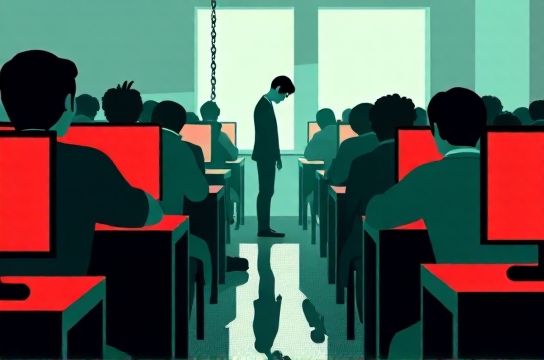
Imagine this: You're working harder than ever, pulling all-nighters, grinding through endless tasks, but somehow… you’re not getting ahead. That’s involution in a nutshell. In Chinese, it’s called *neijuan* (内卷), and it describes a situation where everyone’s putting in more effort, but no one’s actually winning. It’s like running on a treadmill that keeps speeding up — exhausting, frustrating, and honestly, kind of pointless.
This isn’t just about overworked office employees. Involution hits everywhere — from high school students drowning in homework and exam prep, to college grads lining up for thousands of job applications just for one entry-level role, to parents spending small fortunes on tutoring so their kids can ‘keep up.’ The pressure starts early and never really lets go.
Take the Gaokao, China’s national college entrance exam. It’s not just a test — it’s a make-or-break moment that shapes futures. Students study 12+ hours a day for years, all for a shot at a top university. But here’s the kicker: even if you get in, the competition doesn’t stop. Graduating from a prestigious school used to guarantee a good job. Now? Fresh grads are applying for civil service positions that pay less than waitstaff in big cities — because stability beats uncertainty when the system feels rigged.
And let’s talk about work culture. The infamous “996” schedule — 9 a.m. to 9 p.m., six days a week — still lingers in tech and other industries. People don’t do it because they love overtime; they do it because if they don’t, someone else will. That’s involution: no real progress, just an endless race where the only rule is “don’t fall behind.”
Social media makes it worse. We scroll through feeds full of curated success stories — dream jobs, luxury trips, perfect relationships — and feel like we’re failing by comparison. But behind the scenes? Many of those influencers are burnt out, anxious, and secretly wishing for a way out.
So what’s the solution? Some young people are quietly opting out — embracing *tang ping* (躺平), or “lying flat.” It’s not laziness; it’s a form of quiet resistance. Choosing simplicity, rejecting endless competition, and saying, “I don’t have to hustle to be worthy.”
Change won’t happen overnight. But awareness is growing. More people are talking about mental health, redefining success, and pushing back against unrealistic expectations. Maybe the future isn’t about working harder — but working smarter, living better, and finally stepping off the treadmill.