
From 'Involution' to 'Lying Flat': Understanding China's Internet Slang in 2024
- Date:
- Views:302
- Source:The Silk Road Echo
Alright, let’s talk about something you’ve probably seen floating around online—those weird, catchy Chinese internet phrases like ‘involution’ and ‘lying flat.’ If you’re scratching your head wondering what they mean and why everyone’s suddenly obsessed, don’t worry—you’re not alone. By 2024, these terms aren’t just slang; they’re social movements wrapped in memes, and they’re telling a bigger story about life in modern China.
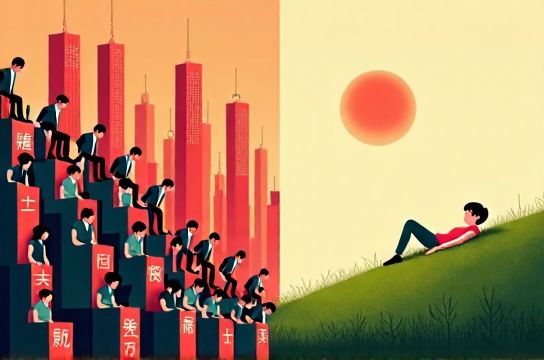
First up: ‘involution,’ or *neijuan* (内卷) in Mandarin. No, it’s not about rolling things up—it’s about spinning in place. Imagine working harder and harder but going nowhere. That’s involution. It started as a buzzword among students and young professionals who felt trapped in endless competition: longer hours, more degrees, zero rewards. You study all night? Cool. But so does everyone else. So now you have to study *all night and run a side hustle*. That’s neijuan—grinding without growth.
Then came the backlash: ‘lying flat,’ or *tangping* (躺平). This one went viral because it was basically the Gen Z middle finger to burnout culture. Lying flat doesn’t mean you’re lazy (well, not exactly). It means opting out of the rat race. Want to work only 30 hours a week? Fine. Dream of buying a house in Beijing? Nah, I’ll rent and chill. It’s minimalism with an attitude—a quiet protest against never-ending hustle porn.
Fast forward to 2024, and these phrases aren’t just trending—they’re shaping mindsets. Companies are noticing. Some employers are even adjusting work policies, offering four-day weeks or mental health days, all because workers said, ‘We’re not playing the old game anymore.’
But here’s the twist: lying flat isn’t always literal. For many, it’s more about mindset than lifestyle. It’s saying, ‘I won’t let my worth be defined by promotions or paychecks.’ Meanwhile, involution has evolved too—it’s now used to roast everything from overcrowded job markets to parents pushing toddlers into ‘elite’ preschools at age two. Yep, it’s that deep.
Why should you care? Because this isn’t just China being quirky. These terms reflect global anxieties about overwork, inequality, and the myth of meritocracy. Sound familiar? Yeah, the U.S. has its ‘quiet quitting,’ and Korea talks about *gapjil*—abusive power dynamics. We’re all feeling the pressure, but China’s internet culture just gave it a sharper, funnier voice.
So next time you see ‘neijuan’ or ‘tangping’ pop up, don’t just scroll past. They’re more than slang—they’re survival strategies in the digital age. And honestly? A little bit of lying flat might be exactly what we all need once in a while.