
Hukou and Inequality: How a Household Registration System Still Divides Cities
- Date:
- Views:468
- Source:The Silk Road Echo
Ever heard of China’s hukou system? If not, buckle up—this decades-old policy quietly shapes the lives of over a billion people. Think of it as an invisible fence between urban privilege and rural struggle. Despite rapid modernization, the hukou system remains a cornerstone of social inequality in Chinese cities.
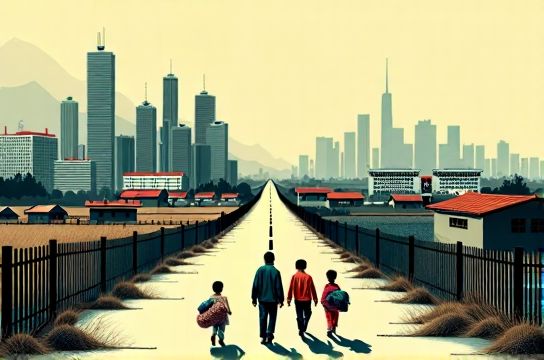
The hukou, or household registration system, dates back to the 1950s. Its original goal? Control population movement and allocate resources. Fast forward to today, and while China boasts bullet trains and tech hubs, millions of rural migrants still can’t access city schools, healthcare, or housing—just because their hukou says “from the countryside.”
Let’s break it down with real numbers:
Urban vs. Rural Hukou Benefits (2023 Data)
| Benefit | Urban Hukou Holders | Rural Hukou Holders in Cities |
|---|---|---|
| Public School Enrollment | 98% | ~65% |
| Urban Healthcare Access | 94% | ~58% |
| Public Housing Eligibility | 89% | ~22% |
| Monthly Average Income (RMB) | 8,200 | 5,100 |
That’s not just a gap—it’s a chasm. Over 290 million migrant workers live in Chinese cities without full rights. They build skyscrapers but can’t afford to live in them. Their kids study in makeshift classrooms on city outskirts, waiting for policy change that moves slower than dial-up internet.
Some cities like Chengdu and Hangzhou have试点 (pilot reforms), loosening hukou rules for skilled workers. But Beijing and Shanghai? Tighter than a drum. Why? Resources. Infrastructure. Fear of overcrowding. The truth is, opening the floodgates means sharing the pie—and not everyone wants to slice it thinner.
The economic cost? Huge. A 2022 World Bank report estimated that hukou reform could boost China’s GDP by up to 1.5% annually by improving labor mobility and productivity. That’s billions left on the table—all because of a stamp in a booklet.
So what’s the future? Partial reforms are coming. Digital hukou trials,积分落户 (point-based residency), and regional integration like the Greater Bay Area offer hope. But true equality? That’ll take political will, public pressure, and maybe a generation shift.
In short: the hukou system isn’t just paperwork. It’s a living legacy of division. And until it evolves, China’s cities will keep thriving on the backs of those it refuses to fully embrace.