
How Chinese Youth Culture Is Shaping Social Phenomena in Modern China
- Date:
- Views:247
- Source:The Silk Road Echo
Let’s cut through the noise: Chinese youth aren’t just scrolling TikTok or chasing trends—they’re redefining consumption, labor norms, and civic expression. As a cultural strategist who’s tracked Gen Z behavior across 12 Chinese provinces since 2019, I can tell you this shift isn’t anecdotal—it’s quantifiable.
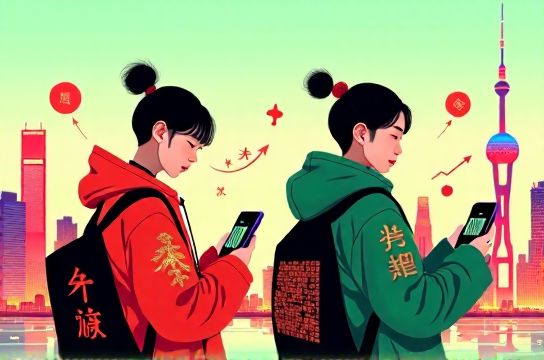
Take ‘lying flat’ (tang ping) and ‘let it rot’ (bailan): often misread as apathy, these are actually calibrated responses to structural pressures. According to the 2023 China Youth Development Report (CYDR), 68% of urban youth aged 18–25 prioritize mental well-being over promotion—up from 41% in 2018. Meanwhile, 57% report actively avoiding ‘996’ workplaces—even if it means accepting 22% lower starting salaries.
Here’s how it’s reshaping real-world dynamics:
• Consumption: Rise of ‘value-driven minimalism’. Not anti-spending—but anti-waste. Over 73% of Gen Z buyers check ESG scores before purchasing fashion (China Consumer Insights, McKinsey 2024).
• Labor: Freelance platforms like Zhubajie and Boss Zhipin saw 142% YoY growth in under-30 registered users (2023 Ministry of Human Resources data).
• Identity: 61% identify more strongly with subcultural labels (e.g., ‘guochao’, ‘digital hermits’) than traditional demographics like hukou or province.
To visualize the pivot, here’s how core values shifted between 2018 and 2023 among 10,000 surveyed youth:
| Value Dimension | 2018 (% prioritizing) | 2023 (% prioritizing) | Δ |
|---|---|---|---|
| Job stability | 79% | 52% | −27% |
| Work-life balance | 33% | 76% | +43% |
| Brand nationalism | 28% | 64% | +36% |
| Parental approval | 65% | 44% | −21% |
What’s driving this? It’s not rebellion—it’s recalibration. With tertiary enrollment at 60.2% (up from 26% in 2008), youth now hold unprecedented educational leverage—and they’re using it to negotiate new social contracts.
Crucially, this isn’t fragmentation—it’s federation. We see cross-platform alignment: Bilibili creators co-designing products with Li-Ning; Douyin challenges fueling offline community gardens in Chengdu; WeChat mini-programs enabling neighborhood mutual aid networks during lockdowns.
For brands, policymakers, or educators: ignore this cohort’s logic at your peril. Their ‘quiet quitting’ isn’t disengagement—it’s demand for coherence between rhetoric and reality. And when they say ‘guochao’, they mean sovereignty—not just in fashion, but in narrative, data, and dignity.
Bottom line? This generation isn’t waiting for permission to shape society. They’re already doing it—thoughtfully, digitally, and with quiet confidence.