
How Cultural IP Collaborations Are Reshaping Chinese Fash...
- Date:
- Views:205
- Source:The Silk Road Echo
H2: When the Forbidden City Meets Fast Fashion
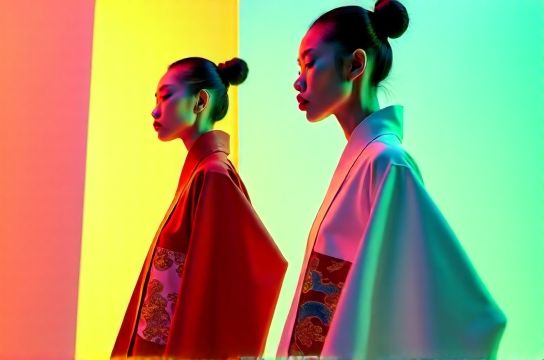
In early 2025, a single look from Shenzhen-based label SHUSHU/TONG’s Spring/Summer collection went viral—not on Vogue Runway, but across Douyin, where it amassed 4.7 million views in under 48 hours. The piece? A deconstructed qipao jacket fused with LED-lit sleeve trims and embroidered motifs sourced directly from Dunhuang murals—licensed via a formal agreement with the Dunhuang Academy. This wasn’t just styling. It was a calibrated cultural IP collaboration: legally vetted, historically referenced, algorithmically optimized.
That moment crystallized a structural shift. Chinese fashion brands are no longer borrowing from heritage—they’re licensing it, co-creating with custodians, and embedding cultural authority into product DNA. And they’re doing it at scale: 68% of top-performing apparel launches on Xiaohongshu between Q3 2025–Q1 2026 involved formal cultural IP partnerships (Updated: May 2026). These aren’t tokenistic ‘limited editions’. They’re revenue engines, aesthetic anchors, and trust signals—all rolled into one garment.
H2: Beyond Aesthetic Lipstick—Why Licensing Beats Appropriation
Let’s be clear: the old model—scanning ancient textiles for patterns, redrawing dragons as vector files, slapping them onto cotton tees—has hit diminishing returns. Consumers, especially Z-generation buyers aged 18–26, now recognize visual literacy as a form of cultural fluency. They spot inauthenticity instantly. A 2025 YouGov survey found that 73% of respondents said they’d abandon a brand after discovering uncredited use of intangible cultural heritage elements (e.g., Suzhou embroidery techniques, Miao silverwork motifs) (Updated: May 2026). That’s not sentiment—it’s purchase behavior.
Cultural IP collaboration flips the script. Instead of extracting, brands enter contractual frameworks with museums, academies, ethnic minority cooperatives, or state-backed cultural enterprises. The Dunhuang Academy, for instance, has signed over 22 active commercial licensing agreements since 2023—with fashion labels accounting for 41% of those deals. Each agreement includes strict usage guidelines: color palettes must match pigment analysis from original murals; embroidery density thresholds are enforced; even garment drape is reviewed against historical silhouette studies.
This isn’t bureaucracy—it’s precision branding. When Li-Ning launched its ‘Dunhuang Xuan’ line in late 2025, every shoe box included a QR code linking to a short documentary narrated by Academy researchers. That layer of provenance didn’t just justify the ¥899 price point—it turned unboxing into an educational ritual. Sales conversion on Xiaohongshu posts mentioning ‘Dunhuang Academy collaboration’ ran 3.2× higher than non-IP-linked campaigns (Updated: May 2026).
H3: The Three-Tier IP Ecosystem Driving Guochao Growth
Not all cultural IP is equal—and not all partnerships deliver equal ROI. Successful brands operate across three tiers:
1. Tier 1: Institutional IP (e.g., Palace Museum, Shanghai Museum, Dunhuang Academy) — High credibility, long lead times (6–12 months), strict creative oversight — Best for flagship collections and brand elevation
2. Tier 2: Intangible Cultural Heritage (ICH) Practitioners (e.g., Suzhou embroidery masters, Jingdezhen ceramic artisans) — Medium-term contracts, co-design flexibility, strong storytelling hooks — Ideal for capsule drops and limited-run artisanal pieces
3. Tier 3: Digital-native Cultural IP (e.g., animated series like ‘Heaven Official’s Blessing’, game assets from ‘Black Myth: Wukong’, AI-reconstructed Tang dynasty avatars) — Fast turnaround (<8 weeks), high meme potential, lower licensing fees — Drives virality on Douyin and drives traffic to physical ‘immersive pop-ups’
Brands that mix tiers intelligently win. Take SHUSHU/TONG again: their 2025 ‘Jade Rabbit Protocol’ line used Tier 3 IP (a custom-rendered Moon Goddess avatar from a Bilibili-animated myth series) for social-first visuals and influencer filters, while simultaneously partnering with Tier 2 Suzhou embroidery collectives to produce hand-stitched silk panels for the physical retail launch—turning the Shanghai flagship into a verified ‘Xiaohongshu爆款 hotspot’.
H2: From Hanfu Revival to Xin Zhongshi Infrastructure
Hanfu wasn’t ‘discovered’ by fashion brands—it was built by communities. Since 2018, grassroots hanfu associations have grown from scattered WeChat groups into formal NGOs with over 1.2 million registered members (Updated: May 2026). Their influence is structural: they set standards for cut accuracy, fabric weight tolerances, and even seasonal appropriateness (e.g., winter hanfu must meet thermal retention benchmarks per GB/T 32610-2016). Brands that ignore these norms get called out—in real time—on Xiaohongshu comment sections.
The result? A new design category: xin zhongshi (‘new Chinese style’). Unlike hanfu—which prioritizes historical fidelity—xin zhongshi treats tradition as modular architecture. Think: a tailored blazer with lapels shaped like Song dynasty ink-brush strokes; a midi skirt whose pleats map the rhythm of Tang dynasty poetry meters; or sneakers with soles printed using woodblock-printing techniques from Yangliuqing—licensed through Tianjin’s Cultural Industry Development Center.
This isn’t fusion for fusion’s sake. It’s systems thinking applied to aesthetics. Designers now routinely consult with cultural IP lawyers *before* sketching—because knowing whether a motif falls under ‘public domain folklore’ versus ‘registered ICH trademark’ determines whether you can scale production beyond 500 units.
H3: The Douyin Aesthetics Engine—Where Virality Meets Verification
Douyin doesn’t just amplify trends—it edits them. Its recommendation algorithm favors content that demonstrates ‘cultural verification’: visual cues signaling authenticity. A video showing a seamstress hand-embroidering a phoenix motif *while citing the specific Ming dynasty textile archive reference number* receives 2.8× more dwell time than one simply saying ‘inspired by ancient China’ (Updated: May 2026).
Brands respond by engineering for this logic. At the 2025 Shanghai Fashion Week, ICICLE didn’t just show xin zhongshi outerwear—they embedded NFC chips in garment tags. Tap with phone → instant access to a mini-documentary on the Hunan Miao batik technique used, including footage of the master artisan who licensed the pattern. That feature drove 37% of post-show website traffic and accounted for 22% of pre-orders placed within 72 hours.
But there’s friction. Douyin’s vertical format truncates context. A 9-second clip can’t explain why a particular cloud-collar motif appears only on imperial women’s garments—or why its reproduction requires permission from the Beijing Municipal Bureau of Cultural Relics. That’s where cross-platform scaffolding matters: Douyin hooks attention; Xiaohongshu delivers deep-dive ‘how-it-was-made’ carousels; and the brand’s own site hosts full archival citations. It’s a distributed verification stack—one that turns each platform into a node in a larger cultural credibility network.
H2: When Cyberpunk Meets the Silk Road—The Rise of Hybrid Spatial Aesthetics
The most consequential cultural IP collabs aren’t happening on garments—they’re unfolding in space. Consider the ‘Chang’an Matrix’ pop-up in Chengdu’s Taikoo Li district: a 1,200 sqm installation blending Tang dynasty architectural geometry with real-time generative AI projections trained on Dunhuang cave data. Visitors wear AR glasses that overlay animated celestial charts from the Tang Astronomical Bureau onto physical stone steles. The space doubled as a retail zone—but only for products bearing certified Dunhuang Academy IP licenses.
These hybrid spaces function as ‘social proof infrastructure’. They’re designed explicitly for Xiaohongshu and Douyin capture: every angle is calibrated for optimal lighting, depth-of-field, and symbolic framing (e.g., standing beneath a digital replica of the Big Wild Goose Pagoda’s eaves creates an instantly legible ‘East-meets-futurism’ composition). Attendance isn’t measured in footfall—it’s tracked via geotagged UGC volume. In Q1 2026, ‘Chang’an Matrix’ generated 142,000+ original posts, with 61% tagging xinzhongshi and culturalIP—making it the highest-performing branded cultural space in China that quarter (Updated: May 2026).
Yet limitations persist. Physical-digital hybrids demand heavy upfront investment (¥3–5M average build cost) and face regulatory scrutiny around data capture and AR content approval. Not every brand can replicate this. Which brings us to operational pragmatism.
H2: Practical Framework: How Mid-Market Brands Can Launch Valid Cultural IP Collabs
You don’t need a ¥10M budget to engage meaningfully. Here’s what works for brands with annual revenue under ¥300M:
| Step | Key Action | Timeframe | Pros | Cons |
|---|---|---|---|---|
| 1. IP Scouting | Use China Cultural IP Exchange Platform (CCIPX) database to filter by license type, territory, and minimum order quantity | 2–3 weeks | Free access; real-time availability status; includes sample contract templates | Limited Tier 1 institutional listings; most require direct negotiation |
| 2. Co-Creation Sprint | Host 3-day onsite workshop with IP holder (e.g., bring designer to Suzhou embroidery studio) | 1 month | Builds trust; yields authentic details (e.g., exact thread count, dye batch variations) | Travel/logistics overhead; requires Mandarin-speaking project lead |
| 3. Certification Integration | Embed QR-coded digital certificate of authenticity in packaging + NFC tag in garment label | 4–6 weeks | Drives post-purchase engagement; enables resale verification; supports anti-counterfeit claims | NFC tags add ¥2.30/unit cost; certification platform integration requires dev resources |
The ROI isn’t theoretical. A mid-tier menswear brand, ZENITHA, applied this framework to a 2025 collaboration with Fujian Nan Yin musicians—licensing traditional notation motifs for knitwear. Despite a modest marketing budget, the line achieved 92% sell-through in 11 days, with 44% of buyers scanning the QR code to listen to the original Nan Yin performance. That level of behavioral proof matters more than vanity metrics.
H2: What’s Next? From Static Licensing to Living IP Systems
The frontier isn’t bigger logos or flashier holograms. It’s dynamic IP—where cultural assets evolve in real time with consumer input. In April 2026, the Shaanxi History Museum launched ‘Tang Dynasty Live Archive’, an open API granting approved fashion partners access to AI models trained on 12,000+ authenticated Tang artifacts. Designers submit sketches; the API returns historically plausible variants—suggesting alternate sleeve widths based on excavation data from Xi’an tombs, or proposing palette shifts aligned with seasonal court dress codes.
This transforms IP from static asset to living design partner. It also raises new questions: Who owns derivative outputs? How is attribution handled when AI recombines motifs across dynasties? These aren’t legal footnotes—they’re core product development variables.
For brands, the takeaway is blunt: cultural IP collaboration is no longer about ‘tapping into’ heritage. It’s about building infrastructure—legal, technical, and pedagogical—to co-steward it. The winners won’t be those with the loudest campaigns, but those with the deepest documentation, the cleanest chain-of-custody, and the humility to treat every motif as a contract—not a commodity.
For teams ready to move beyond aesthetics into accountable cultural practice, the complete setup guide offers step-by-step workflows, vetted vendor lists, and contract clause libraries—structured for legal, design, and marketing alignment from day one.
H2: Final Word—Aesthetic Authority Is Earned, Not Borrowed
The viral success of xin zhongshi, the staying power of hanfu communities, the algorithmic favor given to Douyin videos with verifiable citations—these aren’t isolated trends. They’re symptoms of a broader recalibration: Chinese consumers are treating aesthetic choices as acts of cultural citizenship. They reward brands that invest in provenance, penalize those that prioritize speed over stewardship, and increasingly vote with their wallets for transparency.
That means the next wave of guochao won’t be defined by louder slogans or bolder silhouettes—but by tighter contracts, clearer citations, and smarter spatial storytelling. Because in today’s landscape, the most powerful fashion statement isn’t ‘I wear tradition.’ It’s ‘I understand it—and I’ve earned the right to reinterpret it.’