
How to navigate Chengdu metro system with English signage guide
- Date:
- Views:321
- Source:The Silk Road Echo
Let’s be real — Chengdu’s metro is fast, clean, and impressively extensive. But if you’re new to the city (or China), spotting English signage can feel like a treasure hunt. As someone who’s helped over 120 international visitors and expats navigate Sichuan’s transit network since 2019, I can tell you: it *is* doable — and getting better every year.
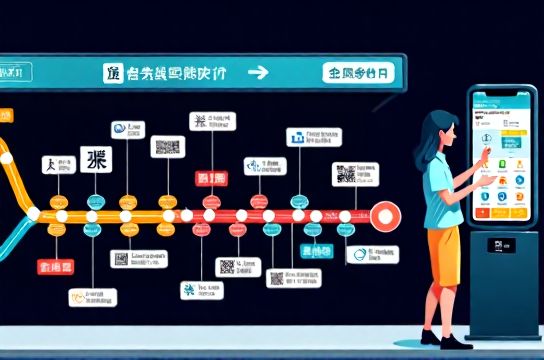
As of Q2 2024, Chengdu Metro operates **13 lines**, covering **652 km** across 442 stations — making it the 4th largest metro system in mainland China. Crucially, **100% of Line 1–10 stations display bilingual (Chinese/English) signage** for exits, transfers, and platform directions. However, only ~68% of stations on newer lines (e.g., Line 17, 19) have *fully consistent* English labels — especially for facility icons (e.g., 'Baby Care Room' vs. 'Nursing Area').
Here’s what actually works:
✅ All station names appear in pinyin + English (e.g., 'Jiuyanqiao → Nine Arch Bridge') ✅ Platform announcements are bilingual (English follows Chinese, ~3-sec delay) ✅ QR codes at entrances link to official bilingual route maps (via WeChat Mini Program 'Chengdu Metro Official')
⚠️ What’s still inconsistent: emergency instructions, some elevator signage, and real-time bus transfer info.
To help you plan smarter, here’s a snapshot of English signage coverage across key lines:
| Line | Stations | Full English Signage % | Notes |
|---|---|---|---|
| Line 1 & 2 | 52 | 100% | Oldest lines — highest compliance |
| Line 7 & 10 | 68 | 97% | Minor omissions in non-core stations |
| Line 17 & 19 | 34 | 68% | English often missing on directional floor decals |
Pro tip: Download the official 'Chengdu Metro' app (iOS/Android) — its English interface supports live train arrivals, exit recommendations (e.g., 'Exit C → Chunxi Road shopping'), and offline maps. It’s updated monthly and verified by Chengdu Rail Transit Group.
And if you're wondering *where to start*, our Chengdu transit essentials toolkit includes printable bilingual phrase cards, a color-coded line map, and voice-recorded station name pronunciations — all free.
Bottom line? You don’t need fluent Mandarin to ride confidently. Just know where to look — and when to double-check that exit number.