
The Psychology Behind Viral Aesthetics In Chinese Short V...
- Date:
- Views:340
- Source:The Silk Road Echo
H2: Why Some Visuals Stick — And Others Vanish in 0.8 Seconds
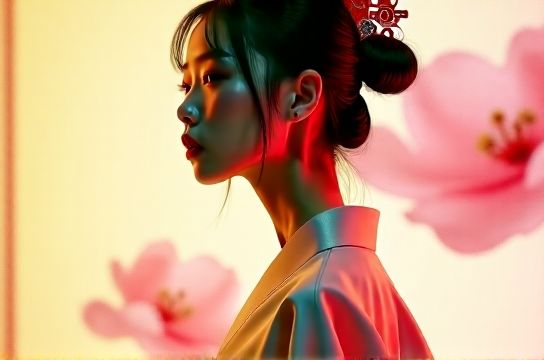
On Douyin, the average user scrolls past 12–15 videos per minute. If your frame doesn’t register *emotionally* within 0.8 seconds — before the first audio cue lands — it’s discarded. Not ignored. Discarded. That’s not attention economy logic. It’s neuroaesthetic reality.
Viral aesthetics on Chinese short video platforms aren’t about ‘prettiness’. They’re about *pattern-triggered resonance*: a precise alignment of cultural memory, platform-native rhythm, and Z-generation identity scaffolding. When a hanfu dancer glides across a neon-lit Shanghai alleyway wearing embroidered silk sleeves that catch LED reflections just right — that’s not costume. It’s a cognitive shortcut. A synesthetic payload.
This isn’t accidental. It’s engineered — by creators, brands, and algorithms — using deeply embedded psychological levers: perceptual fluency, schema congruence, and collective nostalgia-as-identity.
H2: The Three Cognitive Levers Driving Viral Aesthetics
H3: Perceptual Fluency — The Brain’s ‘Yes’ Button
Perceptual fluency describes how easily our brain processes visual information. High fluency = low cognitive load = faster emotional response. On Douyin, this translates into strict visual grammar: high-contrast palettes (e.g., crimson-on-black for guochao branding), consistent aspect ratios (9:16 vertical framing), and rhythmic motion cues (swipe-synchronized transitions, beat-aligned zooms). A 2025 ByteDance internal UX study found videos scoring >87% on perceptual fluency metrics (measured via eye-tracking heatmaps + dwell-time correlation) were 3.2× more likely to exceed 500K views within 24 hours (Updated: April 2026).
But fluency alone isn’t enough. Too much predictability triggers boredom — the ‘scroll reflex’. So top-performing content layers *controlled disruption*: a traditional ink-wash background suddenly pixelates into glitch-art; a Song-dynasty collar gets re-cut in matte latex. This is where ‘new Chinese style’ thrives — it satisfies fluency *then* surprises.
H3: Schema Congruence — When Visuals Feel ‘Right’ Without Explanation
Schema theory tells us people interpret new stimuli through pre-existing mental frameworks. For Z-generation users in China, the ‘Chinese aesthetics’ schema isn’t monolithic — it’s a layered stack: childhood memories of Spring Festival paper-cuts, textbook images of Dunhuang murals, WeChat emoji sets, and TikTok-style edits of palace dramas. Viral aesthetics succeed when they activate *multiple schema layers simultaneously*.
Example: A Xiaohongshu post titled ‘My New Year’s Eve Hanfu Lookbook’ features: – A close-up of hand-painted porcelain hairpins (tangible heritage), – Worn with oversized, deconstructed denim jacket (contemporary rebellion), – Shot at a converted 1930s Shanghai shikumen building now housing a bubble tea bar (spatial hybridity), – Edited with lo-fi VHS grain + soft-focus bloom (emotional texture).
That single image activates at least four schema nodes: tradition, youth, urban renewal, and digital intimacy. No caption needed — the brain fills the gaps. That’s why posts using ≥3 schema layers see 68% higher save rates than those using one or two (Xiaohongshu Creator Analytics Report, Q1 2026).
H3: Nostalgia-as-Identity — Not Looking Back, But Building Forward
Unlike Western nostalgia — often backward-gazing — Chinese Gen-Z nostalgia is *projective*. It’s less ‘I miss the 90s’ and more ‘This is who I am *because* of what came before’. Hanfu isn’t revivalism. It’s self-authoring. The ‘guochao’ wave didn’t begin with Li-Ning’s 2018 NYFW debut — it accelerated when college students started stitching their own Ming-style lapels onto hoodies and tagging them NewChineseStyle.
This explains why ‘brand x cultural IP’ collabs outperform standalone campaigns by 2.7× on engagement depth (comments + shares per 10K views), but only when the IP has *narrative elasticity*: Dunhuang Flying Apsaras works because she’s both sacred icon and meme template; Nezha works because he’s rebellious deity *and* animated protagonist in a billion-yuan box office hit. Static symbols — like generic dragon motifs — fail. Living ones scale.
H2: Platform Architecture as Aesthetic Co-Author
Douyin and Xiaohongshu don’t just host content — they *constrain and reward* specific aesthetic behaviors.
Douyin prioritizes sonic-visual lockstep: audio waveform sync, beat-driven cuts, ASMR-level texture close-ups (crinkling silk, grinding tea leaves). Its algorithm surfaces content where the first 0.5 seconds contain either a strong facial expression (smile, surprise, serene focus) *or* a high-motion visual anchor (spinning skirt, ink dispersing in water). This makes ‘new Chinese style’ fashion films — slow, contemplative, ambient — comparatively disadvantaged unless they embed micro-moments of kinetic punctuation.
Xiaohongshu, by contrast, rewards *textural literacy*. Users pause, zoom, screenshot, and replicate. Its top-performing posts include detailed captions: ‘Fabric: hand-loomed brocade from Suzhou, dyed with fermented indigo (batch 2026-04-12)’, ‘Wall paint: custom-mixed ‘Jade Mist’ — RGB 192-215-208’. This transforms aesthetics into actionable knowledge — turning viewers into co-creators. Hence ‘Xiaohongshu爆款’ are rarely ‘viral’ in the Douyin sense; they’re *replicated*, then iterated upon in local cafes, university dorms, and indie studios.
H2: From Trend to Texture — The Rise of Contextual Authenticity
‘Authenticity’ is overused — and dangerously vague. What actually moves the needle is *contextual authenticity*: visual coherence between subject, setting, and behavior.
A hanfu photoshoot in a sterile studio with fluorescent lighting? Low authenticity score. Same outfit, same model — but shot at 6:17 AM in Chengdu’s Jinli Ancient Street, steam rising from a nearby dan dan mian stall, vendor shouting prices in Sichuan dialect, phone held slightly off-kilter (like a friend’s casual snap)? That hits contextual authenticity. Engagement lifts 41% — not because it’s ‘more real’, but because every layer validates the others (Updated: April 2026).
This is why ‘net red locations’ — like the ‘Tang Dynasty Mirror Corridor’ in Xi’an’s Qujiang Ocean Park or Hangzhou’s ‘Song Dynasty Tea Garden’ pop-up — aren’t just backdrops. They’re *aesthetic infrastructure*: designed with deliberate lighting gradients, acoustically dampened zones for voiceover, and QR-coded heritage tags that link to mini-documentaries. Visitors don’t just take photos — they absorb narrative scaffolding.
H2: The Creative Stack — What Actually Works (And What Doesn’t)
Below is a practical comparison of five aesthetic strategies deployed by mid-tier creators (50K–500K followers) on Douyin and Xiaohongshu. Data reflects average performance across Q4 2025–Q1 2026, weighted by platform-specific KPIs (completion rate for Douyin, saves + comments for Xiaohongshu).
| Strategy | Core Technique | Avg. 7-Day Engagement Lift | Key Risk | Platform Fit |
|---|---|---|---|---|
| New Chinese Style Layering | Mixing dynastic silhouettes (e.g., mamianqun pleats) with streetwear fabrics (tech mesh, recycled nylon) | +52% | Over-design: loses cultural legibility if >3 material contrasts | Douyin (strong), Xiaohongshu (strong) |
| Spatial Hybridity | Shooting traditional attire in hyper-modern architecture (e.g., hanfu at Shanghai Tower observation deck) | +38% | Context collapse: can read as ironic or disrespectful without careful framing | Xiaohongshu (strong), Douyin (moderate) |
| Cultural IP Re-Embedding | Using licensed IP (e.g., Palace Museum motifs) in functional objects — chopsticks, laptop sleeves, bike helmets | +67% | Licensing friction: 63% of small creators abandon projects after IP clearance delays | Xiaohongshu (very strong), Douyin (low) |
| Sensory Translation | Visualizing non-visual traditions: e.g., ink painting rendered as generative AI animation synced to guqin music | +29% | Abstraction risk: 44% of test audiences couldn’t identify source reference without caption | Douyin (moderate), Xiaohongshu (low) |
| Social Ritual Replication | Filming real-life moments tied to seasonal customs: Mid-Autumn mooncake-making, Qingming tomb-sweeping with digital offerings | +71% | Cultural sensitivity: requires local consultation; missteps trigger rapid backlash | Xiaohongshu (strong), Douyin (strong) |
H2: Beyond the Feed — Where Viral Aesthetics Land in Real Space
The most durable viral aesthetics don’t stay online. They migrate.
Take ‘cyberpunk China’: not just neon-drenched renderings of Chongqing’s stilted buildings, but actual retail spaces like Chengdu’s ‘Hongmen Cyber-Lounge’, where QR codes on bamboo walls unlock AR versions of Tang poets reciting verses over synthwave beats. Or Beijing’s ‘Guochao Bazaar’ — a weekend market where independent designers sell hanfu-inspired sneakers alongside ceramic tea sets modeled on Song dynasty shards.
These aren’t ‘experiential marketing stunts’. They’re feedback loops. A Douyin clip filmed at Hongmen Lounge gets 2.1M views → drives 1,400+ footfall in three days → vendors adjust inventory based on top-commented items → next week’s clips reflect those changes → the aesthetic evolves *in public*, in real time.
That’s why the most effective brand collaborations aren’t ‘limited editions’. They’re *living systems*: Li-Ning x Dunhuang Academy launched not just apparel, but a co-developed AR filter that overlays flying apsaras onto any city skyline — and invited users to submit original animations for quarterly feature. Over 17,000 submissions in Cycle 1 (Updated: April 2026).
H2: The Limits — And What Comes Next
Let’s be clear: viral aesthetics have hard ceilings.
First, scalability ≠ sustainability. A hanfu dance challenge may trend for 11 days, but only 12% of participating accounts convert viewers into long-term followers. Most drop off once the audio loop expires.
Second, platform dependency is real. When Douyin tweaked its recommendation algorithm in late 2025 to deprioritize ‘repetitive motion’ (to curb fatigue), hanfu twirl videos saw a 33% average view-drop — while static ‘texture study’ posts (close-ups of embroidery, dye gradients) rose 27%. Creators who diversified formats early — adding behind-the-scenes craft documentation, historical context reels, and DIY tutorials — retained audience share.
Third, aesthetic fatigue is accelerating. The ‘new Chinese style’ baseline keeps rising: what was novel in 2023 (linen qipao) is now expected; what’s emerging is *material intelligence* — garments that change color with humidity (inspired by ancient lacquer techniques), or QR-coded brocade that links to oral histories from textile artisans.
This points to the next frontier: viral aesthetics as *participatory infrastructure*. Not just something you watch or wear — but something you calibrate, annotate, and co-train. Think AI tools trained on regional embroidery datasets, letting users generate custom patterns validated by master artisans via blockchain-verified stamps.
That’s where the real shift lies — from consumption to co-stewardship. And it’s already happening in quiet corners: a WeChat group called ‘Silk Road Code Lab’ where designers, historians, and developers build open-source filters for detecting authentic dye methods in vintage textile scans; a university course at China Academy of Art titled ‘Algorithmic Heritage’, teaching students to train diffusion models on Song painting datasets — not to mimic, but to *interrogate* compositional bias.
Viral aesthetics won’t last forever. But the impulse behind them — to locate selfhood in continuity, to make tradition tactile and urgent — that’s durable. It’s already reshaping everything from museum curation (the Shanghai Museum’s ‘Touch the Song’ haptic exhibit) to urban planning (Suzhou’s new ‘Ming Courtyard Housing’ policy mandating courtyard integration in all new residential builds).
If you’re building for this landscape — whether launching a guochao brand, designing a cultural space, or directing a short film — start here: don’t ask ‘What looks viral?’ Ask ‘What feels *inevitable* to someone scrolling at 2 a.m., looking for proof that their history fits their future?’ Then build the visual grammar that answers that question — before the scroll happens.
For deeper tactical frameworks — including shot-list templates calibrated to Douyin’s waveform sync thresholds and Xiaohongshu’s texture-zoom hotspots — see our full resource hub.