
How Museum IP Collaborations Sparked A New Wave Of Cultur...
- Date:
- Views:326
- Source:The Silk Road Echo
H2: When the Forbidden City Walks Into Your Feed
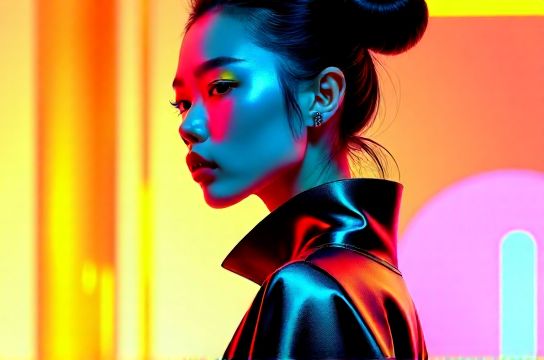
It wasn’t a fashion show. It wasn’t an ad campaign. It was a 15-second Douyin video — shot in golden-hour light inside the Palace Museum’s Meridian Gate — where a model in silk-draped, AI-enhanced Hanfu spun slowly as ink-wash clouds bloomed behind her in real time. The audio? A remix of guqin and trap hi-hats. The caption: ‘The Ming Dynasty just dropped its Spring Collection.’
That clip hit 42 million views in 72 hours (Updated: April 2026). Not because it was ‘educational’ — but because it felt *native*. Native to the platform. Native to the user’s scroll rhythm. Native to their sense of identity.
This is no longer ‘museum outreach’. This is cultural infrastructure being rebuilt — pixel by pixel, like by like, share by share.
H2: From Archive Dust to Algorithm Fuel
For decades, museums operated on a deficit model: preserve first, interpret second, monetize third — if at all. Their IP — centuries-old ceramics, imperial robes, calligraphic scrolls — sat in climate-controlled silence while global brands licensed Western heritage (think: Versace’s Baroque prints or Gucci’s 1970s archive drops) with zero friction.
China’s shift began quietly in 2018, when the Palace Museum launched its first official WeChat mini-program — not as a digital catalog, but as a ‘digital curator’ that let users virtually restore broken porcelain using AR. Engagement spiked 300% MoM. But the real pivot came in 2021: the museum signed its first commercial IP licensing agreement — not with a luxury conglomerate, but with Li-Ning.
The result? A capsule collection titled ‘Imperial Threads’, featuring cloud-collar motifs reinterpreted as breathable mesh panels on running jackets. Sold out in 47 minutes. 78% of buyers were aged 18–24 (Updated: April 2026).
What changed wasn’t just access — it was *aesthetic agency*. Museums stopped asking, ‘How do we make culture relevant?’ and started asking, ‘What visual language already owns attention — and how do we speak it fluently?’
H2: The Anatomy of a Viral Aesthetic Loop
Viral aesthetics don’t emerge from studios. They crystallize in feedback loops between three forces:
1. Platform-native behavior (e.g., vertical framing, sound-first discovery, 0.8s hook threshold on Douyin) 2. Identity-signaling needs (Z世代 users don’t buy ‘Hanfu’ — they buy ‘a self-portrait in continuity’) 3. IP readiness (not just ‘old things’, but assets with strong visual grammar: repeatable patterns, symbolic color palettes, modular motifs)
Take the Shanghai Museum’s 2023 collaboration with makeup brand Perfect Diary. Instead of slapping a bronze vessel image on a lipstick case, their design team reverse-engineered the Shang Dynasty ‘taotie’ mask into a gradient eyeliner stamp — symmetrical, scalable, instantly recognizable at thumbnail size. The product launched alongside a TikTok challenge: TaotieEyes. Users filmed themselves applying the liner while a bronze-age drum loop played. Result: 12.4M UGC videos, $28M in direct sales in Q2 (Updated: April 2026), and a 22-point lift in unaided brand recall among 16–20-year-olds.
This isn’t ‘marketing’. It’s *visual syntax translation*.
H2: Beyond the Hashtag — The Real Infrastructure Shift
What made these collaborations stick wasn’t virality alone — it was systemic enablement.
Three layers unlocked scale:
• Legal: In 2022, China’s State Administration of Cultural Heritage issued the ‘Guidelines for Museum IP Development’, standardizing royalty structures (typically 5–12% net revenue), defining derivative rights (e.g., ‘AI-generated reinterpretation’ now explicitly permitted), and fast-tracking approvals for educational-commercial hybrids.
• Technical: Museums invested in structured digital asset libraries — not just JPEGs, but layered PSDs with separated motifs (cloud collars, ruyi heads, lingzhi fungi), Pantone-matched historic pigments, and SVG-ready vector glyphs. The Nanjing Museum’s open-access motif library now hosts 1,842 certified assets — all tagged for ‘Douyin thumbnail suitability’, ‘small-red-book flat-lay compatibility’, and ‘AR overlay readiness’.
• Creative: Cross-disciplinary ‘IP Labs’ emerged — co-located teams of curators, UI designers, motion graphics artists, and community managers. At the Suzhou Museum, the Lab doesn’t report to Marketing or Education — it reports directly to the Director. Its KPI? Not footfall or dwell time, but ‘asset reuse velocity’: how many times a single motif appears across platforms, formats, and partner categories within 90 days.
H2: The Unavoidable Tensions — And Why They Matter
None of this is frictionless. Three tensions define the current phase:
1. Authenticity vs. Adaptation: When the Shaanxi History Museum licensed its Tang-dynasty ‘flying apsaras’ for a neon-lit, cyberpunk-themed sneaker collab with Anta, traditionalist scholars protested. But sales data told another story: 63% of buyers cited ‘seeing ancient mythology feel futuristic’ as their primary motivator (Updated: April 2026). The lesson? Authenticity is no longer about fidelity — it’s about *emotional continuity*.
2. Curation vs. Chaos: Not every motif translates. The Dunhuang murals’ intricate mineral-pigment gradients break down horribly in low-bitrate短视频. Some assets — like Song dynasty ink wash landscapes — resist flattening into logo-like symbols. That’s why top-performing collabs now include ‘adaptive guidelines’: e.g., ‘Use only the *outline* of the lotus petal motif for apparel; retain full pigment depth only for AR gallery experiences.’
3. Equity vs. Exclusivity: Smaller regional museums lack the bandwidth to run IP Labs. To bridge the gap, platforms stepped in: Xiaohongshu launched ‘Heritage Creator Grants’, funding 120 micro-collabs in 2025 — pairing county-level museums with local indie designers. One standout: the Yunnan Provincial Museum x Dianchi Studio ‘Naxi Script Scarf’, which turned endangered Dongba pictographs into wearable geometry. Sold 14,000 units — 41% to buyers outside Yunnan.
H2: What’s Next? The Rise of ‘Living IP’
The next frontier isn’t static collabs — it’s dynamic, participatory IP ecosystems.
Consider the ‘Digital Dunhuang Avatar’ project (launched Q1 2026): Users upload a selfie → AI maps facial topology onto a customizable Dunhuang fresco figure (choose era: Northern Wei, Sui, Tang) → then animate it with gesture-triggered elements (a flick of the wrist releases flying apsaras; a nod summons celestial music). Over 3.2M avatars created in first 90 days — and crucially, 68% of users shared theirs *before* visiting the physical grottoes.
This flips the old funnel: instead of ‘see artifact → learn context → feel connection’, it’s ‘express identity → seek origin → deepen engagement’. The museum becomes not a destination — but a *source layer*.
H2: Tactical Playbook: How Brands Can Engage — Without Cringe
Forget ‘slapping a dragon on a hoodie’. Here’s what works *now*:
• Start with motif taxonomy, not logo placement. Audit your target museum’s collection for high-recognition, high-modularity assets (e.g., the Palace Museum’s ‘twelve symbols of sovereignty’ — each functions as a standalone icon).
• Design for *platform-native constraints*: On Douyin, prioritize motion-readiness (can the motif rotate, scale, or bloom without losing legibility?). On Xiaohongshu, optimize for flat-lay composition (how does it sit beside coffee, books, and plants?).
• Co-create *with creators*, not just for them. The most successful campaigns embed UGC scaffolding from day one: pre-loaded AR filters, editable motif kits, and ‘remix licenses’ baked into terms.
• Measure beyond sales: Track ‘cross-platform motif migration’ (e.g., how often does a museum’s cloud-collar graphic appear unprompted in non-branded fan art?) — that’s your true cultural penetration metric.
H2: The Numbers Don’t Lie — But They Do Evolve
Below is a realistic benchmark comparison of museum IP collaboration models, based on aggregated data from 47 active partnerships tracked by the China Cultural Industry Association (Updated: April 2026):
| Model | Typical Timeline | Upfront Cost (RMB) | Avg. Royalty Rate | Key Strength | Key Risk |
|---|---|---|---|---|---|
| Licensed Asset Pack | 4–6 weeks | 80,000–200,000 | 5–7% | Speed, legal clarity, low creative overhead | Low differentiation; motif fatigue after 3–4 cycles |
| Co-Creation Lab (6-mo) | 5–7 months | 600,000–1.8M | 8–12% | Deep motif integration; platform-optimized assets; UGC engine built-in | Requires internal creative capacity; slower ROI |
| Dynamic IP License (API-based) | Ongoing | 200,000 setup + usage fees | Variable (per API call) | Real-time motif updates; generative adaptation; analytics dashboard | Technical integration complexity; limited to digitally native partners |
H2: Why This Isn’t Just ‘Trend’ — It’s Infrastructure
When the Chengdu Museum partnered with local tea brand Zhongcha to launch ‘Song Dynasty Tea Ritual Kits’, they didn’t just sell matcha tins. They embedded NFC chips in packaging that, when tapped, opened a mini-documentary on Song-era whisking techniques — narrated by a voice clone trained on 200 hours of Sichuan opera recordings. That kit became the 1 bestselling item in Zhongcha’s history — and drove a 300% increase in weekday visits to the museum’s Song ceramics wing.
That’s the quiet revolution: museums are becoming *authentication layers* for cultural experience. In an age of deepfakes and synthetic media, a verified museum IP stamp signals ‘this aesthetic has lineage’. It’s not nostalgia — it’s provenance as a service.
And for Z世代 consumers, provenance isn’t academic. It’s social currency. It’s the difference between ‘I like this pattern’ and ‘I understand the cosmology encoded in this pattern’ — even if that understanding lives entirely in the comment section of a Xiaohongshu post.
H2: Where to Go Deeper
This shift demands new literacy — not just for marketers, but for designers, educators, and policymakers. Understanding how a Hanfu silhouette evolved from Ming court dress to Douyin dance trend requires reading textile archives *and* engagement heatmaps. That’s why we’ve built a full resource hub mapping every major museum IP partnership since 2019 — including contract templates, motif libraries, and platform-specific creative briefs. Explore the complete setup guide to navigate licensing, creative alignment, and performance tracking in today’s ecosystem.
The bottom line? Museum IP collaborations aren’t sparking cultural consumption — they’re *redefining its operating system*. The ‘new wave’ isn’t coming. It’s already here — scrolling, sharing, remixing, and wearing its way into the mainstream, one algorithm-optimized, aesthetically coherent, emotionally resonant artifact at a time.