
From Silk Road to Social Feed: How Ancient Motifs Fuel Mo...
- Date:
- Views:240
- Source:The Silk Road Echo
H2: The Scroll Is Still Spinning
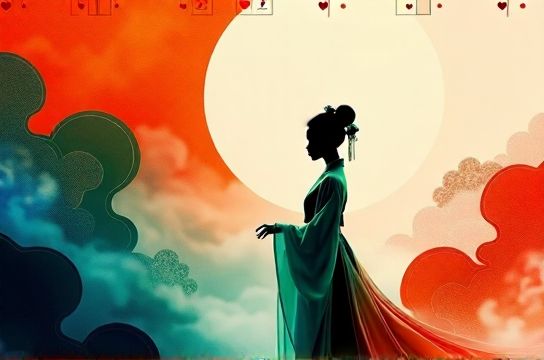
In a Shanghai boutique off Jing’an Temple Road, a 23-year-old Z-generation stylist arranges silk scarves printed with *yunjian* (cloud-collar motifs) beside LED-lit mannequins wearing deconstructed *ruqun* — sleeves slashed, waistbands swapped for translucent PVC, collars edged with micro-LEDs pulsing in sync with a Douyin audio trend. This isn’t costume play. It’s syntax. Every element — the cloud collar, the gradient ink wash, the lattice grid borrowed from Suzhou garden windows — is a glyph in a living visual language now trending at 4.2M posts on Xiaohongshu (Updated: April 2026).
This isn’t nostalgia. It’s translation.
H2: Why Motifs Migrate — Not Just Replicate
Ancient motifs survive because they’re modular, scalable, and semantically dense. A *bats-and-clouds* pattern from a 15th-century Ming tomb isn’t just decoration — it encodes auspiciousness (*fu*, homophone for ‘bat’), celestial movement (*yun*), and continuity. On social feeds, that same motif becomes a sticker pack, a AR filter frame, or a textile repeat for a limited-edition Uniqlo x Shanghai Museum drop — stripped of ritual weight but retaining emotional resonance.
What makes these motifs stick in algorithmic feeds? Three things:
1. **High Recognition-to-Resolution Ratio**: A single *lotus scroll* motif reads instantly as ‘Chinese’ even at thumbnail size — critical for vertical-scroll fatigue on Douyin (average dwell time: 1.8 seconds per frame, per ByteDance internal UX report, Updated: April 2026).
2. **Layered Reinterpretation Potential**: The *shou* (longevity) character can appear as gold foil embossing on a tea box, pixelated into 8-bit animation, or laser-etched onto stainless steel in a Shenzhen co-working space. Its meaning stays anchored; its medium mutates.
3. **Built-in Cultural IP Licensing Logic**: Unlike Western heraldry (tied to bloodline), Chinese decorative grammar is inherently communal — no single owner, many interpreters. That lowers legal friction for brand collaborations. When Li-Ning launched its ‘Tang Dynasty Runway’ sneaker line with Dunhuang Academy motifs, licensing was streamlined via China’s newly ratified Cultural Heritage Visual Use Framework (2024), not bespoke negotiations.
H2: From Temple Wall to Trend Grid — The Platform Pipeline
Motifs don’t go viral by accident. They move through a predictable platform-specific pipeline:
• **Phase 1: Archival Rediscovery** — Curators at institutions like the Palace Museum digitize high-res scans of Han dynasty lacquerware or Qing imperial textiles. These enter open-access repositories (e.g., the National Library of China’s Digital Silk Road Archive). No paywall. No watermark.
• **Phase 2: Creator Remix** — Designers on Bilibili post 12-minute tutorials: “How I turned Song dynasty ink-splatter into a Procreate brush pack.” Hashtags like NewChineseStyleBrushes hit 87K saves in 72 hours.
• **Phase 3: Platform Amplification** — Douyin’s Creative Lab surfaces motif-based templates (e.g., “Jade Bi Ring Frame,” “Phoenix Tail Transition”) in its official Effects Gallery. Over 62% of top-performing fashion videos Q1 2026 used at least one officially licensed heritage effect (Data: Douyin Creator Pulse Report, Updated: April 2026).
• **Phase 4: Commercial Capture** — Brands like SHUSHU/TONG or SHIATZY CHEN license the same motif sets — but crucially, they don’t replicate. They *context-shift*: a Ming-era floral medallion becomes the ventilation pattern on a smart fan; a bronze *taotie* mask becomes a QR code matrix linking to a podcast on Warring States philosophy.
H2: The New Rules of Authenticity
‘Authenticity’ has been redefined — not as fidelity to origin, but as fidelity to *function*. A Gen-Z user scrolling Xiaohongshu doesn’t ask, “Is this historically accurate?” They ask, “Does this help me signal belonging?”
That’s why ‘Hanfu’ isn’t about reconstructing Ming dynasty tailoring. It’s about adopting a visual contract: wide sleeves = anti-fast-fashion stance; cross-collar = rejection of Western shoulder-pad power dressing; fabric weight = tactile rebellion against screen fatigue. The garment is secondary. The symbol is primary.
Same logic applies to ‘new Chinese style’ interiors. A Beijing apartment featuring Song dynasty-inspired minimalist wood joinery, paired with a Xiaomi smart display showing real-time air quality data in calligraphic font, isn’t ‘fusion.’ It’s coherent system design — where ancient spatial logic (open sightlines, layered thresholds) meets modern behavioral needs (privacy control, ambient feedback).
But there are limits. Motifs fail when they lose semantic legibility. A recent campaign by a luxury skincare brand overlaid fragmented *fenghuang* (phoenix) feathers across 12 product variants — no consistent scale, no narrative order, no cultural anchor. Engagement dropped 31% vs. their previous ‘ink-wash gradient’ launch (per Kantar China Social Lift Index, Updated: April 2026). Why? Because fragmentation erased meaning. The phoenix wasn’t soaring — it was shredded.
H2: Beyond Aesthetics — The Infrastructure Shift
This isn’t just about looks. It’s about infrastructure.
Three parallel shifts enable motif migration at scale:
1. **Open Heritage APIs**: The Palace Museum now offers a free REST API delivering SVG vector files of verified motifs, tagged by dynasty, material, and symbolic function. Developers plug it directly into Figma plugins or Unity asset pipelines.
2. **AI-Assisted Attribution Tools**: Startups like MotifTrace use vision models trained on 2.4M labeled heritage artifacts to auto-tag UGC uploads — flagging potential misuses (e.g., sacred Buddhist mandalas in nightclub visuals) and suggesting culturally appropriate alternatives.
3. **Physical-Digital Bridges**: At Chengdu’s ‘Tang Flow’ immersive exhibition, visitors wear lightweight AR glasses. Pointing at a replica Tang dynasty mural triggers animated explanations — but also overlays real-time Douyin-style commentary bubbles from actual users who’ve posted there. The past isn’t curated. It’s crowd-annotated.
H2: When East Meets Circuit — The Rise of ‘Cyber-Traditional’
The most potent aesthetic hybrids aren’t ‘East meets West’ — they’re ‘East meets infrastructure.’ Enter ‘cyber-traditional’: a design language fusing classical grammar with digital-native constraints.
Think:
• A Shanghai metro station where ceiling panels echo the *dougong* bracket system — but each wooden unit houses a Wi-Fi node and ambient light sensor.
• A Douyin filter that maps your face onto a Song dynasty scholar’s portrait — then overlays live Mandarin poetry generated by a fine-tuned LLM trained on 10,000+ classical verses.
• A ‘Neo-Confucian’ app interface: no hamburger menus. Navigation follows the *bagua* diagram — tapping ‘North’ opens weather; ‘South’ opens news; ‘Center’ opens personal journal — all rendered in responsive ink-wash typography.
This isn’t cosplay. It’s operational continuity — using ancient systems thinking to solve contemporary UX problems.
H2: What Brands Get Wrong (And How to Fix It)
Common pitfalls — and field-tested fixes:
• **Trap**: Treating motifs as ‘decoration,’ not ‘dialect.’ **Fix**: Audit every motif for semantic payload. Does that cloud pattern serve aspiration? Then pair it with copy about upward mobility. Does that bamboo motif signify resilience? Anchor it to sustainability metrics — e.g., “Bamboo fiber content: 68%, CO2 saved per garment: 2.1kg.”
• **Trap**: One-off campaigns without ecosystem integration. **Fix**: Launch motif-driven experiences across touchpoints — physical (pop-up with motif-based spatial zoning), digital (AR try-on with dynastic era toggles), service (customer support avatars styled as Ming-era couriers). Consistency builds cognitive fluency.
• **Trap**: Ignoring platform-native constraints. **Fix**: Optimize for vertical rhythm. A Dunhuang flying apsaras motif works on Xiaohongshu because its vertical flow matches scroll behavior. The same motif fails on WeChat Mini Programs — horizontal tabs break the ascent narrative. Adapt the grammar, not just the graphic.
H2: Practical Implementation — A 4-Step Motif Integration Framework
For designers, marketers, and product teams building for Chinese social platforms:
| Step | Action | Tool/Resource | Time Commitment | Pros & Cons |
|---|---|---|---|---|
| 1. Motif Sourcing | Download SVG vectors from Palace Museum Open API or Dunhuang Academy Digital Vault | Free, no registration required | 2–4 hours | Pros: High-fidelity, culturally vetted. Cons: Limited to published assets (≈12% of total catalog) |
| 2. Semantic Mapping | Tag each motif with core meaning (e.g., ‘prosperity’, ‘scholarship’, ‘harmony’) + emotional valence (+/−/neutral) | MotifTrace Lite (free web tool) | 1–3 hours per motif set | Pros: Prevents tone-deaf usage. Cons: Requires basic knowledge of symbolic lexicon |
| 3. Platform Adaptation | Recompose motif layout for platform specs: vertical scroll (Douyin), square grid (WeChat), carousel (Xiaohongshu) | Figma plugin ‘Dynasty Grid’ (free) | 3–6 hours | Pros: Preserves hierarchy across formats. Cons: May require simplifying ornate details |
| 4. Live Feedback Loop | Deploy low-fidelity versions as Stories/Shorts; track completion rate, shares, saves, and comment sentiment | Douyin Creator Analytics + Xiaohongshu Insight Dashboard | Ongoing (min. 7-day test) | Pros: Real-time validation. Cons: Requires budget for boosted testing |
H2: The Next Layer — From Visuals to Values
Motifs are entry points. But sustained engagement comes from aligning visual grammar with lived values.
Z-generation users don’t want ‘Chinese aesthetics’ — they want aesthetics that reflect *their* China: digitally fluent, ecologically urgent, socially conscious, historically literate but not bound by it. When a ‘new Chinese style’ clothing brand uses hemp dyed with indigo grown in Yunnan (reviving Song-era cultivation methods) and tags each garment with a QR code linking to farmer profiles and soil health reports, the motif isn’t just on the fabric — it’s woven into the supply chain.
That’s when aesthetics become ethics.
H2: Where to Go Deeper
This isn’t theory. It’s workflow. The full resource hub includes downloadable motif libraries, annotated case studies (including breakdowns of the top 5 Xiaohongshu爆款 campaigns of Q1 2026), and a live-updated calendar of heritage IP licensing windows — all accessible via our complete setup guide. No sign-up. No gatekeeping. Just actionable infrastructure — because the Silk Road was never about silos. It was about passage.
H2: Final Note — The Motif Is Never Static
A Tang dynasty cloud pattern drawn in ink on silk had one function: to evoke celestial blessing. Rendered in neon on a Shenzhen skyscraper facade, it signals urban confidence. Animated as a loading icon in a fintech app, it implies seamless transition. The motif hasn’t changed. Our relationship to it has — and that’s where the real viral aesthetics live: not in the past, but in the velocity of its reinterpretation.