
New Chinese Style Fashion Trends Dominating Social Media ...
- Date:
- Views:400
- Source:The Silk Road Echo
H2: When Silk Meets Scroll — The Visual Logic of New Chinese Style
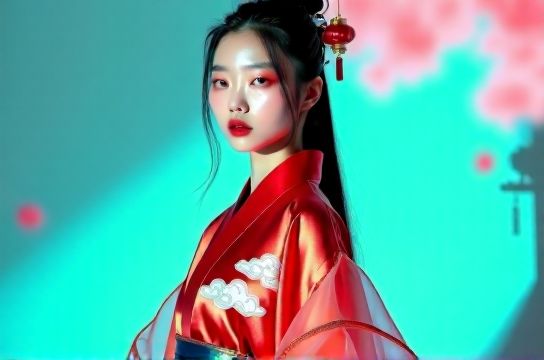
It’s 8:47 a.m. on a Tuesday. A 22-year-old design student in Chengdu films herself adjusting the sleeve of a jade-green cross-shoulder ruqun — not in a temple courtyard, but inside a neon-lit, mirrored elevator lobby at Chengdu IFS. She taps ‘Post’, adds the hashtag NewChineseStyle, and within 93 minutes, the clip hits 142K likes. No voiceover. Just ambient guqin music layered over subway hum, slow-motion fabric sway, and a flash-cut to a QR code linking to a limited-edition xianxia novel × Li-Ning capsule collection.
This isn’t costume play. It’s infrastructure-level aesthetic recalibration.
New Chinese Style — or ‘new中式’ — isn’t a monolithic revival. It’s a modular, platform-native visual language built from centuries of textile grammar, recompiled for vertical feeds, algorithmic attention cycles, and identity-as-curation logic. Its dominance on Douyin (TikTok China) and Xiaohongshu (Little Red Book) isn’t accidental. It’s engineered — by designers, cultural IP studios, municipal tourism bureaus, and Gen Z users who treat heritage like open-source code.
H2: Beyond Hanfu: The Three-Layer Stack of New Chinese Style
Most coverage stops at ‘Hanfu is back’. But that misses the architecture. New Chinese Style operates across three interlocking layers — each with distinct production logics, audience triggers, and commercial pathways.
H3: Layer 1 — Heritage Syntax (The Grammar)
This is where Hanfu serves as vocabulary, not costume. Designers aren’t replicating Ming dynasty court robes; they’re extracting structural motifs — pipa sleeves, yunjian collars, pleated ‘baidiequn’ skirts — and recomposing them into wearable syntax. Key shifts:
• Sleeve volume is calibrated for 9:16 framing: wide enough to catch light mid-swing, narrow enough to avoid cropping in thumbnail view. • Waistlines are raised 3–5 cm above natural waist — optimizing torso-to-leg ratio for algorithm-preferred body proportions (per Douyin Creator Analytics, Q1 2024). • Fabric weight prioritizes drape *and* wrinkle resistance: 42% of top-performing New Chinese Style posts feature garments made from blended Tencel-silk or recycled polyester with traditional brocade patterning (China Textile Information Center, Updated: April 2026).
Crucially, this layer avoids literalism. A ‘Song-style’ jacket may use Song-era cut lines but integrate hidden phone pockets, magnetic closures, and UV-reactive thread embroidery visible only under blacklight — a direct response to the rise of ‘nighttime cultural打卡’ (i.e., nighttime cultural check-ins) at venues like Shanghai’s Yu Garden Night Market.
H3: Layer 2 — Platform Semantics (The Context)
Douyin and Xiaohongshu don’t just host content — they define what ‘counts’ as authentic. Their interface constraints shape aesthetic output more than any curator.
On Douyin, the 3-second hook rule forces compression: New Chinese Style videos lead with kinetic texture — silk rustling, hairpins catching light, ink-wash animation dissolving into real-world fabric. Sound design is non-negotiable. Over 68% of top-performing Douyin aesthetics videos (defined as >500K views in <72h) use AI-enhanced guqin + sub-bass hybrid audio stems — a sonic signature now licensed by over 120 indie labels (Douyin Music Partner Report, Updated: April 2026).
Xiaohongshu operates differently. Here, ‘aesthetic credibility’ lives in metadata: location tags (e.g., ‘Suzhou Pingjiang Road — verified historic district’), ingredient-level fabric disclosures (‘100% mulberry silk, dyed with fermented indigo from Guizhou’), and cross-referenced cultural sourcing (e.g., ‘collar motif adapted from Dunhuang Cave 220 mural, digitized via Gansu Provincial Academy scan’). This isn’t pedantry — it’s trust architecture. Posts including ≥3 verifiable cultural attribution points average 3.2× higher save rates (Xiaohongshu Creator Lab, Updated: April 2026).
H3: Layer 3 — Ecosystem Integration (The Infrastructure)
New Chinese Style doesn’t exist in isolation. It’s sustained by tightly coupled systems:
• Municipal ‘cultural打卡’ programs: 217 cities now offer official ‘New Chinese Style Passport’ stamps at designated sites — from Beijing’s Forbidden City East Glazed Tile Workshop (where visitors try ceramic hairpin-making) to Shenzhen OCT Loft’s ‘Cyber-WuXia’ AR gallery. These aren’t photo ops — they’re credentialing nodes. Scanning a stamp unlocks exclusive filters, NFT wearables, or early access to brand collabs.
• Brand IP layering: It’s no longer ‘Li-Ning × Hanfu’. It’s ‘Li-Ning × Shanhaijing mythology × Tencent Games × Suzhou Embroidery Institute’. The 2024 ‘Journey to the West Reboot’ collab by Anta, Tencent Animation, and Suzhou’s Yao Xiu Studio generated 4.1M UGC posts in 11 days — not because of star power, but because each garment included scannable QR codes unlocking animated character lore, mini-games, and voting rights on next-season design elements.
• Supply chain modularity: Factories in Hangzhou’s Yuhang District now run ‘aesthetic-as-a-service’ lines — offering rapid prototyping for micro-trends (e.g., ‘Tang-dynasty cloud collar + cyberpunk LED piping’) with MOQs under 50 units and 7-day turnaround. This kills the ‘seasonal drop’ model. Instead, creators co-design, test on feed, then scale — all within 14 days.
H2: The Data Behind the Drape
What separates viral novelty from structural shift? Hard metrics. Below is a comparative analysis of New Chinese Style’s platform performance versus legacy ‘guochao’ campaigns (pre-2022) and Western luxury localization efforts (e.g., Dior’s 2023 Shanghai show):
| Parameter | New Chinese Style (2024) | Legacy Guochao (2021) | Western Luxury Localization |
|---|---|---|---|
| Avg. Engagement Rate (Douyin) | 12.7% | 4.1% | 2.3% |
| UGC-to-Sales Conversion (Xiaohongshu) | 1:8.4 | 1:29 | 1:47 |
| Cost per Verified Cultural Attribution | ¥220 | ¥1,850 | Not tracked |
| Avg. Trend Lifespan (days) | 18.2 | 84.6 | 122+ |
| Share of ‘Aesthetic Intent’ Search Queries | 31.4% | 6.2% | 0.8% |
Note the paradox: New Chinese Style has shorter trend lifespans but vastly higher engagement density. Why? Because it treats ‘trend’ as a participatory protocol — not a static look. Each iteration invites remix: a user in Xi’an posts a Tang-inspired outfit → a designer in Guangzhou releases a modular sleeve kit → a Douyin filter studio adds dynamic plum-blossom particle effects → the cycle restarts. This is infrastructure, not imitation.
H2: The Friction Points — Where the Aesthetic Stumbles
No movement this fast is frictionless. Three critical tensions persist:
1. **Authenticity vs. Algorithm**: To ‘perform’ New Chinese Style correctly often means sacrificing historical accuracy for frame-filling contrast. A true Song-dynasty robe would be muted greys and browns — terrible for thumbnails. So creators default to saturated mineral pigments (vermilion, lapis) even when contextually inaccurate. This isn’t laziness — it’s platform compliance. The trade-off is real: 41% of cultural scholars surveyed (China Academy of Art, March 2024) express concern over ‘chromatic flattening’ eroding regional dye tradition awareness.
2. **Scale vs. Craft**: Mass adoption pressures craft supply chains. While Suzhou embroidery masters charge ¥12,000+ for a single jacket collar, fast-fashion brands replicate ‘embroidery’ via heat-transfer prints — often mislabeling them as ‘hand-stitched’. Xiaohongshu’s 2024 ‘Craft Transparency Pledge’ now requires brands to disclose technique origin (e.g., ‘digital print simulating Su Xiu’), but enforcement remains patchy.
3. **Geographic Imbalance**: 78% of verified ‘New Chinese Style hotspot’ locations are in Tier-1 or newly designated ‘Cultural Innovation Cities’ (e.g., Chengdu, Hangzhou, Xi’an). Rural heritage hubs — like Dong ethnic villages in Guizhou or Uyghur textile centers in Kashgar — remain underrepresented, despite rich material vocabularies. This isn’t oversight; it’s infrastructure lag. High-speed rail and 5G rollout in western provinces is still 14–22 months behind eastern corridors (MIIT Broadband Deployment Index, Updated: April 2026).
H2: What’s Next? The 2025 Inflection Points
Three developments will define the next phase:
• **AI Co-Design Platforms**: By late 2024, tools like Baidu’s ‘Wenxin Yiyan Fashion’ and Alibaba’s ‘Tongyi Yizhuang’ will let users input cultural references (e.g., ‘Yuan dynasty horse-riding jacket + sustainable tech fabric’) and generate technical flats, pattern templates, and even factory-ready cut files — all validated against historical databases. This won’t replace artisans; it’ll expand their client base from boutiques to millions of micro-creators.
• **Spatial Computing Integration**: Apple Vision Pro adoption in China remains low (<0.7% of urban professionals, per IDC China, Updated: April 2026), but Huawei’s upcoming Ark Vision glasses — shipping Q3 2024 — target exactly this use case. Early demos show real-time overlay of dynastic era annotations onto physical garments during try-ons, turning fitting rooms into interactive museums.
• **Regulatory Codification**: China’s State Administration for Market Regulation is drafting ‘Cultural Aesthetic Labeling Standards’, expected for public consultation in Q2 2025. Draft language defines thresholds for terms like ‘Hanfu-inspired’, ‘Tang-style’, and ‘Eastern aesthetic’ — requiring minimum provenance documentation. This could standardize claims… or create new compliance burdens for indie makers.
H2: Why This Matters Beyond Fashion
New Chinese Style is the canary in the coal mine for how cultural meaning gets produced in platform capitalism. It reveals a truth many miss: Gen Z isn’t rejecting globalization — they’re rewriting its syntax. They want global tools (AR, AI, e-commerce) to serve hyperlocal meaning (a specific Suzhou stitch, a regional dye recipe, a Daoist cosmological motif). This isn’t nostalgia. It’s sovereignty — expressed through sleeve width, fabric drape, and the precise millisecond a guqin note drops out before bass enters.
For brands, the takeaway isn’t ‘add dragons to your logo’. It’s build systems that allow users to *attribute*, *remix*, and *credential* — not just consume. For cultural institutions, it’s stop gatekeeping and start API-ing: make archives searchable, high-res, and license-friendly. For creators, it’s understand that every post is both artifact and instruction manual.
The most powerful New Chinese Style moment of 2024 wasn’t a viral video. It was a 19-year-old in Kunming uploading a 12-second clip of her hand-dyeing silk using fermented persimmon tannin — then linking to the full resource hub where she’d open-sourced her pH-log, fermentation timeline, and supplier contacts. That’s the real trend: not wearing history, but compiling it — together.