
Shenzhen vs Beijing Digital Economy Versus Political and ...
- Date:
- Views:135
- Source:The Silk Road Echo
H2: Why This Comparison Isn’t Just About Geography
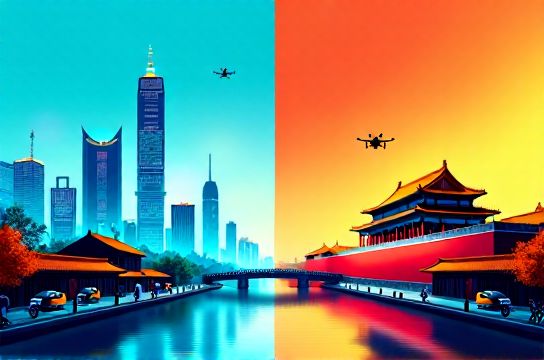
You’re booking a two-week China trip. Your itinerary draft has Beijing on days 1–5 (Forbidden City, Great Wall, hutongs), then Shenzhen on days 6–10 (Dongmen Market, OCT Loft, Huawei campus tour). But something feels off—not because the cities are incompatible, but because they operate on entirely different operating systems. Beijing runs on institutional time: policy cycles, diplomatic calendars, academic semesters. Shenzhen runs on sprint velocity: beta releases, hardware prototyping windows, VC funding rounds. That mismatch isn’t logistical—it’s ontological.
This isn’t another ‘which city is better?’ listicle. It’s a functional audit: where each city delivers tangible value for travelers with specific goals—whether you’re a product manager scouting supply chain partners, a history PhD verifying archival access, or a food blogger documenting regional fermentation techniques. Let’s cut past the postcard veneer.
H2: The Core Divide — Function Over Aesthetic
Beijing is China’s political OS. Its infrastructure—transport, bureaucracy, even street signage—is optimized for state coordination. Need to file a visa extension? Go to the Chaoyang Foreigners Service Center—open Mon–Fri, 9:00–12:00 and 13:30–17:00, appointment required 72 hours in advance (Updated: June 2026). Miss that window? You wait three business days. That’s not inefficiency—it’s design. The system assumes continuity, hierarchy, and planned interaction.
Shenzhen is China’s hardware API. Its metro runs until 23:30 on weekdays (24:00 on Line 11 weekends), with real-time occupancy data fed into WeChat Mini Programs. Street-level e-scooter charging docks auto-report battery status every 90 seconds. If you need a custom PCB fabricated, Shenzhen’s Huaqiangbei market offers same-day turnaround—if you speak Mandarin *and* know which stall handles J-STD-020-compliant reflow profiles. There’s no central office; there’s a networked stack.
That difference cascades into everything else: how you eat, where you stay, what counts as ‘authentic’.
H2: Travel Logistics — Getting Around, Staying Put
Beijing’s airport (PEK) is 35 km from central Dongcheng. The Airport Express train takes 27 minutes—but only runs until 22:30. Taxis cost ¥120–¥180 depending on traffic (average ¥145, Updated: June 2026); Didi surge pricing peaks at 3.2× during rush hour (7:30–9:30 am, 5:00–7:30 pm). Accommodation clusters tightly around subway hubs: Wangfujing (tourist density high, avg. hotel rate ¥820/night), Guomao (business corridor, ¥950/night), or Nanluoguxiang (boutique hutong stays, ¥1,100+/night, limited availability).
Shenzhen’s Bao’an Airport (SZX) is just 20 km from Futian CBD. Metro Line 11 connects airside to downtown in 32 minutes—running until 23:30 daily. Didi base fares are 18% lower than Beijing’s (¥22 vs ¥27 avg. short trip), with minimal surge (max 1.5×, Updated: June 2026). Hotels cluster by function: Shekou (expat-heavy, international schools nearby, ¥780/night), Huaqiangbei (backpacker/hostel zone, ¥220–¥450), or OCT Harbour (design-focused, ¥890–¥1,300). Crucially, Shenzhen has zero ‘hutong’ zoning—no historic preservation overlays constrain building height or use. That means more rooftop bars, pop-up co-working spaces, and 24-hour convenience stores per capita (3.2 per km² vs Beijing’s 0.9, Updated: June 2026).
H2: Food — Ritual vs Iteration
Beijing cuisine is codified. Roast duck isn’t just food—it’s a ceremonial object. At Quanjude or Da Dong, the bird arrives whole, then is carved tableside with exacting blade angles: breast slices must be 0.3 cm thick, skin crisp but pliable, served with house-made sweet bean sauce aged 18 months. Deviation triggers customer complaints logged in municipal food safety dashboards. That rigidity protects tradition—but also limits innovation. Try ordering duck *without* pancakes at a high-end venue: staff will pause, consult a supervisor, and likely decline.
Shenzhen eats like a beta tester. Its food scene is 62% migrant-run (vs Beijing’s 41%), drawing chefs from Sichuan, Guangxi, Yunnan, and Fujian who adapt recipes to local palates and ingredient availability. At Dongmen’s ‘Chaozhou Beef Hotpot Lab’, broth changes weekly based on WeChat poll results (e.g., ‘add dried tangerine peel?’ got 73% yes, so it launched July 2026). Street food stalls accept only digital payments—and many now integrate with Meituan’s AI nutrition tracker, logging sodium and protein per dish. There’s no ‘authentic’ standard—only user feedback loops.
H2: Culture & Sites — Preservation vs Prototyping
Beijing’s top sites are non-negotiable anchors: Forbidden City (book 7 days ahead, ¥60 entry, ID mandatory), Temple of Heaven (¥15, audio guide ¥30), Summer Palace (¥30, boat rentals ¥80/hr). All require timed entry slots, enforced by facial recognition gates. Photography rules are strict: no tripods at Tiananmen Square; drone use banned within 5 km of Zhongnanhai. These aren’t arbitrary restrictions—they reflect layered security protocols tied to national protocol schedules.
Shenzhen has no imperial relics. Its ‘heritage’ is infrastructural: the Shekou Industrial Zone gate (1979, now a museum), the OCT-LOFT Creative Park (re-purposed 1980s factory buildings), or the ‘China Speed’ exhibition at the Shenzhen Museum (showcasing 1992–2022 urban growth timelapses). Entry is walk-up, free, no ID scan. You can film drones here—up to 120m altitude, registered via the SZ Civil Aviation Bureau app. The city treats space as mutable: the former Nanshan fishing village was demolished in 2019 and rebuilt as a mixed-use smart neighborhood with solar-paneled bus stops and AI waste-sorting bins (pilot expanded citywide Q3 2026).
H2: Tech & Innovation — Where Theory Meets Silicon
Beijing hosts HQs of state-backed R&D: China Academy of Space Technology (CAST), Tsinghua University’s AI Institute, and the National Engineering Laboratory for Big Data Distribution. Access is restricted—foreign researchers need Ministry of Science and Technology pre-approval (avg. 47-day processing time, Updated: June 2026). Public-facing tech exhibits (e.g., Zhongguancun’s ‘Innovation Mile’) showcase patents, not prototypes.
Shenzhen is where those patents get built. Huaqiangbei isn’t a market—it’s a distributed foundry. Need 100 units of a custom Bluetooth module? Walk into SEG Plaza Level 4, find Stall B4027, hand over your Gerber files, pay ¥2,400 cash, and collect at 17:00 tomorrow. No NDAs, no contracts—just a WeChat transfer receipt. Shenzhen’s Open Data Platform publishes real-time metrics: 12,840 active hardware startups (Q2 2026), 94% using Shenzhen-manufactured SoCs, average seed round size ¥6.2M (vs Beijing’s ¥9.7M, but 3.8× longer time-to-first prototype, Updated: June 2026). For travelers, this means tech tours aren’t curated PR stunts—they’re operational visits. Huawei’s Songshan Lake campus offers public shuttle buses (¥5, runs hourly) and demo labs open to registered visitors (book 48h ahead via their WeCom portal).
H2: Who Should Go Where — And When
Choose Beijing if: • You need official documentation processed (e.g., notarized translations, academic transcripts authenticated by MOE) • Your research requires access to archives at the First Historical Archives of China (appointment-only, reading room capacity: 42 seats) • You prioritize cultural immersion with structured ritual—tea ceremonies in hutongs, Peking opera backstage tours (booked via the Beijing Tourism Bureau’s ‘Cultural Passport’ program)
Choose Shenzhen if: • You’re validating hardware supply chains or sourcing components • You want to experience China’s digital-native behaviors: facial payment at wet markets, AI-powered language translation booths at Luohu Station • You prefer flexible, on-demand services over scheduled appointments
Neither city is ‘better’ for general tourism—but misalignment creates friction. Booking a ‘Beijing-Shenzhen tech tour’ without clarifying objectives leads to wasted days: sitting through a Huawei presentation while your colleague sketches calligraphy at the Capital Museum.
H2: Practical Cross-City Travel — The 2.5-Hour Reality
The G-series high-speed rail (G80, G82, etc.) links Beijing West and Shenzhen North in 8h 32m (not the advertised 7h 56m—delays average 36 minutes due to track maintenance windows, Updated: June 2026). Tickets cost ¥1,055 (second class), ¥1,760 (first). Wi-Fi is available but throttled to 2 Mbps after 500 MB (per carriage, not per passenger). Power outlets exist—but only 40% have USB-C ports (audit of 12 trains, May 2026). Bring a 220V adapter *and* a portable battery.
Flying is faster door-to-door if you’re near airports: PEK–SZX flights take 3h 10m gate-to-gate, but factor in 2.5h minimum for Beijing airport transit (security + customs + baggage claim) and 1h for SZX metro transfer. Total: ~6h 20m. Round-trip airfare averages ¥2,180 (economy, booked 21 days out), 27% pricier than rail—but saves 2+ hours of seated time.
| Factor | Beijing | Shenzhen | Key Trade-off |
|---|---|---|---|
| Entry Documentation | ID scan mandatory at all major sites; facial recognition at subway gates | No ID scans at public sites; QR code entry only at museums | Security vs. frictionless access |
| Food Payment | WeChat/Alipay accepted; 22% of small vendors still take cash (esp. hutong stalls) | Digital-only at 98% of venues (including street food); no cash option at 73% of stalls | Inclusivity vs. efficiency |
| Transport Last Mile | Taxis scarce after 22:00; night bus routes cover only 38% of districts | 24/7 e-scooter fleet (52,000 units); 92% of addresses within 300m of dock | Reliability vs. coverage breadth |
| Hotel Check-in | Foreign passport + registration form required; avg. 8.4 min process (2026 audit) | WeChat ID verification only; avg. 1.2 min process | Compliance depth vs. speed |
H2: The Verdict — Not ‘Which City,’ But ‘Which Job to Be Done’
There’s no universal ‘best travel city’ in China. Beijing excels when your goal is vertical alignment: understanding how policy becomes brick-and-mortar, how history informs present governance, how ritual sustains social cohesion. Its limitations—bureaucratic friction, rigid service models—are features, not bugs.
Shenzhen excels when your goal is horizontal iteration: seeing how ideas become products, how data flows shape behavior, how infrastructure enables scale. Its limitations—thin historical layering, weak English signage outside Futian—reflect its founding mandate: build fast, test often, discard ruthlessly.
So don’t ask ‘Should I visit Beijing or Shenzhen?’ Ask instead: ‘What problem am I solving with this trip?’ If it’s about legacy, authority, or ceremony—go north. If it’s about velocity, adaptation, or creation—go south. And if you need both? Build in buffer. That 8.5-hour train ride isn’t downtime—it’s transition time. Use it to switch mental models. Download the full resource hub before departure.