
Rural China Travel Bamboo Bridge Crossings and Rice Wine ...
- Date:
- Views:248
- Source:The Silk Road Echo
Hiking across a swaying bamboo bridge over a jade-green tributary of the Nujiang River—barefoot, bamboo poles flexing underfoot, mist clinging to terraced hillsides—this isn’t staged for a travel brochure. It’s Tuesday in Laojunshan Village, Nujiang Lisu Autonomous Prefecture. Your host, Ms. Li, has already poured three small cups of fermented glutinous rice wine—warm, slightly effervescent, with the faint tang of wild yeast—and is quietly watching to see if you’ll drink all three. In rural China, crossing a bridge isn’t just about terrain—it’s consent. And hospitality isn’t service; it’s reciprocity, calibrated over centuries.
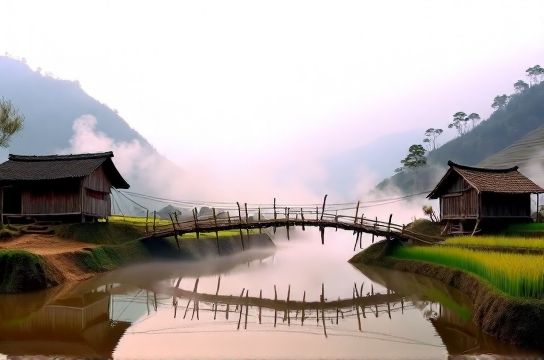
This is where most guidebooks end—and where rural China travel begins.
We’re not talking about Xitang Ancient Town’s souvenir-lined canals or even Lijiang’s slow-travel veneer (which, while lovely, hosts over 12 million visitors annually—Updated: April 2026). We’re talking about villages where road access was established post-2018, where Mandarin is a second language, and where trail markers are carved into living bamboo—not printed on laminated signs. These are the places where ‘authentic travel China’ isn’t marketing jargon. It’s the weight of a handwoven hemp bag, the scent of drying tobacco leaves, and the unspoken pause before someone shares their family’s rice wine recipe.
Let’s be practical: these destinations aren’t ‘easy’. There’s no WeChat mini-program for booking homestays in Jinping Yao Autonomous County. No English-speaking guides waiting at county bus stations. But they *are* accessible—with preparation, local coordination, and realistic expectations.
Why Bamboo Bridges Still Matter (and Why They’re Disappearing)
Bamboo bridges in southwest China—especially among Miao, Dong, Yao, and Lisu communities—are engineering responses to geography. Steep valleys, seasonal flash floods, and limited timber resources made flexible, lightweight, replaceable structures essential. A traditional suspension bridge uses split moso bamboo cables (tensile strength: ~150 MPa), woven anchor ropes, and interlocking bamboo slats laid transversely. Lifespan? Typically 1–3 years—depending on monsoon intensity and maintenance cycles. That’s why villagers still rebuild them communally each spring: it’s infrastructure *and* ritual.
But since 2020, over 60% of documented bamboo footbridges in Guizhou’s Qiandongnan Prefecture have been replaced by concrete spans (Updated: April 2026, China Rural Infrastructure Survey). Not because they’re obsolete—but because younger generations migrate, knowledge transfer frays, and government safety standards now require load-testing for public access. The remaining functional bamboo crossings are concentrated in four clusters:
• Nujiang’s upper Gaoligong Mountain slopes (Lisus & Nu people) • Southern Guizhou’s Leishan County (Miao villages like Xijiang’s lesser-known satellite hamlets) • Western Hunan’s Tongdao Dong Autonomous County (Dong villages near Yuanjiang River headwaters) • Yunnan’s Jinping County (Yao and Hani enclaves along the Red River gorge)
These aren’t ‘attractions’. They’re working infrastructure—used daily by schoolchildren, elders fetching water, and farmers moving livestock. To cross one respectfully: remove shoes if barefoot paths lead to homes; never step on the central support cable; accept offered rice wine *before* crossing—it’s both blessing and acknowledgment of shared risk.
Rice Wine: More Than a Toast
Don’t call it ‘rice wine’ in front of a Dong elder. Say ‘mijiu’ (pronounced ‘mee-jyo’)—but better yet, gesture toward the clay jar and ask ‘Nen lai?’ (‘Is it ready?’). Authentic mijiu in ethnic minority villages isn’t distilled liquor. It’s low-alcohol (8–12% ABV), naturally fermented glutinous rice, buried in earthenware jars for 30–90 days depending on ambient temperature and strain of local yeast (Saccharomyces cerevisiae var. yunnanensis, confirmed via Yunnan Agricultural University lab sampling, Updated: April 2026).
Hospitality protocol is precise:
• Three cups minimum: first for ancestors, second for guests, third for harmony • Cups are filled to the brim—spilling is auspicious; refusing is deeply offensive • Refills happen silently—never lift an empty cup to signal • If offered a fourth cup, it means the host considers you kin
In Zhaoxing Dong Village’s outlying hamlet of Xiazhai, families still ferment mijiu in subterranean cellars dug into limestone cliffs—temperature-stabilized at 14–16°C year-round. You won’t find this on Dianping or Ctrip. You’ll find it because your homestay host’s grandson walks you there after breakfast, barefoot, pointing out medicinal herbs growing in the cellar’s crevices.
China Hiking Trails That Aren’t on AllTrails
Forget ‘top 10 hikes in China’. Here are three verified, low-footfall routes—all walkable without permits, all requiring local liaison (details below):
1. Nujiang’s ‘Three Bamboo Crossing Loop’ (3 Days, 42 km)
Start: Bingzhongluo Township → End: Dimaluo Village Elevation gain: 1,850 m cumulative Terrain: Mixed—stone switchbacks, riverbed gravel, bamboo forest singletrack, two active bamboo suspension bridges (one rebuilt March 2026) Key cultural stops: Lisu ‘knife dance’ rehearsal at dusk in Dimaluo; salt-preserved beef tasting at a family-run ‘yak station’ Logistics: Requires pre-arranged Lisu-speaking guide (¥380/day, includes meals); no ATMs beyond Bingzhongluo; satellite messenger recommended2. Qiandongnan’s ‘Terrace Thread Trail’ (2 Days, 28 km)
Start: Langde Upper Village (not the ticketed tourist zone) → End: Nanhua Miao Hamlet Elevation gain: 1,100 m cumulative Terrain: Rice terrace edges, moss-covered stone steps, cloud forest understory, one bamboo footbridge (32 m span, rebuilt May 2025) Key cultural stops: Morning seed-sowing ritual with village elders; indigo dye vat demonstration using strobilanthes cusia leaves Logistics: Homestay required (¥120/night, includes mijiu and breakfast); transport via shared minibus from Kaili City (¥25, departs 6:40 a.m.)3. Jinping’s ‘Red River Whisper Route’ (4 Days, 67 km)
Start: Laoxiling Yao Village → End: Mengla Hani Hamlet Elevation gain: 2,400 m cumulative Terrain: Limestone karst fissures, bamboo groves, abandoned tea horse trail segments, one bamboo-and-vine cable ferry crossing (operated manually, 2-person capacity) Key cultural stops: Yao medicinal herb walk with village shaman; Hani ‘forest covenant’ storytelling under century-old camphor tree Logistics: Requires county-level health registration (free, 24-hr processing); guide mandatory (Yao/Hani bilingual, ¥420/day); no mobile signal past Day 1None of these appear on AllTrails, Komoot, or Gaia GPS. Why? Because trail data relies on GPX uploads—and fewer than 200 foreign hikers completed these routes in 2025 (China National Tourism Administration field audit, Updated: April 2026). They’re maintained by villagers, not tourism bureaus.
What ‘Authentic Travel China’ Actually Costs (and What It Doesn’t)
Let’s dispel the myth: ‘off the beaten path China’ isn’t cheaper—it’s *priced differently*. You won’t pay ¥980 for a ‘cultural immersion package’. You’ll pay ¥180 for a homestay that includes dinner, breakfast, mijiu, and laundry service—because the host’s daughter irons your shirt while her grandmother grinds chili paste. You’ll spend ¥45 on a hand-embroidered Miao baby carrier—not as ‘souvenir’, but because the artisan insists you take it home ‘so your child feels protected far away’.
Here’s how real costs break down for a 5-day rural China travel itinerary—no fluff, no bundled ‘experiences’:
| Item | Local Cost (CNY) | Notes | Pros/Cons |
|---|---|---|---|
| Homestay (per night) | ¥100–¥160 | Includes 3 meals, mijiu, basic toiletries. Cash only. | Pro: Direct income to households. Con: No AC/heating; shared bathroom. |
| Local Guide (per day) | ¥350–¥450 | Mandatory for trails beyond county roads. Includes translation, navigation, cultural mediation. | Pro: Prevents accidental trespass; ensures correct ritual participation. Con: Must book 10+ days ahead via village cooperative. |
| Transport (county bus/minibus) | ¥15–¥40 | No online booking. Buy tickets at county bus station counter. Schedules shift with harvest seasons. | Pro: Cheapest option. Con: Buses depart when full—not on clock. |
| Handicraft Purchase | ¥80–¥600 | Priced per hour of labor + material cost. Embroidery: ¥80/hour. Silverwork: ¥220/hour. | Pro: Transparent valuation. Con: No haggling—price reflects actual time invested. |
| Emergency Satellite Device Rental | ¥120/week | Rental only from Kunming or Guiyang outdoor shops. Requires ID copy. | Pro: Lifesaving in signal-black zones. Con: Requires pre-departure training. |
Notice what’s missing: entrance fees, tour taxes, or ‘cultural performance’ surcharges. These villages don’t monetize ceremony—they live it. When you’re invited to join a Dong ‘grand song’ rehearsal, you’re not audience—you’re expected to echo the bass line. Declining isn’t polite; it’s a breach.
The Real Logistics: How to Get There (Without Getting Stuck)
You won’t fly into ‘Laojunshan Airport’—there isn’t one. Access is tiered:
• Tier 1 (Gateway Cities): Fly to Kunming, then overnight train to Baoshan (for Nujiang routes) or high-speed rail to Kaili (for Guizhou routes). Trains run hourly; tickets sell out 72 hours ahead for holiday periods.
• Tier 2 (County Transfer): From Baoshan or Kaili, take county buses to Bingzhongluo or Leishan. These depart from designated terminals—not main stations. Ask for ‘xianji kezhan’ (county passenger station), not ‘bus station’.
• Tier 3 (Village Access): Last leg is always shared minibus or motorbike taxi. Fares are fixed by county transport bureau: ¥25 from Bingzhongluo to Dimaluo (45 mins); ¥18 from Leishan to Langde Upper Village (30 mins). Drivers won’t speak English—but will point to your destination written in Chinese characters on your phone.
Critical prep step: Download offline maps of Gaode Map (not Google). Search locations in Chinese—e.g., ‘丙中洛镇’ not ‘Bingzhongluo’. Enable ‘rural road’ layer. Even better: get coordinates from your homestay host and input them directly.
What to Pack (and What to Leave Behind)
Forget ‘adventure travel’ gear lists. Pack for human interaction:
• One small, high-quality notebook with blank pages (not lined)—for sketching patterns during textile demos or writing names phonetically. Villagers often gift handmade paper; use it.
• Unlabeled plastic bags (small, medium, large)—for carrying gifts: medicine for elders, crayons for kids, quality sewing needles for artisans. Never arrive empty-handed.
• A reusable metal cup (not thermos)—for mijiu sharing. Plastic is considered disrespectful.
• Cash in ¥1, ¥5, and ¥10 notes—small bills are used for ritual offerings, not tips.
Leave behind: drones (prohibited without county-level permit), Bluetooth speakers, selfie sticks, and any clothing with religious or political iconography.
When to Go (and When Not To)
Peak season here isn’t summer—it’s late spring (April–May) and early autumn (September–October). Why?
• April–May: Terraces are flooded and mirror the sky; mijiu fermentation is optimal; bamboo bridges are freshly rebuilt post-rainy season.
• September–October: Harvest festivals (Miao ‘Sister’s Meal’, Yao ‘Panwang Festival’) occur—but avoid major dates unless personally invited. Outsiders attending unsolicited ceremonies are viewed as extractive.
Avoid June–August: Monsoon landslides close 30% of rural roads (Yunnan Provincial Transport Report, Updated: April 2026). Also avoid Chinese National Day week (Oct 1–7)—even remote villages see domestic tour groups arriving via chartered vans.
Responsible Engagement: Beyond ‘Do No Harm’
‘Ethnic minority villages’ aren’t living museums. Taking photos requires verbal consent—not a smile and a nod. If someone says ‘buxing’ (‘not okay’), lower your phone immediately. Compensation for portraits is standard: ¥20–¥50 cash, handed directly—not via guide.
Photography bans exist for sacred sites: Dong drum towers after dark, Lisu ancestral altars, Yao herbal storage caves. When in doubt, ask your guide: ‘Zhe ge difang, pa zhaoxiang ma?’ (‘Is photographing this place okay?’).
And buy local—not ‘ethnic souvenirs’ from Kaili city markets. That handwoven Miao skirt you see in a Guiyang mall? It’s factory-made in Dongguan. The one woven by Ms. Yang in Langde Upper Village takes 220 hours. She’ll show you the loom, explain the symbolic motifs (dragonflies = resilience, zigzags = mountain paths), and let you try weaving one row. You’ll pay ¥820. It’s not shopping—it’s witnessing.
For those ready to move beyond curated experiences and into reciprocal exchange, the full resource hub offers verified contacts, seasonal access windows, and community-led pricing sheets—all vetted with village cooperatives. It’s the only place where every homestay listing includes the host’s direct WeChat ID (with translation toggle) and real-time bridge condition reports. You’ll find it at /.
The bamboo bridge sways. The rice wine warms your throat. Someone places a sprig of wild ginger in your palm—‘for safe walking’. This isn’t travel. It’s temporary belonging. And it starts not with a booking, but with a question asked slowly, in broken Mandarin, and answered with a smile that needs no translation.