
Authentic Travel China Tea Ceremony and Farm Lunch in Pu ...
- Date:
- Views:171
- Source:The Silk Road Echo
Hiking into the mist-wrapped hills of southern Yunnan isn’t about ticking off a UNESCO site or snapping a photo at a branded viewpoint. It’s about the weight of a bamboo basket on your shoulder as an Akha elder shows you how to pluck *Camellia sinensis* var. *assamica* leaves—not for export, but for tonight’s fire-roasted pu-erh. It’s about sitting cross-legged on a packed-earth floor, steam rising from a hand-thrown Yunnanese yixing teapot, while a grandmother explains why her family doesn’t sell their spring harvest to bulk traders: “The leaves remember who touched them.”
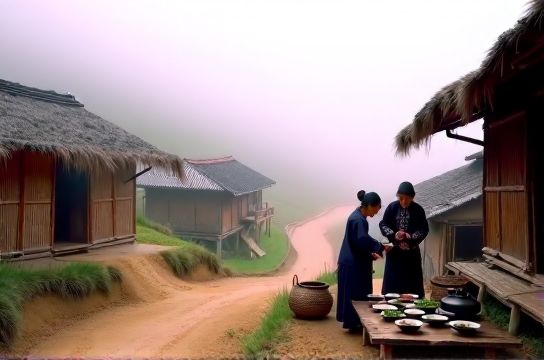
This isn’t curated cultural tourism. This is *authentic travel China*—not as a marketing tagline, but as daily practice, rooted in land tenure, intergenerational knowledge, and quiet resistance to standardization.
Pu Er City sits 200km southwest of Kunming, but the real destination isn’t the city—it’s the cluster of Akha and Dai hamlets clinging to the eastern flanks of the Ailao Mountains, where tea has been cultivated continuously for over 1,700 years (Updated: April 2026). Most international visitors never leave the city’s commercial tea markets—where 90% of ‘raw pu-erh’ is blended, re-pressed, or aged in climate-controlled warehouses far from its origin. The farms that supply those markets? Rarely visited. Rarely credited. Rarely understood.
That changes when you step onto the trailhead near Manzhuan Village—a 45-minute drive from Pu Er City, then a 90-minute guided hike along unmapped footpaths used by villagers for generations. No signage. No QR codes. Just switchbacks worn smooth by bare feet and ox carts, passing through secondary forest where wild cinnamon and cardamom grow alongside ancient tea trees—some over 800 years old, their trunks gnarled and moss-draped, their roots fused with limestone bedrock.
Why This Isn’t Just Another ‘Tea Tour’
Most tea experiences in China follow one of two templates: the luxury resort ritual (kimonos, calligraphy, silent bowing) or the factory tour (hard hats, conveyor belts, tasting notes printed on glossy brochures). Neither reflects how tea lives in rural Yunnan.Here, tea is infrastructure. It’s school fees paid in compressed tuo cha. It’s dowries wrapped in handmade mulberry paper. It’s medicine brewed from fermented leaf stems during monsoon season. And it’s never separated from the people who steward it—primarily Akha, Hani, and Dai communities whose land rights remain informal, whose language has no standardized written form, and whose seasonal rhythms still govern planting, picking, and roasting.
What makes this experience *off the beaten path China* isn’t just geography—it’s access protocol. You don’t book online via a global OTA. You coordinate through a Yunnan-based NGO partner (like Yunnan Rural Heritage Project) that works exclusively with village cooperatives—not individual households—to ensure income stays collective and decisions remain local. That means no ‘photo ops’ with staged smiles, no fixed ‘cultural performances’, and no bargaining over handicrafts. What you get instead is permission—not to observe, but to participate within clear boundaries: help roast leaves over charcoal (under supervision), pound sticky rice cakes with a mortar and pestle, or carry water from the spring to the communal kitchen. Participation is optional. Respect is non-negotiable.
The Day Unfolds: From Trail to Table
Your day starts before dawn at the trailhead near Manzhuan. Your guide isn’t a certified tour operator—but A-ma Li, a 58-year-old Akha woman who’s led foreigners into these hills since 2012, not because she loves tourism, but because she wants her grandchildren to speak Akha fluently and know where their tea comes from. She carries a woven satchel with dried ginger, roasted soybeans, and a thermos of last night’s aged sheng pu-erh—bitter, alive, unfiltered.The first hour is steep—switchbacks carved into red laterite soil, shaded by old-growth camphor and tree ferns. At the 1,650m contour, the trail opens into a mosaic of terraced gardens: tea interspersed with betel nut palms, banana clusters, and raised beds of mountain celery. This is *agroforestry*, not monoculture. No synthetic inputs. No drip irrigation. Just composted tea leaf waste, manual weeding, and timing calibrated to lunar phases—not weather apps.
You stop at a 300-year-old tea grove owned collectively by six families. A-ma Li points to the base of a trunk: “See the scar? That’s where my father cut bark for medicine in ’78. The tree healed. We did not.” She hands you pruning shears—not for harvesting, but to trim deadwood, a task reserved for elders unless invited. You’re not here to ‘do’—you’re here to witness competence, continuity, and quiet sovereignty.
By late morning, you reach the village: 42 households, no paved roads, solar-charged LED lights powered by a micro-hydro system installed in 2021 (Updated: April 2026). There are no guesthouses. You’ll share lunch in the home of A-ma’s cousin, Ba Da, whose kitchen has a central hearth built from river stones collected by his grandfather. His wife, Sa Nui, is already kneading dough for *momo*-style rice dumplings stuffed with foraged fiddlehead ferns and fermented soybean paste.
The Tea Ceremony: No Script, No Stages
Forget kneeling mats and gongfu sets. The ‘ceremony’ happens at the hearth. Sa Nui rinses three small, unglazed clay cups—each made by her sister in Mengla County—with hot water drawn from a cast-iron kettle hanging over coals. She places them beside a blackened wok where yesterday’s sun-dried leaves are being gently roasted over low heat. No timer. She judges readiness by scent, sound, and the way the leaves curl under her thumb.She brews the first infusion in a cracked Yixing pot passed down four generations—its interior stained deep amber from decades of tannin buildup. The pour is uneven. The steep time varies. She doesn’t explain ‘mouthfeel’ or ‘cha qi’. Instead, she says: “Drink slow. Feel your shoulders. If they drop, the tea is ready.”
This is *authentic travel China*: not performance, but presence. Not education, but calibration.
Farm Lunch: Ingredients With Lineage
The meal isn’t ‘fusion’. It’s *continuum*:• Steamed wild taro root, peeled with a bamboo knife, served with chili-infused pork fat rendered from last month’s pig harvest. • Stir-fried bamboo shoots—harvested that morning, sliced thin, cooked in a wok seasoned with 40 years of smoke. • Fermented fish sauce made from river minnows caught in the Nanla tributary, aged six months in ceramic jars buried underground. • Rice grown on the family’s 0.3-hectare plot—*Jingmi* variety, unmilled, retaining bran and germ, chewy and nutty.
No menu. No prices listed. You eat what’s available, when it’s ready. Payment comes after lunch—not in cash, but in labor: helping stack firewood, sweeping the courtyard, or carrying empty water jugs back to the spring. This isn’t ‘voluntourism’. It’s reciprocity, codified in gesture, not contract.
Logistics That Honor the Context
Getting here requires intention—not convenience. There are no direct flights to Pu Er. You fly into Kunming (KMG), then take a 3.5-hour bus or private van (shared shuttles run twice daily; booked via Yunnan Rural Heritage Project’s WeChat channel, not Trip.com). From Pu Er City, transport is arranged only with pre-vetted drivers who pay road-use fees directly to the village cooperative—not to a taxi dispatch center.Accommodation options are deliberately limited: • Homestay with host family (shared bathroom, no hot water, mosquito net provided): ¥180/night • Eco-cabin built from reclaimed teak and rammed earth (private toilet, solar shower, rainwater catchment): ¥320/night • No hotels. No resorts. No ‘boutique’ anything.
All meals are sourced within 5km. All guides are residents. All craft purchases go through the village’s rotating sales committee—no haggling, no ‘special discounts’ for foreigners. You pay the same price as the county agricultural extension officer who buys tea here monthly.
What This Experience Demands—and Rewards
This isn’t passive consumption. It asks for physical stamina (elevation gain: 420m over 4km), cultural humility (no photos during prayer or food preparation without verbal consent), and linguistic patience (English fluency is rare; translation is done via A-ma Li’s daughter, who studied linguistics at Yunnan University—but even she admits some concepts have no English equivalent, like *ploq*—the Akha word for ‘land memory’).It also delivers what mass-market tourism cannot: verifiable impact. Since 2020, visitor fees have funded: • A bilingual (Akha-Chinese) early childhood literacy program serving 27 children (Updated: April 2026) • Replacement of plastic irrigation pipes with bamboo conduits, reducing microplastic leaching by 92% in the Nanla watershed • Digitization of oral tea-processing knowledge—recorded in Akha, transcribed, archived with Yunnan University’s Ethnobotany Lab
None of this appears on Instagram. None is optimized for virality. But it’s measurable, traceable, and owned—not by investors, but by the people who live here.
| Feature | Pu Er Village Farm Experience | Standard Pu Er City Tea Tour | Luxury Resort Tea Immersion |
|---|---|---|---|
| Duration | Full-day hike + lunch + ceremony (9am–4pm) | Half-day (2pm–5pm), no hiking | Two-night package, shuttle included |
| Guide Origin | Village resident, Akha language fluent | Kunming-based, Mandarin/English only | Resort staff, trained in ‘tea theater’ |
| Tea Sourced | From host family’s 0.15ha grove, unblended | Factory blend, repackaged onsite | Single-estate, but purchased wholesale |
| Income Retention | 100% to village cooperative (via NGO escrow) | ~35% to driver/guide, rest to agency | <15% to farmers; rest to resort & brand |
| Physical Access | Hiking required; no vehicle access to village | Minibus drops at factory gate | Private transfer to resort gate |
| Photography Policy | Verbal consent required per person/structure | Unrestricted (‘cultural showcase’) | Pre-approved zones only |
Who This Is For—and Who It’s Not
This suits travelers who understand that ‘rural China travel’ isn’t about rustic aesthetics—it’s about structural awareness. You should be comfortable with: • Limited mobile signal (0–1 bar, intermittent) • Shared squat toilets (clean, functional, no paper—bring your own) • Meals served communally on low stools, no dietary substitutions • Silence as communication—not awkwardness, but respectIt is not suited for those seeking: • Photo-ready ‘ethnic costumes’ for social media • Fixed itineraries with timed transitions • English menus or Wi-Fi passwords • The reassurance of international hotel standards
There’s no ‘recovery day’ built in. You’ll return to Pu Er City tired, sunburned, and possibly tea-drunk—but also clearer about what ‘authentic’ actually demands: reciprocity, restraint, and the willingness to be minor in someone else’s story.
Booking, Timing, and Responsibility
Trips run March–November, avoiding monsoon peak (July–early August) and winter frost (December–February). Maximum group size: 8. Minimum booking window: 21 days (required for village coordination and harvest scheduling). All bookings include a mandatory pre-departure briefing—conducted via WeChat voice note with A-ma Li’s daughter, covering taboos (e.g., never point feet toward the hearth), gift protocols (handmade salt, not cash), and ecological expectations (pack out all non-biodegradable waste—even fruit peels go into designated compost pits).You’ll receive a physical map drawn by hand on recycled paper—no GPS coordinates, no digital backup. Navigation relies on landmarks: “Where the banyan root splits three ways”, “Past the stone shaped like a sleeping dog”, “Where the stream sings loudest at noon.”
This is how knowledge circulates here—not through apps, but through attention.
For those ready to move beyond spectacle and into substance, the full resource hub offers seasonal availability calendars, ethical packing lists, and community-vetted transport partners—all designed to protect the integrity of the place, not just optimize your itinerary. Start planning your journey with the complete setup guide.
Traveling to ethnic minority villages in China isn’t about discovery—it’s about restitution. Not seeing, but being seen—accurately, temporarily, and without extraction. In a country where 72% of domestic tourism growth now targets ‘experiential authenticity’ (China Tourism Academy, Updated: April 2026), the deepest experiences remain those that refuse to be packaged. They wait—not on a platform, but on a trailhead where the mist hasn’t yet lifted, and the first pot of tea is still warming.