
Off the Beaten Path China: Silent Stone Villages in Nujiang
- Date:
- Views:205
- Source:The Silk Road Echo
Hiking into the Nujiang Grand Canyon isn’t like trekking the Tiger Leaping Gorge trail near Lijiang — there’s no shuttle bus line, no souvenir stalls selling mass-produced Naxi embroidery, and no Wi-Fi signal for 48 hours straight. What you’ll find instead are villages built from river-worn slate, roofs held down by stones to withstand monsoon gales, and elders who speak Lisu or Nu but rarely Mandarin — let alone English. These aren’t ‘hidden gems’ curated for Instagram. They’re living communities that have weathered centuries of isolation — and they’re among the last places in China where tourism hasn’t rewritten the rhythm of daily life.
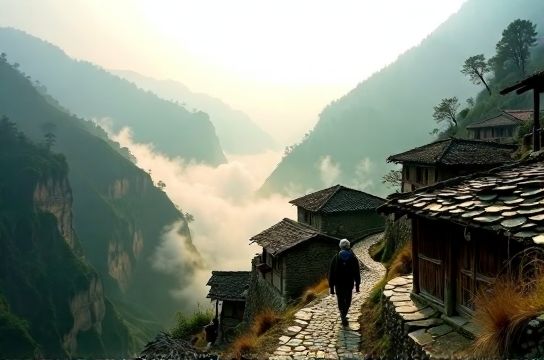
This isn’t a guide to ‘discovering’ something pristine. It’s a practical field report for travelers who understand that authenticity isn’t found in untouched landscapes — it’s negotiated, respectfully, through language barriers, shared meals, and willingness to walk without GPS.
Why Nujiang? Because It’s Still Unmapped — Literally
Nujiang Lisu Autonomous Prefecture covers 24,000 km² — roughly the size of Vermont — yet has fewer than 550,000 residents (Updated: April 2026). Only two paved roads cross the canyon east-west: the G562 national highway (often closed for landslides between June–September) and the newer S318 provincial road, which remains unpaved for 72 km between Fugong and Bingzhongluo. Google Maps shows blank space across much of the northern canyon; Baidu Maps labels entire valleys as “no data.” That’s not a bug — it’s infrastructure reality.
Unlike Xitang Ancient Town — where every alleyway is metered for photo ops and tea houses charge ¥68 for a cup of jasmine with a view — Nujiang’s villages operate on subsistence rhythms. Rice terraces are still irrigated by hand-dug bamboo channels. Livestock are herded on foot up switchbacks too steep for motorbikes. And when the rains come (averaging 2,200 mm/year), roads dissolve into mudslides — not inconveniences, but seasonal resets.
That’s why this region remains one of the few places in China where ‘rural China travel’ means more than a weekend agritourism package. It means staying in a family-run guesthouse with no hot water, eating fermented buckwheat cakes cooked over an open hearth, and learning how to weave hemp cord using a backstrap loom — not because it’s ‘cultural immersion,’ but because your host needs help repairing a fence before the next storm.
The Silent Stone Villages: Not Just Scenery, But Strategy
The term ‘silent stone villages’ isn’t poetic license — it’s architectural fact. In Bingzhongluo Township and the upper reaches of the Nu River, homes are built from locally quarried grey schist and black slate, stacked dry — no mortar. The stones are heavy, dense, and acoustically deadening. When wind sweeps down the canyon walls at night, the only sound is the creak of wooden beams, not clattering tiles. Silence here is functional: thermal mass keeps interiors cool in summer and retains heat in winter; stone resists fire better than timber; and its weight anchors structures against landslides.
Three villages stand out for depth of access and cultural continuity:
- Zhongluo Village (elevation 1,820 m): A Nu-speaking enclave clinging to a north-facing slope. Known for its intact clan-based land tenure system — still enforced via oral agreements recorded in bamboo slips. No homestays exist here; visitors stay with designated hosts approved by the village council. Requires written permission obtained in advance via the Fugong County Ethnic Affairs Office.
- Qi’ao Village (elevation 2,150 m): Lisu-majority, famed for its biannual ‘Dabao Festival’ — a three-day ritual involving masked dances, wild boar sacrifices, and the brewing of zha jiu, a millet wine fermented in hollowed fir logs. Tourist attendance capped at 30 people per year (Updated: April 2026). Registration opens 90 days prior via the Nujiang Prefectural Tourism Bureau.
- Laomendu Village (elevation 1,480 m): A mixed Nu-Lisu settlement with the oldest surviving stilted granary architecture in the canyon — elevated on stone pillars to deter rodents and floods. Offers the most accessible entry point for first-time hikers, with a 3-hour trail from the nearest motorable road (S318, Km 127).
None have electricity grids. Solar panels power LED lights and mobile charging stations — but only between 10 a.m. and 4 p.m., when batteries are fully charged. Internet is non-existent beyond the county seat. This isn’t ‘off-grid charm.’ It’s logistical reality — and it filters out all but the truly committed.
Hiking Trails That Don’t Exist on Apps
Forget trail markers. In Nujiang, routes are passed down orally: ‘Follow the water until the third waterfall, then take the goat path left of the bent pine.’ GPS coordinates drift by 300+ meters due to canyon wall interference. Your best navigation tool is a local guide — and not just for safety. Guides are often bilingual (Lisu/Mandarin), know medicinal plant uses, and can interpret land-use boundaries invisible to outsiders.
The most rewarding route is the Laomendu–Zhongluo Traverse: a 28-km, two-day hike crossing three ridgelines and descending into two side valleys. Elevation gain: 1,400 m total. You’ll pass abandoned copper mines from the 1950s, see rare Yunnan golden monkeys (Rhinopithecus bieti) at dawn, and traverse sections where the trail is literally a 30-cm-wide ledge carved into sheer rock — secured only by frayed hemp ropes anchored to iron pins driven into fissures.
This is not a ‘China hiking trails’ experience designed for fitness trackers. It’s physical negotiation — with terrain, weather, and community norms. For example: passing through sacred groves requires removing shoes and walking barefoot — a rule enforced by village elders, not signs. Refusing isn’t rude; it’s culturally unintelligible.
What ‘Authentic Travel China’ Actually Means Here
‘Authentic’ gets thrown around like confetti. In Nujiang, it has teeth.
It means understanding that ‘tourism shopping’ isn’t about souvenirs — it’s about reciprocity. You don’t buy a woven bag; you trade a spare flashlight battery for one, because the battery powers the weaver’s solar-charged lamp after dark. You don’t ‘sample local cuisine’ — you help shell fava beans for tomorrow’s stew while listening to stories about the 1989 flood that washed away the old bridge. There’s no menu. There’s only what’s harvested, preserved, or foraged that week.
It also means accepting limits. No photography inside clan shrines. No recording of ritual chants. No drone flights — prohibited by prefectural regulation since 2023 to protect both privacy and nesting raptors. Violations aren’t met with fines, but with quiet withdrawal of hospitality: meals stop arriving, doors remain closed, guides decline further work. This isn’t hostility — it’s boundary-setting rooted in generations of external exploitation.
And yes, this makes planning harder. You can’t book online. You can’t confirm availability via WeChat. You must go to Fugong County, visit the Ethnic Minority Culture Preservation Center (open Tues–Sat, 9 a.m.–12 p.m.), submit ID copies, sign a conduct agreement, and receive a stamped letter of introduction — the only document accepted by village councils.
Getting There & Staying Grounded
There is no direct flight to Nujiang. The closest airport is Baoshan (BSD), 320 km south — a 10-hour drive on winding mountain roads. Most experienced travelers fly into Kunming, take the overnight train (K9682) to Dali (arrive 6:15 a.m.), then hire a 4x4 driver (¥800–¥1,200/day, negotiable) for the 6–8 hour trip north along the Lancang River to Fugong. Roads are narrow, single-lane, and frequently blocked by rockfall — drivers carry crowbars and rope, not just spare tires.
Accommodation options are minimal and intentionally so:
| Village | Max Guests/Night | Facilities | Guide Required? | Pros | Cons |
|---|---|---|---|---|---|
| Laomendu | 12 | Solar lighting, compost toilet, shared cold-water washbasin | No (but strongly advised) | Easiest access; active weaving co-op; bilingual hosts | Limited privacy; no private rooms; frequent afternoon rain |
| Zhongluo | 6 | Candlelight only; outdoor pit latrine; wood-fired water heating (on request) | Yes — village-appointed, ¥200/day | Deepest cultural access; clan-led storytelling sessions; medicinal plant walks | No electricity; strict curfew (8 p.m.); requires pre-approval |
| Qi’ao | 8 (festival season only) | Fire-heated stone floors; shared sleeping platform; no running water | Yes — mandatory during festival; optional otherwise | Ritual participation; traditional fermentation demos; rare birdwatching | Bookings open only 90 days ahead; limited shoulder-season access |
All stays include three meals daily — based on seasonal harvests. Expect sour yam soup, smoked pork strips, wild fern fritters, and barley wine. Vegetarian requests are accommodated only if communicated 14 days in advance (and even then, protein substitutes are limited to tofu or dried mushrooms — no imported soy products).
Responsible Engagement: Beyond ‘Do No Harm’
‘Rural China travel’ here demands proactive ethics — not passive avoidance. That means:
- Carry zero plastic: No bottled water (villages provide boiled spring water in reusable flasks); no snack wrappers (pack food in cloth bags).
- Compensate fairly: Pay guides and hosts in cash (RMB only — no Alipay/WeChat). Standard rates: ¥200/day for guides, ¥180/night for lodging + meals. Tip in kind only if requested — e.g., extra batteries, sewing needles, or children’s storybooks in Mandarin or Lisu script.
- Ask before you act: Don’t ‘help’ with farming unless invited. Don’t touch ritual objects. Don’t offer unsolicited medical advice — village health workers are trained in both herbal and basic clinical care.
Tourism income accounts for under 12% of household revenue in these villages (Updated: April 2026). Cash flow matters — but so does cultural sovereignty. That’s why the Nujiang Prefectural Government mandates that 100% of tourism-related fees (permits, guide commissions, entrance ‘donations’) are retained locally — not funneled to provincial coffers. You’ll see receipts stamped with the village seal, not a government logo.
When to Go — And When Not To
The ‘best’ time depends on your goal:
- April–May: Dry, mild, blooming rhododendrons. Ideal for hiking — but avoid late May, when leech season begins in shaded valleys.
- September–October: Post-monsoon clarity. Harvest festivals in mid-October. Highest chance of spotting snow leopards near glacier-fed streams — though sightings remain rare (<5 verified reports in 2025).
- Avoid June–August: Landslide risk peaks. Roads close unpredictably. Humidity exceeds 90% — mold grows on camera lenses within hours.
Winter (December–February) brings sub-zero nights and frozen springs — beautiful, but logistically intense. Only attempt with a certified high-altitude guide and full cold-weather gear.
Bringing It Home — Without Taking Too Much
‘Authentic travel China’ doesn’t end when you leave the canyon. It continues in how you represent what you’ve seen. Avoid framing villages as ‘time capsules’ or ‘vanishing cultures.’ These communities are adapting — installing micro-hydro systems, digitizing oral histories with offline tablets, training youth in ethnobotany. Your role isn’t preservationist — it’s witness.
If you want deeper context on ethical engagement frameworks used by grassroots tourism cooperatives across Yunnan, our full resource hub includes field-tested toolkits, contact lists for vetted local partners, and bilingual consent templates for photography and interviews.
Nujiang won’t be on your feed. It won’t have a Lonely Planet blurb. And that’s precisely why it matters — not as a destination, but as a reminder: the most resonant journeys aren’t measured in kilometers, but in the quiet moments when a stranger hands you a bowl of steaming barley wine, looks you in the eye, and says nothing — because some things need no translation.