
Off the Beaten Path China: Farm Stays & Tea Picking in Li...
- Date:
- Views:193
- Source:The Silk Road Echo
Hiking down a moss-slicked stone path near Baisha Village—just 25 km northwest of Lijiang Old Town—you pass terraced fields where Naxi elders bend low to harvest wild fennel. A rooster crows from a timber-framed courtyard. The air smells of wet earth, woodsmoke, and roasted pu’er. This isn’t a staged cultural performance. It’s Tuesday. And you’re not on a tour bus.
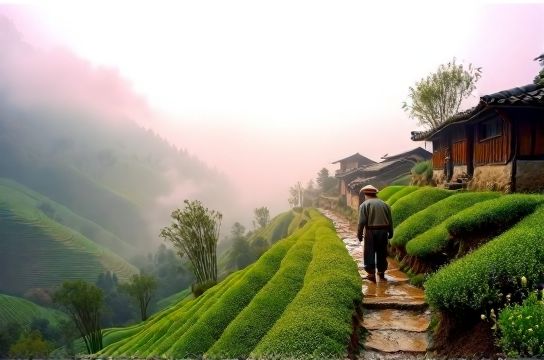
This is rural China travel done right—not as spectacle, but as participation. Forget the postcard-perfect but over-photographed corners of Yunnan. The real depth lies further out: in the mist-wrapped slopes above Lijiang County, where Naxi, Yi, and Mosuo families steward land unchanged for centuries—and where ‘authentic travel China’ isn’t marketing jargon, but daily practice.
Why Lijiang’s hills? Because unlike Xitang Ancient Town (a well-preserved but heavily commercialized water town), or even Nujiang’s dramatic gorges (which remain logistically difficult and under-supported for independent travelers), this corridor offers balance: accessibility without saturation, infrastructure without intrusion. As of April 2026, fewer than 12,000 international visitors per year stay overnight in villages beyond Lijiang’s UNESCO core zone—less than 3% of the city’s total foreign arrivals (Yunnan Tourism Bureau, Updated: April 2026). That’s not accidental. It’s the result of deliberate community-led tourism governance, strict homestay certification standards, and terrain that filters out all but the intentionally curious.
Let’s break down what actually works—and what doesn’t—when planning this kind of trip.
What ‘Rural’ Really Means Here
‘Rural China travel’ in this context isn’t about rustic charm. It’s about functional interdependence. Most host families in the Baisha–Shuhe–Jinhong corridor operate small-scale agro-ecological systems: mixed cropping (barley, buckwheat, tea), free-range poultry, and seasonal herb gathering. Their homes double as guest spaces—not because they’ve been retrofitted for tourism, but because hospitality is structural: ancestral halls are shared, kitchens are communal, and meals are cooked with ingredients pulled from the same plot you’ll later help harvest.
That means no ‘tea ceremony’ theater. Instead, you join a 6 a.m. walk up the eastern ridge to the family’s century-old Camellia sinensis grove—planted by the host’s great-grandfather during the Republic era. You learn to identify flushes by leaf curl and stem tenderness. You carry baskets lined with bamboo slats (not plastic) and follow the rhythm set by your host’s grandmother, who’s picked here since age eight. At noon, you process the leaves together: withering in shaded bamboo trays, hand-rolling to bruise cell walls, sun-drying on woven mats, then firing in a clay kiln heated with pine needles. The resulting tea tastes grassy, mineral, faintly smoky—not polished or standardized. It’s not for export. It’s for sharing, barter, or storing in ceramic jars for winter. You can buy 250g for ¥80–¥120, depending on grade and harvest date. That’s the reality of 旅游购物 (travel shopping) here: transactional, transparent, rooted in use-value—not souvenir markup.
China Hiking Trails: Unmapped but Well-Worn
Don’t expect trail markers or GPS waypoints. The best China hiking trails around Lijiang aren’t on apps—they’re oral maps passed between generations. Your host draws them in ash on a wooden table: ‘From the red bridge, go past the stone mill, then take the goat track behind the second walnut tree. When you see the collapsed shrine, turn left—not right—because the right path floods after rain.’
Three routes stand out for their consistency, safety, and cultural density:
- The Baisha Loop (8 km, ~4 hrs): Starts at Baisha Village’s Ming-era fresco temple, climbs through Naxi terraces, skirts a glacial moraine lake, and descends via a Yi hamlet where elders still weave hemp cloth on backstrap looms. Elevation gain: 420m. Best March–May or September–October.
- Shuhe–Jinhong Ridge Traverse (14 km, ~7 hrs): A full-day commitment crossing three microclimates—from dry pine forest to cloud-forest moss to alpine meadow. Includes a stop at a Mosuo-run apiary and lunch of smoked yak cheese and highland barley cakes. Requires advance coordination (hosts arrange pack-mule support for gear and water).
- The Black Dragon Pool Foothills Circuit (5 km, ~2.5 hrs): A gentle intro route ideal for families or those acclimatizing to 2,400m elevation. Passes abandoned Qing-dynasty irrigation channels and active terraces where children herd geese. Minimal ascent; maximum birdlife (including endangered Sichuan jays).
None are ‘wilderness’. All intersect with working land. That’s the point. These are ethnic minority villages first—and scenic backdrops second.
Farm Stays: Not ‘Glamping’, But Grounded Living
The term ‘farm stay’ misleads. There are no Instagrammable hay bales or curated breakfast boards. What exists are multi-generational compounds built into south-facing slopes, with rammed-earth walls, slate roofs, and courtyards paved with river stones. Rooms are simple: thick wool quilts, carved wooden beds, solar-charged LED lamps, and shared composting toilets (installed 2022–2024 under Yunnan’s Rural Ecotourism Infrastructure Grant). Hot water comes from rooftop solar heaters—reliable March–October, intermittent November–February.
Accommodation isn’t booked on Airbnb. It’s arranged directly via village cooperatives like the Baisha Rural Tourism Association (BRTA), which vets hosts annually on criteria including fire safety, wastewater management, language capacity (at minimum, one family member speaks basic English or Mandarin), and fair wage compliance. As of April 2026, certified homestays charge ¥280–¥420/night for double occupancy—including breakfast (steamed millet cakes, pickled mustard greens, boiled eggs, herbal tea) and one activity (tea picking, weaving demo, or field work). That’s 20–30% higher than non-certified options—but eliminates risk of last-minute cancellations, language barriers, or sanitation surprises.
Crucially, these stays include *no* mandatory tours or add-ons. You choose your pace. Sit silently with the grandfather repairing fishing nets. Help the teen daughter feed silkworms. Or just read under the apricot tree while chickens scratch at your feet. This is slow travel Lijiang—not as luxury, but as permission to occupy time differently.
Tea Picking: Seasonality, Skill, and Why It Matters
Pu’er isn’t grown everywhere in Lijiang’s hills. It thrives only in specific microzones: north-facing slopes with volcanic soil, consistent fog cover, and elevations between 1,900–2,300m. Only seven villages in the county meet all three criteria—and only four (Baisha, Jinhong, Qila, and Shuhe’s western hamlets) allow visitor participation in spring harvest (late March to mid-April).
Why spring? Because the first flush contains highest concentrations of catechins and amino acids—yielding complex, layered flavor. Later harvests (summer, autumn) produce stronger, more astringent leaves used for compressed bricks. Visitors rarely join summer picking: it’s hotter, faster-paced, and less pedagogically oriented.
Skill matters. Novices often snap stems instead of plucking buds + two leaves—a mistake that damages the plant and lowers future yields. Hosts correct gently but firmly: ‘Hold the branch steady with your left thumb. Pinch, don’t pull. Feel the snap—not the tear.’ It takes 2–3 hours to internalize the motion. By day two, most guests fill half a basket without supervision.
Post-harvest processing is where authenticity diverges sharply from commercial production. Factory pu’er uses mechanical rolling, controlled fermentation chambers, and steam sterilization. Here, fermentation happens in stacked bamboo baskets covered with hemp cloth, turned manually every 12 hours for 3–5 days, monitored by smell and touch alone. The result? A living tea—each batch unique, each year’s harvest distinct. You’ll taste the difference in the first steep: bright, floral, with lingering sweetness—not the heavy, leathery notes of mass-market aged pu’er.
Getting There & Logistics: No Shortcuts, But Clear Paths
Lijiang Airport (LJQ) is your gateway—served by direct flights from Beijing, Shanghai, Chengdu, and Kunming. From the terminal, take the official airport shuttle (¥30, 45 mins) to Lijiang Old Town’s South Gate. Then:
- For Baisha: Local bus #5 (¥2, departs hourly 7 a.m.–6 p.m.) drops you at the village entrance. Walk 10 mins to the BRTA office for homestay check-in.
- For Shuhe/Jinhong: Hire a Didi (¥65–¥85, 35 mins). Drivers know the cooperative contacts—ask for ‘the tea-picking coordinator, not the tourist office’.
No private car access beyond Shuhe’s eastern gate. Roads narrow to footpaths. That’s intentional: vehicle restrictions protect soil integrity and keep noise levels below 45 dB—critical for both crop health and resident well-being.
Language remains a barrier—but not an insurmountable one. While few elders speak English, all certified hosts have basic Mandarin literacy and use illustrated phrase cards (‘water’, ‘toilet’, ‘more tea’, ‘thank you’) developed by Yunnan University’s Ethnolinguistics Lab. Download the offline WeChat Mini Program ‘Lijiang Rural Guide’ (available free in App Store/WeChat)—it includes voice-translated Naxi greetings and photo-based menus for common dishes.
What Doesn’t Work (And Why)
Some things look appealing on paper but fail in practice:
- ‘All-inclusive’ tea tours from Lijiang Old Town: These promise ‘authentic’ picking but shuttle groups of 15–20 to a single commercial orchard owned by a Kunming-based agribusiness. You wear gloves, follow a timed script, and receive pre-packaged tea. Zero interaction with families. Avoid.
- Self-guided hikes using Gaode Map or Apple Maps: These apps show ‘trails’ that are actually livestock paths—often unstable, unmarked, and crossing private land without consent. Several incidents of trespass-related disputes occurred in 2025. Always hike with a local host or certified guide.
- Booking homestays via third-party platforms: Platforms like Trip.com list ‘rural stays’ that are actually renovated guesthouses in Lijiang’s outer suburbs—20+ km from actual farming communities, with no agricultural component. You get decor, not depth.
The alternative? Book directly through the full resource hub, which links verified cooperatives, real-time homestay availability, seasonal harvest calendars, and downloadable trail maps vetted by the Yunnan Forestry Department.
Comparative Overview: Certified Homestays vs. Commercial Alternatives
| Feature | Certified Homestay (BRTA/Village Co-op) | Commercial Guesthouse (Outer Suburb) | Non-Certified ‘Farm Stay’ (Unregulated) |
|---|---|---|---|
| Location | Within active farming village (e.g., Baisha core) | 22 km from nearest village, on highway bypass | Rural-adjacent, often rented property with no farm ties |
| Price (per night, double) | ¥280–¥420 (includes breakfast + 1 activity) | ¥360–¥680 (breakfast only) | ¥180–¥320 (no guarantees) |
| Hot Water Reliability (Apr–Oct) | 98% (solar + backup heater) | 100% (electric) | ~65% (often inconsistent) |
| English-speaking Contact | Yes (host or cooperative staff) | Yes (front desk only) | Rarely |
| Tea Picking Access | Guaranteed during spring season | Not offered | Unreliable; often outsourced to distant orchard |
| Community Benefit Share | 100% stays local (co-op distributes earnings) | <20% returns to village | None (profits flow to urban owner) |
Responsible Engagement: Beyond ‘Do No Harm’
‘Authentic travel China’ demands reciprocity—not just observation. Bring practical items: stainless-steel thermoses (plastic degrades fast at altitude), high-SPF lip balm (UV index averages 11+ April–September), and bilingual children’s books (Naxi/Mandarin/English) for village schools. Don’t bring candy or plastic toys—these create waste streams villages can’t manage and displace traditional games.
Compensation is non-negotiable. Pay activity fees in cash (RMB only) directly to the host or cooperative cashier—not via WeChat unless explicitly requested. Tip in kind if appropriate: a roll of quality duct tape (for roof repairs), a box of sewing needles (for textile work), or a solar-powered lantern (many households still lack reliable night lighting).
Most importantly: ask before photographing. Not as courtesy—but as consent protocol. In Naxi cosmology, capturing someone’s image without permission risks disturbing their soul’s balance. A smile and nod suffice. If they decline, put the phone away. That’s not restriction—it’s respect made visible.
Final Note: This Isn’t ‘Escape’. It’s Alignment.
The appeal of off the beaten path China isn’t novelty—it’s resonance. You’re not escaping modernity. You’re aligning with rhythms older than cities: the diurnal cycle of mist and sun, the generational transfer of skill, the quiet certainty of land that feeds, shelters, and remembers.
That’s why travelers return—not for scenery, but for continuity. One guest from Berlin came in 2023 to pick tea, stayed for three weeks, and now sponsors the Baisha primary school’s library renovation. Another from Toronto helped digitize the village’s oral history archive using open-source transcription tools. These aren’t ‘voluntourism’ stunts. They’re natural extensions of trust built over shared labor and unscripted meals.
So go. But go prepared—not with expectations, but with attention. Bring patience for slow translation, humility for imperfect gestures, and openness to being taught how to hold a bamboo basket just so. That’s where rural China travel stops being consumption—and starts becoming kinship.
(Updated: April 2026)