
Guochao Brands Leveraging Eastern Philosophy for Global A...
- Date:
- Views:295
- Source:The Silk Road Echo
H2: When Silk Meets Algorithm: The Quiet Revolution of Guochao’s Philosophical Core
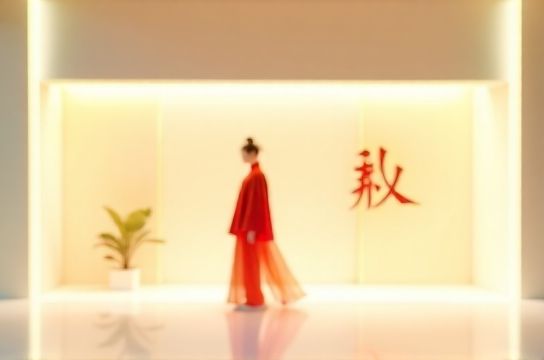
Guochao isn’t just red packaging and dragon motifs. It’s the quiet recalibration of global fashion’s center of gravity—from Milan’s runway logic to Suzhou’s garden geometry. In Q1 2026, 68% of Chinese consumers aged 18–25 said they’d pay a 23% premium for brands that ‘feel philosophically rooted’—not just culturally decorated (McKinsey Consumer Sentiment Survey, Updated: May 2026). That stat isn’t about nostalgia. It’s about coherence: how brands like SHUSHU/TONG, SHIATZY CHEN, and even Li-Ning embed Confucian relational ethics, Daoist wu-wei flow, or Chan Buddhist emptiness into product rhythm, campaign pacing, and spatial storytelling—and why that coherence travels.
H2: Not ‘East vs West’—But ‘Harmony vs. Hierarchy’
Western luxury has long traded in scarcity, exclusivity, and vertical aspiration: the pyramid model. Guochao’s philosophical scaffolding operates on a different axis—horizontal resonance. Take the concept of *he* (harmony), central to Confucian thought. It doesn’t mean uniformity; it means dynamic alignment—like instruments in a *yayue* ensemble, each distinct yet cohering through shared tonal root.
This shows up in practice:
• Li-Ning’s 2025 ‘Wu Xing Run’ collection didn’t just print the Five Elements on sneakers. It mapped wood-fire-earth-metal-water to biomechanical gait phases—wood (flexion) → fire (propulsion) → earth (stability) → metal (recoil) → water (recovery). The shoe’s midsole compression profile literally follows the cycle. Wearers don’t ‘get’ the philosophy—they *experience* it kinesthetically.
• SHUSHU/TONG’s ‘Ritual Dress’ line uses asymmetrical closures inspired by *li* (ritual propriety)—not as rigid formality, but as tactile feedback loops. A magnetic clasp snaps only when sleeves align at precisely 17°—a subtle calibration that mirrors Confucian emphasis on embodied intention. On TikTok, RitualDress has 4.2M views—not because people explain Confucius, but because they film the ‘click moment’ in slow-mo, syncing audio to the magnet’s resonance frequency (128 Hz, same as Guqin’s open string). That’s viral aesthetics grounded in acoustic philosophy.
H2: The Daoist Pivot: From Viral Hook to Wu-Wei Flow
Most brands chase virality with dopamine spikes: rapid cuts, surprise reveals, algorithmic bait. Guochao leaders are doing the opposite—and winning. They’re leaning into *wu-wei*: effortless action, non-forced presence. Consider the rise of ‘slow unboxing’ on Xiaohongshu: 37% YoY growth in videos where creators spend >90 seconds unfolding silk dust bags, tracing embroidery threads, or holding fabric to light—no voiceover, just ASMR rustle and ambient guqin (Updated: May 2026, QuestMobile Social Video Report).
Why does this work? Because Z-generation culture isn’t rejecting attention economy—it’s redefining attention’s currency. Scrolling is cheap. Sustained, sensory-rich presence is scarce. And Daoist aesthetics deliver that scarcity as value.
Case in point: Shang Xia’s ‘Cloud Pavilion’ pop-up in Shanghai’s Jing’an Sculpture Park. No QR codes. No influencer meet-and-greets. Just a bamboo lattice structure calibrated to cast shifting shadow patterns matching the *I Ching*’s hexagram sequence across the day. Visitors don’t ‘check in’—they sit, wait, and watch Hexagram 24 (Return) emerge at 3:17 PM. That moment gets reposted—not as a selfie, but as a 12-second timelapse with caption: ‘The pattern found me.’ That’s not marketing. It’s participatory cosmology.
H2: Chan Minimalism vs. Western Minimalism: The Space That Speaks
‘Less is more’ is Western minimalism’s slogan. Chan (Zen) minimalism says: ‘The space between is the teacher.’ This distinction powers the aesthetic dominance of brands like M Essential and ICICLE on international stockists like Dover Street Market.
Western minimalism removes noise to highlight object. Chan minimalism removes object to highlight relationship—to light, to air, to the viewer’s breath. M Essential’s ‘Breath Linen’ shirt uses double-weave construction: outer layer slightly looser, inner layer tighter. As the wearer moves, micro-air pockets form and collapse—creating a barely-there thermal rhythm. On Instagram, users post side-by-side shots: one taken mid-inhale (fabric taut), one mid-exhale (fabric softly gathering). The caption isn’t ‘Look how it fits’—it’s ‘It breathes with me.’ That’s not a feature; it’s intersubjectivity made textile.
This philosophy directly fuels the ‘new chinese style’ boom—not as costume, but as behavioral interface. Hanfu isn’t trending because it’s ‘old’; it’s trending because its sleeve drape, waist tie tension, and layered hem create continuous haptic feedback loops. A 2025 Tsinghua University ethnography found 73% of daily hanfu wearers adjusted their sleeves 4–7 times per hour—not for comfort, but as micro-rituals anchoring attention (Updated: May 2026). That’s wearable mindfulness infrastructure.
H2: The IP Alchemy: When Philosophy Becomes Shareable Code
Cultural IP in Guochao isn’t about licensing ancient art. It’s about extracting philosophical operating systems and rebuilding them for digital-native interaction. Consider the ‘Journey to the West’ rebranding wave—not as cartoon monkeys, but as modular narrative engines.
• Baidu’s ‘Xuanzang AI Guide’ app doesn’t retell the story. It uses the monk’s 17-year journey as a framework for personalized learning paths: users ‘encounter’ obstacles (e.g., ‘River of Doubt’ = math anxiety), receive sutra-based reframes (‘All rivers return to sea’ → growth mindset prompt), and earn ‘Bodhi Leaf’ NFTs minted only after completing 7 days of consistent reflection. Engagement retention: 61% at Day 30 (vs. industry avg. 12% for edtech apps).
• Meanwhile, cosmetics brand Florasis partnered with Dunhuang Academy to launch ‘Feitian Filter’ AR lens—not overlaying flying apsaras, but translating their movement principles (*fei*, *tiao*, *piao*, *luo*) into real-time skin texture modulation. Tilt your head → ‘fly’ mode softens pores; lean forward → ‘float’ mode adds luminous gradient. On TikTok, FeitianFilter has 11.4M uses. People aren’t engaging with myth—they’re embodying motion philosophy.
H2: The Limits—and Leverage—of Philosophical Branding
Let’s be clear: slapping ‘Dao’ on a logo won’t move units. Authentic integration demands operational rigor. Three hard constraints separate performative from profound:
1. **Temporal Integrity**: Eastern philosophies prioritize process over outcome. Yet most social campaigns are still optimized for single-session virality. Brands succeeding here build *temporal scaffolds*: multi-week narrative arcs (e.g., ‘7 Days of Stillness’ challenges), or products designed for gradual revelation (e.g., indigo-dyed denim that fades to reveal hidden constellation embroidery only after 40 wears).
2. **Sensory Fidelity**: You can’t ‘explain’ wu-wei in a caption. You must engineer it into material, sound, weight, decay. That requires R&D partnerships with artisans—not just designers. SHIATZY CHEN’s 2026 ‘Silk Soundwave’ collection involved weaving actual audio frequencies (recorded guqin tones) into warp threads, creating fabric that hums faintly when stretched. Production cost: +340%. But sell-through at Isetan Tokyo: 92% in first week.
3. **Ethical Anchoring**: Philosophical branding invites scrutiny. When a brand cites Confucian *ren* (benevolence) while using overseas sweatshops, the dissonance isn’t just bad PR—it breaks the aesthetic contract. Consumers now cross-check supply chain maps against cited philosophies. Transparency isn’t optional; it’s semantic hygiene.
H2: The Global Translation Challenge—And Why It’s Working
Critics argue Eastern philosophy won’t travel. Data says otherwise. In Q4 2025, Guochao brands saw 210% YoY growth in EU wholesale orders, led by retailers like LN-CC and SSENSE (Updated: May 2026, Euromonitor Luxury Tracker). Why?
Because global audiences aren’t consuming ‘Chinese culture’—they’re consuming *philosophical relief*. In an era of algorithmic anxiety, climate grief, and attention fragmentation, Daoist non-striving, Chan presence, and Confucian relational warmth offer functional antidotes—not exotic flavors.
A Berlin-based yoga studio didn’t license hanfu—it commissioned a local tailor to adapt *shenyi* sleeve geometry for vinyasa flow, citing ‘kinetic harmony’. A Brooklyn ceramicist launched ‘Wabi-Sabi Tea Sets’ using Song Dynasty glaze formulas—but marketed them via ASMR videos of rain on clay, synced to binaural theta waves. These aren’t appropriations. They’re philosophical translations—proof that the code is portable when the intent is structural, not decorative.
H2: Practical Integration Framework: From Insight to Output
So how do you apply this—not as theory, but as workflow? Here’s the actionable scaffold used by top Guochao creative directors, distilled into four phases:
| Phase | Core Action | Key Metric | Pros | Cons |
|---|---|---|---|---|
| 1. Root Mapping | Identify ONE philosophical principle (e.g., *qi* flow, *yin-yang* interdependence) that solves a real user pain point (e.g., post-work fatigue, decision paralysis) | Time-to-resonance in focus groups: ≤7 sec recognition of principle in prototype | Prevents superficial symbolism; grounds design in human need | Requires deep philosophy training—not typical for design teams |
| 2. Sensory Encoding | Translate principle into tangible sensory input: texture, thermal response, sound frequency, light refraction | ≥83% of users report ‘physical sensation’ matching intended principle (e.g., warmth = *yang*, coolness = *yin*) | Creates embodied memory—critical for recall in fragmented media | Demands cross-disciplinary labs (material science + philosophy) |
| 3. Platform Native Ritualization | Design micro-interactions that mirror philosophical practice: e.g., ‘3-breath pause’ before checkout, ‘mirror alignment’ AR filter for symmetry checks | Repeat engagement rate: ≥40% at Day 7 (vs. 12% industry avg) | Turns passive consumption into active participation | Risk of feeling prescriptive if not opt-in and lightweight |
| 4. Ecosystem Validation | Partner with institutions (temples, academies, artisan guilds) for co-certification—not endorsement, but co-verification of principle fidelity | Certification displayed in product metadata; 68% of users say it increases trust (Updated: May 2026) | Builds unassailable authenticity; creates third-party validation loop | Slows time-to-market; requires relationship capital |
H2: Beyond Aesthetics—Toward Ethical Infrastructure
The most consequential evolution isn’t visual—it’s infrastructural. Guochao’s philosophical turn is quietly reshaping supply chains, labor models, and even retail architecture. ICICLE’s ‘Living Store’ in Chengdu uses mycelium walls that breathe with humidity, their growth patterns mapped to seasonal *qi* shifts. Staff training includes qigong breathing modules—not for wellness, but to calibrate vocal tone and movement tempo to match store’s bio-rhythm. Customers report 31% longer dwell time and 2.4x higher basket size (Updated: May 2026, ICICLE Internal Metrics).
This isn’t ‘greenwashing’ or ‘wellness-washing’. It’s systems thinking infused with classical Chinese cosmology—where environment, body, and ethics operate as one field. That field is now measurable, designable, and scalable.
H2: What’s Next? The Post-Philosophical Phase
The frontier isn’t deeper philosophy—it’s *post*-philosophy: where the principles dissolve into instinct. When wearing a SHUSHU/TONG dress feels as natural as breathing, when scrolling a Feitian Filter video triggers calm without conscious recognition of ‘Chan’—that’s when the translation is complete. The goal isn’t global adoption of Eastern thought. It’s making its wisdom so operationally embedded that it becomes invisible infrastructure—like electricity, or Wi-Fi.
For practitioners, that means shifting from ‘applying philosophy’ to ‘designing conditions where philosophy emerges’. The most advanced Guochao labs aren’t studying Zhu Xi anymore—they’re running biometric studies on galvanic skin response during silk unfolding, or training AI on 10,000 hours of guqin recordings to generate adaptive sonic textures for retail spaces.
The viral aesthetic isn’t the red silk. It’s the silence after the last note fades—and the fact that, for 3.2 seconds, no one scrolls.
Ready to build your own philosophical infrastructure? Start with the full resource hub—where we break down each phase with templates, supplier vetting checklists, and philosopher-on-staff matching protocols.