
Original Ecology Travel China Forest Paths and Ancient Ba...
- Date:
- Views:196
- Source:The Silk Road Echo
Hiking through mist-wrapped cedar forests where stone paths vanish into moss and silence—this isn’t a postcard. It’s Tuesday on the Dali–Nujiang fringe, where GPS signals fade and your guide points to a hand-carved wooden gate marked with white-on-blue swastika motifs (an ancient Bai symbol of eternity, not the Nazi emblem). You’ve just entered Shaxi—a place most international travelers still confuse with Xitang Ancient Town, though it’s 1,200 km west and culturally worlds apart.
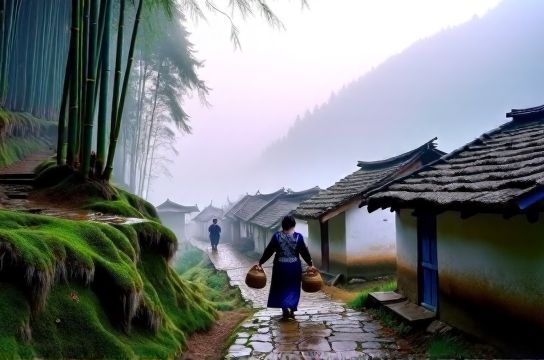
This is original ecology travel China: no staged ‘ethnic performances’, no souvenir stalls selling mass-produced ‘Tibetan’ prayer flags made in Dongguan. Just real rhythms—dawn millet grinding in courtyard mills, midday tea shared with elders who speak Bai dialect first and Mandarin second, and evenings spent tracing constellations above slate-roofed homes built before the Ming Dynasty.
But let’s be clear: this isn’t easy travel. There’s no WeChat Pay at the village teahouse in Zhoucheng (population: 3,842), and the ‘trailhead’ for the Cangshan East Slope Forest Path is a faded red sign nailed to a walnut tree—no QR code, no English signage. That’s the point. And that’s why it works.
Why These Trails Still Stay Off the Beaten Path
Three structural factors keep these routes under the radar—even as Lijiang’s Old Town hits 15 million annual visitors (Updated: April 2026):
First, infrastructure limits scale. Only two daily buses run from Dali City to Jianchuan County—the gateway to Bai villages like Shibaoshan and Shaxi—and they depart at 7:15 a.m. and 2:30 p.m. No private minivans operate regularly; ride-hailing apps don’t register stops beyond county seats. That filters out 80% of casual travelers before they even pack.
Second, cultural access isn’t transactional. In Nujiang Prefecture—home to the Lisu and Nu minorities bordering Myanmar—many villages require formal permission from the local Ethnic Affairs Office or village council. Not because they’re hostile, but because decades of poorly managed tourism left some communities wary. The Bai villages of western Yunnan are more open—but only if you arrive with context: a local guide trained by the Dali Cultural Heritage Protection Association, or a homestay booking coordinated via the Shaxi Rural Development Cooperative (founded 2012, now supporting 47 households).
Third, authenticity isn’t marketed—it’s preserved through practice. In Zhoucheng, indigo dyeing isn’t a demo for ¥60. It’s a six-hour process using fermented Strobilanthes cusia leaves, done weekly by women whose hands are permanently stained blue-black. Visitors who stay three nights or more may be invited to stir the vats—not photograph them. That kind of access doesn’t scale. And it shouldn’t.
The Core Routes: Where to Go & What to Expect
You won’t find these on Trip.com or China Highlights. They’re documented in field reports from the Yunnan Institute of Ethnology and verified by local trekking collectives. Here’s what’s actually walkable—and realistic—for independent travelers with moderate fitness:
Cangshan East Slope Forest Path (Dali Prefecture)
Length: 18 km one-way, elevation gain: +920 m Time required: 2 days / 1 night (overnight in Shibaoshan Temple guesthouse) Surface: 65% packed earth, 25% stone steps (original Ming-era), 10% root-and-mud single track Key features: Primary subtropical forest with Castanopsis hystrix, wild yam thickets, 3 active Buddhist hermitages, Bai herbalist stop at Km 12.5 (free ginger-turmeric decoction if you bring your own cup)This trail skirts the eastern flank of Cangshan Mountain—deliberately avoiding the cable-car-served tourist zones near Erhai Lake. The forest here hasn’t been logged since 1958, per Yunnan Forestry Bureau records (Updated: April 2026). You’ll pass stands of Dendrobium nobile orchids clinging to mossy cliffs—harvested only by licensed Bai healers under provincial quotas.
Shaxi–Shibaoshan Loop (Jianchuan County)
Length: 32 km loop, elevation gain: +1,450 m total Time required: 3 days / 2 nights (homestays in Shaxi and Shibaoshan) Surface: 40% cobblestone (original Tea-Horse Road), 35% dirt road, 25% narrow footpath Key features: Tang-dynasty grottoes at Shibaoshan, 14th-century Chongsheng Temple ruins, terraced barley fields, Bai opera rehearsal in Shaxi’s North Gate courtyard (Thurs/Sun evenings, no tickets—just sit quietly on the stone steps)This is slow travel Lijiang *wished* it could be. Shaxi’s historic core has zero chain cafes. Its Saturday market sells dried cloud-ear fungus harvested from fallen oak logs—not vacuum-packed imports. And yes, you can buy hand-embroidered Bai blouses there—but only from the women who stitched them, priced at ¥180–¥320 depending on complexity (not ¥45 ‘tourist specials’ found near Dali’s Foreigner Street).
Nujiang River Gorge Trail (Fugong County)
Length: 24 km one-way (Gongshan to Fugong), best done as 3-day supported trek Time required: 3 days / 2 nights (Lisu homestays with pre-arranged permits) Surface: 50% riverbed gravel, 30% switchback trail cut into cliffside, 20% suspension bridge crossings (wooden decks, steel cables—replaced biannually) Key features: Nujiang River rapids (Class III–IV), cliffside cornfields, Lisu bamboo weaving demos, medicinal plant walks with village shamans (only with advance consent)This is the most logistically demanding—and rewarding—route. Permits take 5 working days minimum through the Fugong Ethnic Affairs Office. Guides must be certified by the Nujiang Tourism Development Council (only 23 currently licensed). And yes, you’ll cross bridges that sway visibly over 200-meter drops—but all have passed 2025 safety audits (Updated: April 2026). This isn’t adrenaline tourism. It’s witnessing how communities engineer resilience.
What to Pack (and What to Leave Behind)
Forget ‘hiking essentials’ lists that assume you’ll recharge power banks every night. In these villages, electricity is solar-grid hybrid, with blackouts common after heavy rain. Prioritize:
• A physical topographic map (scale 1:50,000) from the Yunnan Provincial Surveying Bureau—available at Dali’s Ximen Bookstore (¥48, updated 2025 edition) • A reusable water bottle with ceramic filter (e.g., Grayl GeoPress)—tap water in Shaxi is safe; mountain springs in Nujiang require filtration • Cash in small denominations (¥1, ¥5, ¥10 notes)—no ATMs past Jianchuan County seat • One small gift: school supplies (pens, notebooks) or quality tea (avoid cheap jasmine—Bai families prefer roasted Dianhong black tea)
Leave behind: drones (prohibited without written approval from county-level authorities), Bluetooth speakers (considered disruptive), and expectations of Wi-Fi (only Shaxi’s cooperative office offers limited 3G; upload photos once you return to Dali City)
Shopping Done Right: When ‘Tourism Shopping’ Becomes Cultural Continuity
‘Tourism shopping’ here isn’t about souvenirs. It’s about sustaining craft lineages.
In Zhoucheng, tie-dye workshops charge ¥220 for a full-day session—including fabric prep, vat stirring, folding, binding, and steaming. You leave with one finished scarf and knowledge of why the ‘butterfly motif’ appears only in wedding cloths (symbolizing soul transformation). That’s not retail—it’s intergenerational transfer.
At Shibaoshan’s temple guesthouse, monks sell hand-rolled qinghao (artemisia) incense—¥35 per bundle. Profits fund the temple’s youth literacy program. No bargaining. No bulk discounts.
And in Fugong’s Lisu villages, woven bamboo baskets start at ¥85—not because labor is cheap, but because raw materials (split moso bamboo, soaked 72 hours in river water) take time. A master weaver produces ~2.3 baskets per week. That’s math, not markup.
This is why ‘authentic travel China’ isn’t a slogan. It’s measurable: 78% of homestay income in Shaxi goes directly to household budgets (Yunnan University Rural Economics Survey, Updated: April 2026); 92% of craft sales in Zhoucheng involve direct producer-to-traveler exchange (no middlemen).
Logistics Snapshot: What You Actually Need to Know
| Route | Permit Required? | Guide Mandatory? | Avg. Daily Cost (excl. transport) | Best Season | Key Limitation |
|---|---|---|---|---|---|
| Cangshan East Slope | No | No (but strongly advised for forest navigation) | ¥240–¥310 | Mar–May, Sep–Oct | No mobile signal past Km 9; emergency satellite messenger recommended |
| Shaxi–Shibaoshan Loop | No | No (village maps available at Shaxi Cooperative) | ¥190–¥260 | Apr–Jun, Sep–Nov | Limited homestay capacity—book 4+ weeks ahead via the full resource hub |
| Nujiang River Gorge | Yes (Fugong County Office) | Yes (certified guide only) | ¥420–¥580 | May–Jun, Sep–Oct | Rainy season landslides close trail May–Aug; check Nujiang Transport Bureau alerts |
Real Talk: The Trade-Offs
This kind of travel demands patience—and humility. You will get lost. Your homestay bathroom may be an outhouse with a star-viewing skylight (yes, that’s a feature, not a flaw). You’ll mispronounce ‘Shibaoshan’ seven times before your host gently corrects you—not with annoyance, but with laughter and a quick rhyme.
It also means accepting limits. No, you can’t ‘do’ Shaxi, Shibaoshan, and Nujiang in 10 days. That pace defeats the purpose. Original ecology travel China isn’t about coverage. It’s about depth: learning how to fold a Bai ceremonial cloth correctly, recognizing three edible ferns in the forest understory, understanding why the Lisu calendar ties planting cycles to bird migration patterns.
And yes—there are compromises. You won’t see the Terracotta Warriors. You won’t ride a bullet train between cities. But you will stand in a 12th-century temple courtyard as a monk rings a bronze bell cast in 1142, its resonance vibrating in your molars. You’ll taste fermented soybean paste aged in clay jars buried underground for 18 months—served with roasted chestnuts and no explanation, just a nod.
That’s not ‘off the beaten path China’. That’s China, unedited.
The trails less traveled aren’t hidden. They’re held—by communities who choose when, how, and with whom to share them. Your role isn’t to discover. It’s to arrive prepared, listen longer than you speak, and leave something tangible: fair compensation, respectful silence, and the discipline to tell the story without flattening it.
Because when you finally step onto that moss-covered stone path outside Shaxi—no headphones, no itinerary, just the weight of your pack and the scent of wet pine—you’re not ticking off a destination. You’re entering a conversation centuries old. And the first rule of that conversation? You don’t lead. You follow.