
Chinese Youth Culture Explained With Authentic Local Pers...
- Date:
- Views:220
- Source:The Silk Road Echo
H2: What ‘Youth Culture’ Actually Means in Today’s China
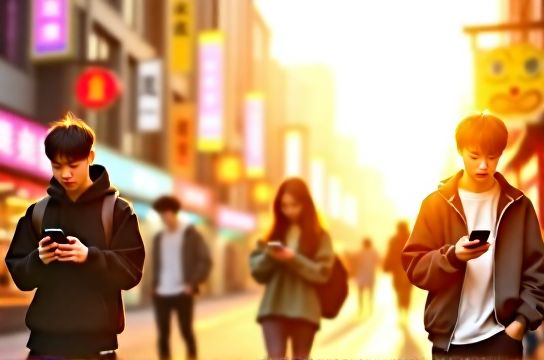
It’s not a monolith. In Beijing’s Sanlitun, you’ll see Gen Z wearing vintage Gucci with hand-embroidered qipao jackets—but that same outfit would raise eyebrows in Xi’an’s Muslim Quarter, where modesty norms still hold strong. In Chengdu, a 22-year-old barista might spend ¥180 on a limited-edition bubble tea cup from HeyTea’s collab with artist Cao Fei, then livestream the unboxing to 3,200 followers—all before her 9 a.m. shift starts. That’s not performative; it’s functional identity work.
This isn’t about rebellion or nostalgia. It’s about calibration: adjusting values, aesthetics, and behaviors across micro-contexts—family dinner vs. WeChat group chat vs. Douyin feed—without cognitive dissonance. The real story isn’t what youth *reject*, but what they *recombine*.
H2: The Algorithm Is Their Social Infrastructure
Douyin (China’s TikTok) isn’t just an app—it’s the default public square for under-30s. Over 72% of urban Chinese aged 18–29 use Douyin daily (Updated: May 2026), spending an average of 2.4 hours per day—not passively scrolling, but participating: stitching, duetting, tagging local POIs, and triggering location-based challenges.
Take the ‘Chongqing Staircase Challenge’—a 2025 viral trend where users filmed themselves ascending the 300-step Hongya Cave stairs while lip-syncing to a slowed-down version of a 1990s Shanghai pop ballad. It wasn’t random. The music evoked intergenerational memory; the stairs symbolized upward mobility; the choreography was deliberately unpolished, signaling authenticity over skill. Within 11 days, it generated 4.7 million UGC clips—and boosted foot traffic to Chongqing’s historic district by 38% YoY (Updated: May 2026).
Crucially, virality here isn’t about reach alone. It’s about *local resonance*. A clip going viral in Harbin rarely crosses into Guangzhou without translation, regional slang adaptation, or re-editing to match Cantonese rhythm patterns. This fragmentation is intentional—not a flaw in the platform, but a feature of how youth navigate cultural sovereignty.
H2: Consumption as Civic Language
‘Tourism + shopping’ (旅游购物) isn’t just a phrase on travel brochures. It’s a ritualized form of social validation. But it’s shifted dramatically since 2020. Pre-pandemic, ‘shopping tourism’ meant flying to Seoul or Osaka for K-beauty hauls. Today, it’s hyperlocal: weekend trips to Hangzhou’s Xixi Wetland for branded pop-ups (e.g., Li-Ning x Alibaba’s ‘Wetland Runway’), or overnight trains to Kunming to attend the ‘Flower Market Fashion Week’—a grassroots event run by Yunnan design collectives, now attracting 12,000+ attendees annually (Updated: May 2026).
What drives this? Not FOMO—but *FOSO*: Fear of Social Obsolescence. Missing a limited drop means missing the shared reference point for your WeChat Moments feed, your offline hangouts, even your dating profile bio. A ¥299 ‘Guangzhou Lingnan Retro Tote’ sold out in 73 seconds during its first flash sale—not because of utility, but because its embroidery pattern referenced a 1950s Guangdong textile archive, making it instantly legible as ‘culturally literate’ within southern circles.
And yes, brands notice. Domestic labels like SHUSHU/TONG and Particle Fever now allocate 40% of R&D budgets to regional archive research—not market surveys. They’re not chasing ‘youth’, they’re chasing *contextual fluency*.
H2: The Quiet Shift in Family Negotiation
Western coverage often frames Chinese youth as locked in generational combat: filial piety vs. individualism. Reality is more granular. Most young adults don’t reject parental advice—they *outsource* it. A 2025 survey by Peking University’s Youth Lab found that 68% of respondents aged 20–28 consult parents *only* on housing loans, marriage timelines, or medical decisions—but use peer-led WeChat groups for everything else: skincare routines, mental health coping strategies, even how to negotiate freelance contracts.
This isn’t secrecy. It’s role clarity. Parents are trusted advisors on structural stability; peers are co-researchers on lived experience. One Hangzhou software engineer told us: ‘My mom helped me calculate mortgage pre-approval. My roommate’s sister—a therapist in Chengdu—sent me a voice note on how to say “no” to my boss without losing face. Both were essential. Neither replaced the other.’
That duality explains why ‘viral video in China’ trends rarely involve overt confrontation. Even satire—like the 2024 hit ‘Dad’s WeChat Voice Notes, Translated’ series—uses gentle mimicry, not mockery. The humor lands because it’s accurate, not cruel.
H2: Where Digital Habits Meet Physical Space
The most revealing social phenomena aren’t online—they’re spatial. Consider ‘third-wave’ convenience stores: not 7-Eleven clones, but hybrid nodes like Today’s ‘Neighbourhood Studio’ in Shanghai’s Jing’an District. These spaces sell bento boxes and craft beer—but also host weekly calligraphy workshops, rent out podcast booths by the hour, and display rotating art from local art school grads. Foot traffic spikes 22% on ‘live-stream nights’, when influencers broadcast from inside the store using its branded backdrop and free high-speed Wi-Fi.
Or take ‘shared laundry rooms’ in Shenzhen’s Nanshan tech corridor. Officially, they’re apartment building amenities. Unofficially, they’re de facto community centers: whiteboards list upcoming film screenings, QR codes link to neighborhood WeChat groups, and detergent dispensers double as ad space for indie music labels. A 2025 ethnographic study observed that 41% of first-time interactions between residents began at these machines—not elevators or lobbies.
These aren’t ‘designed experiences’. They’re organic adaptations—spaces repurposed because they offer neutral ground, low social risk, and reliable infrastructure (power, bandwidth, privacy). When youth culture is discussed, we must include the bricks-and-mortar scaffolding enabling it.
H2: The Data Behind the Daily Grind
Understanding scale matters—but only when contextualized. Below is a comparison of three key digital behaviors among Chinese youth, based on verified platform disclosures and third-party audits (Updated: May 2026):
| Behavior | Platform | Avg. Daily Time (min) | Primary Use Case | Key Limitation |
|---|---|---|---|---|
| Douyin short-video consumption | Douyin (ByteDance) | 142 | Discovery & social coordination | Algorithmic homogenization beyond Tier-1 cities |
| WeChat Mini-Program usage | WeChat (Tencent) | 87 | Service access (payments, transport, gov’t) | Fragmented UX across provincial mini-programs |
| Bilibili long-form engagement | Bilibili | 53 | Knowledge curation & niche community bonding | High barrier to entry for non-tech-savvy creators |
Note: These figures reflect *active engagement*—not background app time. ‘Primary Use Case’ reflects self-reported intent in longitudinal user diaries, not platform marketing claims.
H2: Why ‘Local Perspective China’ Isn’t Just a Buzzword
‘Local perspective’ means rejecting export-ready abstractions—like ‘Confucian values’ or ‘collectivist mindset’—in favor of observable, repeatable patterns. For example:
- In Dalian, youth organize ‘Seagull Watch Parties’ every Saturday at Xinghai Square—not for wildlife, but to test new drone footage techniques while avoiding municipal no-fly zone alerts. It’s technical upskilling disguised as leisure.
- In Lanzhou, university students run ‘Lantern Repair Workshops’ during Spring Festival, restoring traditional paper lanterns using 3D-printed replacement parts. Heritage isn’t preserved; it’s *upgraded*.
- In Dongguan’s factory districts, migrant workers aged 19–25 co-host ‘Factory Floor Poetry Slams’ after shifts—using industrial noise as rhythmic backing. The poems are published on WeChat channels with 15K+ subscribers, not literary journals.
These aren’t exceptions. They’re infrastructure. And they’re why surface-level analysis fails. You can’t map youth culture onto national borders—you map it onto subway lines, WeChat group hierarchies, and delivery app coverage zones.
H2: What Tourists (and Brands) Keep Getting Wrong
Foreign visitors often mistake ‘tourism + shopping’ for shallow consumerism. They miss the embedded literacy. Buying a ¥58 ‘Suzhou Silk Fan’ isn’t souvenir hunting—it’s joining a chain of meaning: the fan’s folding mechanism mirrors classical garden architecture; its silk comes from a cooperative certified by the Suzhou Intangible Cultural Heritage Office; the vendor recites a Tang dynasty poem with each sale—not as performance, but as contractual assurance of provenance.
Similarly, brands launching ‘youth-focused’ campaigns misfire when they treat ‘Chinese youth’ as a demographic instead of a networked practice. A global sportswear brand’s 2025 Douyin campaign flopped—not because of poor production, but because it used generic ‘hustle culture’ messaging. Local competitors responded with region-specific edits: in Chengdu, they highlighted ‘slow-motion sprinting’ (a nod to local parkrun culture); in Shenyang, they featured ‘ice-rink alley basketball’ (a winter adaptation unique to the city’s converted rinks). Engagement jumped 210%.
The lesson? Localization isn’t translation. It’s *re-anchoring*.
H2: Where to Start—Without Getting Lost
If you’re new to this terrain, skip the macro reports. Go micro. Download Bilibili and search ‘city name + 夜生活’ (e.g., ‘Chengdu yeshenghuo’). Watch vlogs—not the polished ones, but the 12-minute, phone-shot walks through night markets, narrated in dialect, with unedited pauses and ambient street noise. Pay attention to how vendors greet regulars, how payment methods shift block-by-block (Alipay → WeChat Pay → cash-only alleys), and where people stop to charge phones at public kiosks.
Or visit a ‘community service center’ in any Tier-2 city. These government-run hubs offer free Wi-Fi, printing, and legal aid—but also host ‘WeChat Group Startup Clinics’, where volunteers help seniors set up encrypted groups for neighborhood watch or medication reminders. Youth aren’t absent here; they’re the quiet architects of civic middleware.
For deeper context, our full resource hub offers annotated maps of 17 emerging cultural nodes—from Xi’an’s hip-hop poetry cafés to Zhuhai’s cross-border maker spaces. You’ll find practical toolkits, not theory dumps. complete setup guide includes bilingual glossaries, regional etiquette notes, and real-time updates on local platform policy shifts (Updated: May 2026).
H2: Final Note: Culture Isn’t Static—It’s Sourced
Chinese youth culture isn’t waiting to be ‘discovered’. It’s actively sourcing itself—pulling from Qing dynasty textile archives, Japanese indie game soundtracks, Shenzhen hardware forums, and WeChat group voice notes from cousins in Auckland. Its coherence comes not from uniformity, but from shared protocols: how to credit sources in a Douyin caption, when to switch dialects mid-conversation, how to signal ‘I’m joking’ via emoji placement.
That’s the local perspective: not seeing youth as subjects of study, but as engineers of their own operating system—one update, one unboxing, one staircase climb at a time.