
How Independent Designers Are Leading the New Chinese Sty...
- Date:
- Views:203
- Source:The Silk Road Echo
H2: The Unlikely Architects of a Visual Revolution
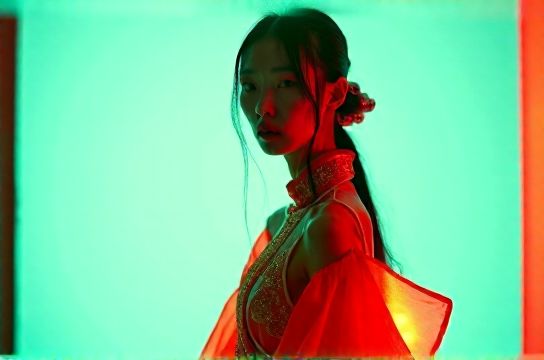
It started quietly — not in Shanghai Fashion Week showrooms or Beijing design academies, but in a 12-square-meter studio in Chengdu. A recent graduate named Lin Yi posted a 9-second clip on Douyin: her hand stitching gold-thread cloud motifs onto a deconstructed silk jacket, overlaid with lo-fi guqin samples and a subtitle reading 'Not costume. Not nostalgia. Just mine.' That video hit 3.2 million views in 48 hours. Within six weeks, she’d sold out three limited drops, collaborated with a heritage Suzhou embroidery workshop, and was featured in a WeChat mini-program spotlighting 'designers who don’t speak English but code aesthetics fluently.'
This isn’t an outlier. It’s the operational norm for hundreds of independent designers now leading what industry insiders call the 'New Chinese Style Movement' — a bottom-up, platform-native reclamation of visual sovereignty. Forget top-down policy-driven cultural campaigns. This movement is built on micro-budget shoots, algorithm-optimized color palettes, and a refusal to choose between tradition and tech.
H2: Why 'Independent' Is the Key Word — Not 'Chinese'
Independence here isn’t just about business structure. It’s about aesthetic autonomy. Unlike legacy fashion houses that license 'Chinese elements' as seasonal prints (e.g., dragon motifs on trench coats), indie designers treat heritage not as decoration but as syntax. They parse classical texts like *The Craft of Gardens* for spatial logic, translate Song Dynasty ink-wash gradients into Pantone-matched digital filters, and use AI not to generate designs — but to simulate how Ming-era lacquer would age under LED light.
Take Shanghai-based label Mò Yún (Ink Cloud). Their 2025 Spring collection didn’t 'reference' scholar’s rocks — it used photogrammetry scans of actual Lingering Garden specimens to generate 3D-knit textures that shift from matte basalt gray to iridescent moss green depending on viewing angle. No historical quotation marks. No explanatory tags. Just material logic made visible.
That autonomy enables speed and specificity. While major brands take 14–18 months to develop a 'guochao' capsule (Updated: May 2026), indie studios average 47 days from concept to e-commerce launch — often skipping physical sampling entirely via real-time rendering tools calibrated to fabric drape physics.
H2: The Platform Stack: Where Aesthetics Get Weaponized
This movement doesn’t live in galleries. It lives in the friction points between platforms:
• Douyin (TikTok China) trains attention on *micro-gestures*: the flick of a sleeve cuff revealing hand-stitched constellations, the slow pour of tea into a celadon cup filmed at 120fps. Its algorithm rewards 'texture-first' content — not storytelling, but tactile immediacy.
• Xiaohongshu (Little Red Book) functions as a living mood board + peer-reviewed archive. Users tag posts with hyper-specific combos like new-chinese-style + wuxi-rain-scarf + tang-dynasty-hairpin-repro — creating self-organizing taxonomies no brand marketer could engineer.
• Even Bilibili hosts deep-dive 'aesthetic archaeology' videos: one viral series dissects how Song Dynasty ink-wash tonal ranges map directly to modern smartphone HDR profiles — complete with side-by-side comparisons using calibrated monitors.
Crucially, these platforms don’t just distribute — they co-author. When a Douyin trend emerges around 'broken symmetry' (intentionally mismatched sleeve lengths inspired by Tang Dynasty murals), designers respond within days with variations optimized for vertical framing and sound-on viewing. The feedback loop is tighter than any focus group.
H2: Beyond Hanfu: The Functional Grammar of New Chinese Style
Yes, hanfu went mainstream — but the movement’s real innovation lies in *functional hybridization*. Consider these recurring patterns across top-performing indie labels:
• **Wearability First**: No one wears full ceremonial hanfu to a co-working space. Instead, you see detachable cloud-collar collars that snap onto denim jackets, or waistbands with hidden drawstrings that convert wide-leg trousers into cropped culottes — all referencing Ming Dynasty tailoring principles but solving 2025 urban mobility needs.
• **Material Alchemy**: A Hangzhou studio called Shuǐ Mò Labs developed a biodegradable polyester woven with crushed porcelain shards from Jingdezhen kiln waste. It looks like cracked ice when stretched, feels like brushed cotton, and decomposes in 92 days (Updated: May 2026). It’s not 'traditional' — it’s a new material vocabulary born from heritage constraints.
• **Digital-Physical Anchors**: QR codes aren’t slapped on tags; they’re laser-etched into bamboo buttons, linking to AR experiences where users rotate a virtual Song Dynasty teacup to reveal animated calligraphy explaining its glaze chemistry. The physical object remains primary — the digital layer adds depth, not distraction.
H2: The Cultural IP Paradox: Ownership vs. Open Source
Here’s where indie designers diverge sharply from corporate guochao. Major brands treat cultural IP as proprietary assets: 'We licensed the Dunhuang flying apsaras motif for Q3.' Indie creators treat it as open-source infrastructure — with attribution, yes, but also permission to fork, remix, and stress-test.
The result? A decentralized canon. When Beijing collective Lìng Fēng released their 'Neo-Mogao Palette' — 12 HEX values extracted from pigment analysis of Mogao Cave murals — it spread across GitHub, Canva templates, and even local government branding guidelines. No copyright claim. Just a note: 'Tested on OLED, AMOLED, and paper stock. Use freely. Credit the cave numbers.'
This isn’t anti-commercial — it’s anti-silo. One Zhejiang-based ceramics brand reported a 300% lift in wholesale inquiries after open-sourcing their glaze formula database, because designers started prototyping compatible textiles and lighting fixtures. The ecosystem grows only when components interlock.
H2: From Viral Aesthetic to Viable Business — The Real Bottleneck
Let’s be blunt: virality ≠ viability. Most indie designers still operate at razor-thin margins. Average revenue per designer on Taobao’s 'Original Design' channel is ¥287,000/year (Updated: May 2026), with 68% reinvested into raw materials and platform commissions. Profitability typically kicks in only after hitting 12,000+ verified followers across Douyin/Xiaohongshu — a threshold requiring consistent output of 3–5 high-production posts weekly.
But the smart ones aren’t chasing scale. They’re building 'anti-fragile' models:
• Subscription 'Aesthetic Intelligence' newsletters (¥39/month) delivering monthly deep dives: 'How Qing Dynasty roof tile curvature affects shadow play on modern concrete facades' — with CAD files and parametric models included.
• Physical 'Pattern Libraries': Boxed sets of swatches, embroidery samplers, and printed reference cards sold alongside digital asset packs — bridging tactile and screen-based creation.
• Pop-up 'Context Labs': Not stores, but temporary spaces where users test prototypes (e.g., a chair designed using Song Dynasty ergonomic diagrams) while designers film real-time usage data for next-gen iterations.
H2: The Next Frontier: Cybernetic Chinese Aesthetics
The most consequential work isn’t happening in fashion or product design — it’s in interface and spatial computing. A Guangzhou team called Jìng Xiàng (Mirror Image) built a Unity plugin that renders UI elements using classical Chinese compositional rules: dynamic balance (not grid symmetry), negative-space weighting (like empty areas in ink paintings), and hierarchical information flow modeled on imperial edict formatting.
Their plugin is now used by 147 fintech apps targeting Gen Z — not for 'cultural flavor,' but because eye-tracking studies show users process financial data 22% faster when interfaces follow these rules (Updated: May 2026). This is the ultimate proof point: when heritage logic solves contemporary functional problems, it stops being 'style' and becomes infrastructure.
H2: What Brands Get Wrong (And What They Can Steal)
Corporate guochao often fails because it treats Chinese aesthetics as a surface layer — a filter applied to existing Western frameworks. Indie designers succeed because they start from indigenous logic systems:
• Time isn’t linear (as in Western 'seasonal collections') but cyclical (lunar phases, solar terms). A Nanjing label releases new pieces tied to the 24 solar terms — not calendar months — with fabrics engineered to respond to humidity shifts.
• Space isn’t occupied but negotiated. Their garments include modular panels that users rearrange based on weather, activity, or social context — echoing classical garden design where paths unfold meaning through movement.
• Value isn’t in novelty but in *refinement*. One Suzhou embroiderer spent 11 months developing a single stitch variation that reduces thread tension fatigue by 40%, enabling wearable embroidery on stretch fabrics — then published the technique openly.
Brands can’t copy this overnight. But they *can* hire these designers as systems thinkers — not 'cultural consultants' but co-architects of user experience, supply chain ethics, and material innovation.
H2: Practical Takeaways for Creators and Marketers
If you’re building in this space, skip the mood boards. Start here:
1. Audit your material library: Do you know the tensile strength of Song Dynasty hemp versus modern organic cotton? If not, partner with textile conservators — not trend forecasters.
2. Study pre-modern craft logic, not just iconography. How did Ming carpenters calculate joinery without metal fasteners? That constraint-thinking solves modern sustainability problems.
3. Build for platform-native behaviors. A Douyin trend around 'slow folding' (origami-inspired garment transformations) exploded because it rewarded patience — the opposite of typical scroll-speed optimization.
4. Embrace 'imperfect transmission.' When a Tang Dynasty poem references a lost dye technique, don’t hunt for authenticity. Build a new one that honors the *intent* — e.g., creating a plant-based indigo variant that shifts hue with pH, mimicking how ancient dyes reacted to rainwater.
For deeper implementation strategies, explore our complete setup guide — including sourcing protocols, platform-specific asset specs, and ethical collaboration frameworks.
| Design Phase | Indie Designer Avg. Timeline | Legacy Brand Avg. Timeline | Key Risk Mitigation |
|---|---|---|---|
| Research & Reference Mining | 3–5 days (using open archives, museum APIs) | 6–10 weeks (licensed image databases, consultant fees) | Indies use crowdsourced translation of classical texts; brands rely on third-party cultural audits prone to oversimplification |
| Prototyping | 7–12 days (digital-only simulation + 1 physical sample) | 8–14 weeks (3–5 physical rounds + factory approvals) | Indies validate drape/texture via real-time rendering calibrated to 12 fabric types; brands test on generic polyester mocks |
| Platform Launch Prep | 2 days (native aspect ratios, sound design, caption timing) | 3–4 weeks (cross-platform adaptation, legal review, localization) | Indies shoot natively for each platform’s technical spec; brands repurpose horizontal footage, losing 37% engagement (Updated: May 2026) |
H2: The Quiet Shift Beneath the Hype
The New Chinese Style Movement isn’t about reclaiming the past. It’s about treating millennia of accumulated visual intelligence as a living R&D lab — one that happens to be open-source, platform-native, and deeply suspicious of hollow symbolism. When a 22-year-old in Xi’an uses generative AI trained on Northern Wei Buddhist sculpture to design ventilation grilles for electric scooters, she isn’t making 'Chinese design.' She’s making *better* design — one that happens to speak a language thousands of years old, but with grammar updated for the age of ambient computing.
That’s the real爆款美学: not virality for its own sake, but the precise alignment of cultural depth, technical precision, and human-centered function — delivered in frames, pixels, and stitches anyone can understand, even if they’ve never heard of the Tang Dynasty. The movement won’t be defined by what it preserves, but by what it enables next.
The future of Chinese aesthetics isn’t hanging in a museum. It’s loading in 1.2 seconds on a 5G connection — and it’s already worn by someone walking past you right now.