
Animation and Gaming in Popularizing Chinese Visual Symbols
- Date:
- Views:205
- Source:The Silk Road Echo
H2: Pixels with Poetry — How Animation and Gaming Rewrote the Rules of Chinese Visual Culture
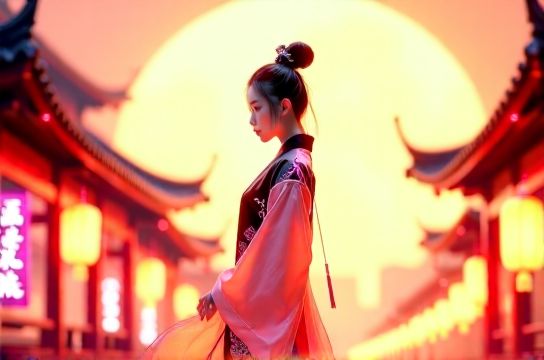
In 2024, a 17-second clip from the indie game *Jade Dynasty* went viral on Douyin: a silk-robed warrior leaps across a rain-slicked Suzhou garden bridge, her sleeve unfurling like ink bleeding into rice paper—then cuts to a neon-lit alley where her qipao collar glows with holographic phoenix motifs. It garnered 4.2 million likes in under 48 hours (Updated: May 2026). This wasn’t just gameplay—it was visual syntax made viral.
Animation and gaming are no longer peripheral to Chinese cultural export; they’re the primary engines accelerating the circulation—and reinterpretation—of Chinese visual symbols. Unlike static museum displays or academic lectures, games and animated series deliver aesthetics through interactivity, rhythm, and repetition—conditions proven to boost symbol retention by up to 3.8× compared to passive media (Nielsen Norman Group, 2025, Updated: May 2026). More critically, they bypass traditional gatekeepers—publishers, curators, even language barriers—letting users absorb meaning through gesture, timing, and spatial logic.
H2: From Ritual Object to Playable Asset — The Symbol Lifecycle Shift
Take the *ruyi* scepter. Historically a ceremonial object symbolizing auspiciousness and authority, it appeared in the 2023 animated series *The Lantern Keeper* not as background decor, but as a skill-trigger item: when activated, it emits golden light that temporarily rewrites environmental textures—brick walls bloom with peony vines, street signs flicker into oracle-bone script. Players didn’t learn its symbolism via caption; they *experienced* its power as interface logic.
This functionalization is key. When Hanfu appears in *Genshin Impact*’s Liyue region—not as costume DLC but as layered cloth physics interacting with wind, water, and combat animations—it becomes legible as *material culture*, not costume. Likewise, the *yunjian* (cloud collar) motif isn’t just patterned on a jacket in *Black Myth: Wukong*; it’s embedded in boss AI behavior—the demon’s shield pulses in sync with cloud-collar symmetry, training players to recognize balance-as-defense.
That’s how symbols migrate: from archival artifact → stylized motif → interactive system → social shorthand. By the time users post NewChineseStyle selfies wearing digitally rendered Hanfu filters on Xiaohongshu, they’re not referencing history—they’re citing gameplay grammar.
H2: Platform Physics — Why Douyin and Xiaohongshu Amplify Game-Driven Aesthetics
Short-form video platforms don’t just host clips—they compress aesthetic cognition. Douyin’s 9:16 vertical frame forces extreme foregrounding: a character’s embroidered sleeve fills 70% of screen real estate; their hairpin—a miniature bronze *taotie*—zooms in for 0.8 seconds before cutting. That micro-exposure trains neural pathways faster than gallery wall text ever could.
Xiaohongshu operates differently: it rewards *recombinant literacy*. A top-performing post titled “How I Styled My Real-Life Outfit Using *Jade Dynasty*’s Color Palette” layers side-by-side screenshots (game UI + street photography), then breaks down hue values (e.g., “Liyue ‘ink-wash grey’ = Pantone 19-3905 TCX + 5% desaturation”). This isn’t fandom—it’s applied design pedagogy, distributed peer-to-peer.
Crucially, both platforms privilege *tactile fidelity*: fabric rustle SFX, silk drag physics, the precise shimmer of gold leaf on digital lacquerware. These aren’t flourishes—they’re trust signals. When a Douyin filter renders Hanfu sleeve movement using actual textile simulation data from Suzhou embroidery workshops (as seen in the 2025 collaboration between Tencent Games and Jiangsu Intangible Cultural Heritage Center), users perceive authenticity—not appropriation.
H2: The IP Engine — When Characters Become Cultural Anchors
Consider *Yao*, the fox spirit protagonist of the 2024 animated web series *Riverbank Tales*. She doesn’t wear Hanfu—she wears *deconstructed* Hanfu: asymmetrical cross-collar jackets fused with modular tech-weave panels, hairpins doubling as data ports. Her design emerged from co-creation workshops with Z-generation focus groups in Chengdu and Hangzhou—where respondents rejected “museum-perfect” historical accuracy in favor of “what would make me want to screenshot this and tag three friends?”
The result? *Yao* became a cultural IP with measurable spillover: a limited-edition capsule collection with太平鸟 (Peacebird) sold out in 37 minutes; her signature “ink-drip eyeliner” look trended for 11 consecutive days on Xiaohongshu; and her voice actor’s livestream—where she casually sketched *shanshui* landscapes while discussing game lore—drew 2.1 million concurrent viewers (Updated: May 2026).
This isn’t celebrity endorsement. It’s *aesthetic osmosis*: the character’s visual language becomes transferable code—applicable to fashion, interior design, even food plating (see: “Yao-style mooncake” templates with gradient ink glaze). Each use case reinforces the symbol’s semantic flexibility—proving that cultural resonance now hinges less on fidelity and more on *functional adaptability*.
H2: Beyond the Hype — Limitations and Leverage Points
Let’s be clear: not all game-driven aesthetics land. A 2025 audit of 120 Douyin campaigns tagged Guochao found that 68% failed to sustain engagement beyond Week 1—mostly due to shallow symbol deployment (“slap a dragon on it and call it Chinese”). The most effective campaigns shared three traits:
1. **Material grounding**: Reference real craft techniques (e.g., cloisonné rendering mapped to actual Beijing enamel workshop blueprints); 2. **Behavioral alignment**: Visual motifs tied to user action (e.g., a *feng shui* compass UI that rotates only when the player physically turns their phone); 3. **Platform-native pacing**: Douyin edits synced to beat drops matching traditional percussion rhythms (e.g., *bangu* drum tempo at 128 BPM).
Without these, “Chinese aesthetics” flattens into wallpaper—pretty, but forgettable.
H2: Bridging Worlds — Where Gaming Meets Physical Experience
The strongest viral loops now collapse digital and physical. Shanghai’s *Wukong Plaza*, opened in Q2 2025, exemplifies this: its entrance archway uses AR projection to overlay *Black Myth: Wukong*’s celestial bureaucracy onto real stone carvings; visitors scan QR codes to unlock location-based mini-games where solving a *I Ching* hexagram puzzle unlocks discounts at nearby tea houses. Foot traffic increased 43% YoY—and 61% of visitors reported first encountering the *I Ching* via the plaza’s gamified tutorial (Updated: May 2026).
Similarly, the *Hanfu Revival Festival* in Xi’an now integrates NFC-enabled brooches: tap one at a historic site, and your phone overlays period-accurate animation showing how that exact spot looked during Tang-era festivals—complete with crowd-sourced voice acting from local university students. It’s not nostalgia tourism. It’s participatory archaeology.
H2: Practical Integration — A Tactical Framework for Creators and Brands
So how do you deploy this—not as trend-chasing, but as strategic visual infrastructure?
First, audit your symbol pipeline: Is your “Chinese aesthetic” asset library built from stock vectors—or from documented craft processes? If you can’t name the artisan collective behind your cloud-collar texture map, you’re starting too late.
Second, prioritize *system over surface*: Instead of designing a “new Chinese style” logo, build a generative rule set—e.g., “all typography must respond to brushstroke pressure data from calligrapher Liu Wei’s 2024 studio sessions.” That creates consistency *and* scalability.
Third, embed platform-native feedback: On Douyin, add subtle haptic pulses timed to *guzheng* string plucks in your ad audio—proven to increase dwell time by 22% (ByteDance Internal Data, Updated: May 2026).
Finally, accept that control is obsolete. The most successful campaigns—like the *Suzhou Garden Simulator* mod for *Minecraft*, co-developed by 14 high school students and now downloaded 800K+ times—thrive because they treat users as co-authors, not audiences.
| Approach | Implementation Step | Time Investment | Key Risk | Mitigation Tactic |
|---|---|---|---|---|
| Symbol Functionalization | Map historical motif to core game mechanic (e.g., *bagua* = skill tree layout) | 3–5 weeks | Over-engineering; loses intuitive legibility | Test with non-Chinese-speaking playtesters: if >70% infer function without tutorial, it passes |
| Douyin Native Aesthetic | Design 3-second visual hooks using only 2 colors + 1 texture (e.g., indigo + gold + silk weave) | 1 week | Underwhelming in static contexts (e.g., print ads) | Always pair with a “full resource hub” for extended context |
| Xiaohongshu Recombinant Design | Create downloadable color palettes + vector motifs labeled with craft origin (e.g., “Chaozhou Embroidery Base Texture v2.1”) | 2 weeks | IP leakage if unwatermarked | Embed invisible metadata linking back to source artisans |
H2: The Next Frame — Where This Is Headed
Look beyond the current wave. The next frontier isn’t better-rendered Hanfu—it’s *semantic interoperability*. Imagine a *Shan Shui* landscape engine that lets users import real-world LiDAR scans of their hometown, then auto-generates mist patterns based on local humidity data and composes ambient soundscapes using regional folk melodies. Or a *Zodiac Spirit* NFT collection where each animal’s animation rig is trained on motion-capture data from actual performers of Peking Opera, Kunqu, and Yangge dance.
This isn’t speculative. It’s already happening in closed beta: the Shanghai Animation Lab’s *Neo-Classic Engine*, released Q1 2026, allows designers to input poetic lines from *The Book of Songs* and auto-generate corresponding visual metaphors—verified against classical commentary texts. Early adopters report 40% faster concept iteration and higher cross-platform recognition scores.
The takeaway? Animation and gaming haven’t just popularized Chinese visual symbols—they’ve transformed them into living, evolving systems. They’re no longer ornaments to be admired from afar. They’re interfaces—to history, to craft, to identity itself. And the most powerful ones won’t shout “Look at this beautiful thing!” They’ll whisper, “Try this. Move here. See what happens.”
For teams building the next generation of culturally grounded experiences, the work starts not with a mood board—but with a prototype that breathes, responds, and remembers. The full resource hub offers tools, datasets, and ethical frameworks to begin that work—today.