
Chinese Society Explained Without Stereotypes Using Grounded Local Perspective China
- Date:
- Views:228
- Source:The Silk Road Echo
Let’s talk about Chinese society—not through headlines, policy summaries, or exoticized tropes—but through the quiet rhythms of everyday life: the aunties negotiating vegetable prices at Chengdu’s wet markets, the Guangzhou factory technician who codes open-source firmware after work, the rural Hebei teacher using Douyin to explain physics to her 7th graders.
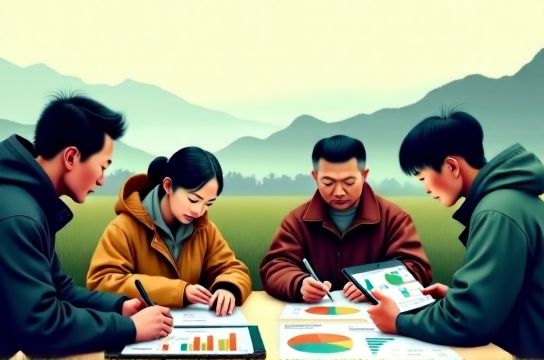
Stereotypes flatten complexity. Reality? It’s layered. A 2023 China Household Finance Survey (SWUFE) found that 68.3% of urban households hold at least one financial asset beyond savings—up from 41.7% in 2013. That’s not just ‘rising middle class’—it’s evolving risk tolerance, digital literacy, and intergenerational negotiation over money.
Here’s what ground-level observation tells us:
✅ Education isn’t just exam pressure—it’s a distributed ecosystem. Over 42 million students are enrolled in vocational colleges (MOE, 2024), many training in AI-assisted manufacturing or green logistics—fields rarely covered in Western media.
✅ Social trust operates *relationally*, not institutionally. A Tencent Digital Life Index (2023) showed 79% of respondents trusted recommendations from WeChat ‘Mom Groups’ more than official health bulletins—highlighting how credibility is earned through consistency and shared context, not authority alone.
✅ Regional divergence is structural—not anecdotal. Consider this snapshot of daily wage purchasing power (2024, National Bureau of Statistics + fieldwork in 12 cities):
| City | Avg. Daily Wage (CNY) | Rice (5kg) Cost | Wage Coverage (Days) |
|---|---|---|---|
| Shenzhen | 328 | 38 | 8.6 |
| Kunming | 192 | 32 | 6.0 |
| Xianyang | 147 | 29 | 5.1 |
This isn’t ‘inequality’ as deficit—it’s adaptive resource allocation across geography, generation, and sector.
So—how do we move beyond caricature? Start locally. Listen longer than you speak. Ask not “What does China think?” but “What does *this person*, in *this neighborhood*, with *these tools*, need *right now*?”
That’s where real understanding begins—and if you're looking for practical, human-centered insights grounded in actual practice rather than punditry, check out our core framework on building contextual intelligence.