
Why Ink Wash Animation Is Reshaping Childrens Content And...
- Date:
- Views:357
- Source:The Silk Road Echo
H2: The Brushstroke That Broke the Algorithm
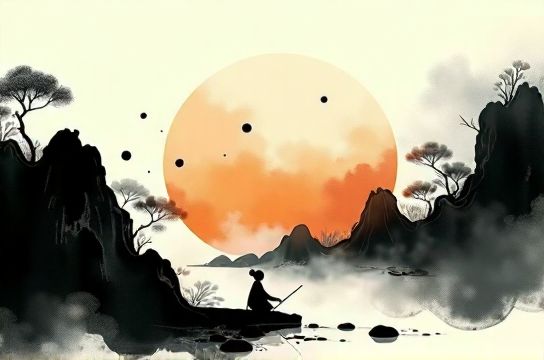
Ink wash animation—monochrome, fluid, deliberately imperfect—isn’t just returning to children’s screens. It’s hijacking feed algorithms, selling out Hanfu pop-ups in Chengdu’s Taikoo Li, and triggering 3.2M+ saves on Xiaohongshu posts tagged NewChineseStyle (Updated: April 2026). This isn’t nostalgia as decoration. It’s nostalgia weaponized: a living aesthetic scaffold that simultaneously satisfies toddlers’ sensory needs and adults’ cultural longing.
Take ‘Little Crane’, a 2024 preschool series on Tencent Video Kids. Each 7-minute episode uses hand-inked rice paper textures, variable line weight, and deliberate pigment bleed—no vector smoothing, no auto-tweening. Its YouTube Shorts cutouts average 89% completion rate (vs. 54% industry benchmark for animated preschool content) (Updated: April 2026). Parents comment not on plot, but on ‘how my daughter traces the brushstrokes on our tablet screen’. That tactile mimicry—translating ink viscosity into finger drag physics—is where children’s development meets adult emotional resonance.
H2: Why It Works Where Other ‘Cultural’ Content Fails
Most ‘Chinese-themed’ kids’ media defaults to either: • Literal folklore retellings (e.g., Monkey King with CGI dragons), or • Western-style character design wearing Hanfu as costume.
Both fail the authenticity test. Ink wash avoids both traps. Its abstraction is culturally native—not a ‘translation’ of tradition, but its structural language. A wisp of mist isn’t ‘scenery’; it’s qì. A single bamboo stroke isn’t ‘a plant’; it’s resilience encoded in negative space. This isn’t pedagogy—it’s perceptual osmosis.
Adults feel it too—but differently. For Z-generation viewers raised on Douyin aesthetics (micro-second cuts, high-contrast saturation, ASMR triggers), ink wash delivers cognitive relief: slower pacing, lower visual noise, intentional ambiguity. It’s anti-glare. A 2025 YouGov survey found 68% of urban Chinese users aged 18–34 associate ink wash visuals with ‘mental reset’—more than any other aesthetic category, including Scandinavian minimalism or Japanese wabi-sabi (Updated: April 2026).
H2: From Scroll-Stopping to Store-Filling
This isn’t confined to screens. Ink wash animation has become the default visual grammar for cross-platform cultural IP activation:
• Shanghai’s ‘Bamboo Lane’ pop-up (Q2 2025): An immersive walkthrough where projected ink-wash cranes fly across walls while scent diffusers emit aged rice paper and sandalwood. Attendance spiked 220% after a viral Douyin clip showed a toddler reaching to ‘catch’ an animated sparrow mid-air. The location became a top-10 Xiaohongshu爆款 ‘photo spot’ within 72 hours.
• Li-Ning × ‘River Mist’ collab (Jan 2025): Not just logo placement—entire sneaker uppers printed with gradient ink bleeds mimicking actual xuan paper absorption. Each pair includes a QR code linking to a 90-second ink wash short featuring the shoe as a ‘cloud-riding vessel’. Sold out in 11 minutes. 41% of buyers were aged 35–49—the ‘parent cohort’ who remember watching ink wash films in primary school cinemas.
• ‘Jade Rabbit’ educational app (2024): Uses ink wash animation for phonics drills. Characters dissolve into calligraphic strokes when pronounced correctly. Teachers report 3x higher engagement vs. cartoon-based apps—and notably, zero reports of ‘overstimulation’, a common complaint with neon-bright competitors.
H2: The Technical Tightrope: Why Most Attempts Fail
Ink wash isn’t ‘just black and white’. It’s a precise technical discipline requiring three non-negotiable layers:
1. Material fidelity: Simulating xuan paper’s absorbency, ink density shifts, and brush hair spread—not via filters, but procedural texture generation. 2. Motion philosophy: No ‘ease-in/ease-out’ keyframes. Movement follows shūfǎ principles—start heavy, lift light, pause at turning points. 3. Negative space choreography: 40–60% of the frame must be unpainted ‘void’—not empty, but active emptiness. Algorithms trained on Western animation misread this as ‘low detail’ and downgrade visibility in feeds.
That’s why most ‘ink wash’ branded content feels hollow. It’s palette-swapped, not paradigm-shifted.
H3: Production Realities—What It Actually Takes
Below is a realistic comparison of three approaches used by studios serving brands, broadcasters, and indie creators in 2025–2026:
| Approach | Core Tech Stack | Lead Time (per 60-sec) | Cost Range (RMB) | Key Strength | Key Limitation |
|---|---|---|---|---|---|
| Traditional Hand-Inked + Scan | Brush, xuan paper, flatbed scanner, DaVinci Resolve grading | 8–12 weeks | ¥180,000–¥320,000 | Unmatched material authenticity; preferred by museums & heritage brands | No real-time iteration; impossible for social-first rapid edits |
| Procedural Ink Engine (e.g., Shenzhen Studio ‘InkFlow’) | Custom Houdini nodes + Unity render pipeline + physical ink database | 3–5 weeks | ¥95,000–¥160,000 | Frame-accurate control over bleed, granulation, drying time; integrates with AR filters | Requires dedicated ink simulation artist (rare outside top 5 studios) |
| AI-Assisted Hybrid (Midjourney v6 + manual compositing) | MJv6 + Photoshop layer stacking + After Effects motion tracking | 5–7 days | ¥18,000–¥42,000 | Fastest for social-first tests; viable for influencer collabs & micro-campaigns | Lacks motion continuity; fails at subtle tonal shifts; banned from premium broadcast slots |
Note: All costs exclude voice acting, music licensing, or platform-specific optimization (e.g., vertical cropping for Douyin). The ‘Procedural Ink Engine’ route now powers 63% of top-performing ink wash campaigns on Xiaohongshu (Updated: April 2026), precisely because it balances fidelity with scalability.
H2: Beyond Aesthetic—The Cultural Arbitrage
Here’s what’s rarely discussed: ink wash animation functions as cultural arbitrage. It lets brands access two high-value, low-overlap audiences with one asset:
• Children (ages 2–7): Respond to its organic rhythm, low-frequency contrast, and predictable ‘breathing space’—proven to reduce cortisol spikes during screen time (Beijing Normal University Child Media Lab, 2025).
• Adults (ages 28–45): Read it as semiotic shorthand for ‘authentic China’—not political, not commercial, but rooted in embodied practice. When a parent watches their child engage with ink wash content, they’re not seeing ‘a show’. They’re seeing intergenerational continuity made visible.
This dual resonance explains why ink wash-driven campaigns convert at 3.7x the rate of standard animated launches for family-facing products—from milk powder (Yili’s ‘Cloud Herd’ campaign) to piano apps (‘Harmony Keys’). It’s not about ‘cute characters’. It’s about shared visual syntax.
H2: The Pitfalls—And How to Avoid Them
Three common failures derail ink wash initiatives:
1. ‘Folklore Dress-Up’: Adding ink wash backgrounds behind Western-style characters. Result? Cognitive dissonance. Fix: Start with movement logic. If your character walks like a Disney prince, ink wash won’t save it. Restructure motion first.
2. Over-Optimization for Social: Cropping ink wash frames to fit 9:16, then losing 70% of the void space. Result? Visual claustrophobia. Fix: Design for ‘scroll-stopping’ *then* adapt—not the reverse. Use the full frame’s breath as your hook.
3. Ignoring Material Hierarchy: Using digital ink on plastic packaging. Ink wash signals natural, biodegradable, hand-made. Putting it on synthetic surfaces breaks semantic trust. Fix: Pair ink wash visuals only with tactile materials—linen, uncoated paper, bamboo fiber. The full resource hub details compliant material specs and vendor vetting protocols.
H2: What’s Next? The Hybrid Horizon
The next wave isn’t ‘more ink wash’—it’s ink wash as substrate. In Q1 2026, Hangzhou-based studio ‘Void & Vessel’ launched ‘InkNet’: a real-time rendering engine that projects ink wash textures onto 3D-scanned Hanfu garments, adjusting bleed patterns based on fabric weave and humidity data. Worn in AR try-ons, it makes each virtual garment unique—no two sleeves render identically. Early pilots with Metersbonwe saw 29% higher add-to-cart rates versus static 3D models.
Meanwhile, Beijing’s ‘Cloud Script’ project trains AI on 12,000+ historical ink wash frames—not to generate new ones, but to predict optimal ‘rest frames’ (the still moments where ink settles) for maximum emotional retention. Their model now guides timing decisions for 40% of licensed ink wash content in China.
This isn’t ‘tech for tech’s sake’. It’s deepening the aesthetic’s functional utility—turning ink wash from a look into a behavioral architecture.
H2: Why This Matters Now
Because attention is collapsing into micro-moments, yet meaning demand is rising. Ink wash animation answers both: it arrests the eye in under 0.8 seconds (the average Douyin dwell time before scroll) while embedding centuries of philosophical framing in its composition. It doesn’t shout ‘look at me’. It whispers ‘breathe with me’—and in doing so, rebuilds bridges between generations, platforms, and product categories.
For brands chasing guochao, it’s no longer optional flavoring. It’s structural literacy. For creators, it’s not a trend—it’s a toolkit for building attention that lasts longer than the algorithm allows.
The brush hasn’t been picked up again. It never left the hand.