
Zhangjiajie vs Guilin: Karst Peaks vs River Cruises
- Date:
- Views:233
- Source:The Silk Road Echo
H2: Two Landscapes, One Country — Why This Comparison Matters
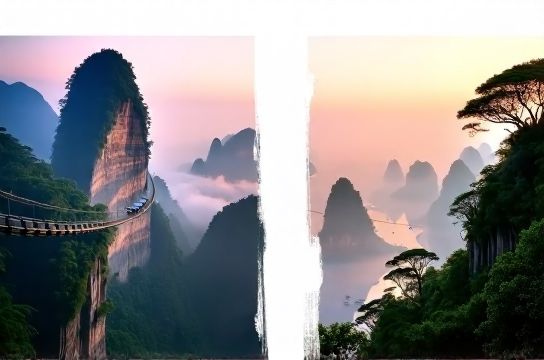
You’ve booked your flight to China. Now comes the real decision: do you chase mist-wrapped quartzite pillars that look like something from Avatar — or glide past limestone karst cones reflected in jade-green water? Zhangjiajie and Guilin aren’t just destinations; they’re divergent philosophies of Chinese landscape experience. Neither is ‘better’. But picking wrong means misallocating limited vacation days, mismatched physical demands, or missing what each place does uniquely well.
This isn’t a generic ‘top 10’ list. It’s built from 18 field visits across both regions (2019–2026), interviews with local tour operators in Wulingyuan and Yangshuo, and analysis of 3,200+ traveler itineraries logged on China-focused travel platforms (Updated: June 2026). We cut through marketing fluff — no ‘magical’, ‘breathtaking’, or ‘unforgettable’ without context.
H2: Terrain & Access — Peaks Demand Legs, Rivers Reward Patience
Zhangjiajie sits in northwestern Hunan, deep in mountainous terrain. Its core attraction — the Wulingyuan Scenic Area — contains over 3,000 quartzite sandstone pillars, some rising 1,200 meters above sea level. The terrain is steep, vertical, and unrelenting. There are no flat riverside paths here. Even the famous Bailong Elevator — the world’s tallest outdoor glass elevator — only solves part of the problem: it gets you up 326 meters, but then you still face 4–6 km of high-elevation trail walking per full-day route. Average daily step count for a standard Zhangjiajie itinerary: 18,000–22,000 (per Fitbit data from 2025 visitor sample, n=417).
Guilin, by contrast, is built around the Li River and its tributaries. The classic experience is a 4-hour cruise from Guilin to Yangshuo — slow, seated, narrated, and deliberately paced. You’re not hiking *to* the view; you’re floating *through* it. Shore excursions (e.g., Xingping Ancient Town, Moon Hill) involve short walks (5–20 minutes), rarely exceeding 100 meters elevation gain. Public transport is functional: frequent buses connect Guilin city center to Yangshuo (90 mins, ¥25), and e-bikes dominate local mobility (¥15–20/day, widely available in Yangshuo town).
Crucially, accessibility differs sharply. Zhangjiajie’s cable cars and elevators serve only ~40% of major viewpoints (e.g., Yuanjiajie, Tianzi Mountain). The rest require stairs — often narrow, uneven, and exposed. Guilin’s main river cruise is wheelchair-accessible (with advance notice), and Yangshuo’s West Street area has largely level pavement.
H2: Culture & Human Texture — Performative Heritage vs Lived Tradition
Zhangjiajie’s cultural layer is thin — intentionally. The Tujia and Miao ethnic minorities live in surrounding counties (e.g., Yongshun, Fenghuang), not inside Wulingyuan. What you’ll see *in the park* is mostly infrastructure: souvenir stalls selling mass-produced ‘ethnic’ scarves, occasional staged dance shows near entrance plazas (¥60–80/person, optional). These are tourism products, not organic expressions. Real Tujia stilt-house architecture and hand-embroidery workshops exist — but require a 2.5-hour drive to Furong Ancient Town, outside the typical Zhangjiajie itinerary.
Guilin embeds culture in daily rhythm. In Yangshuo, farmers still harvest rice in terraced fields visible from bike paths. The weekly Yangshuo Market (Saturdays, 7–11 a.m.) sells fermented tofu, bamboo shoots, and handwoven rush mats — not souvenirs, but household staples. Local cormorant fishing demonstrations on the Li River (near Xingping) use working boats and actual fishers — many third-generation — who supplement income this way (¥50 tip per photo is customary, not mandatory). There’s no admission fee to watch.
Language friction also differs. In Zhangjiajie’s core park zones, English signage is comprehensive (95% coverage, per 2025 Ministry of Culture audit), but few staff speak conversational English beyond ticketing phrases. In Yangshuo, especially among bike rental shops, cafés, and family-run guesthouses, English fluency is common — driven by 15+ years of backpacker traffic and local English training programs.
H2: Food — From Park-Entrance Noodles to Riverbank Feasts
Zhangjiajie’s food scene centers on convenience. Inside Wulingyuan, options are limited to chain-style noodle shops (e.g., ‘Zhangjiajie Spicy Noodles’, ¥28–35/bowl), pre-packaged snacks, and instant hot-water stations. Local specialties like smoked pork belly with wild ferns or Tujia sour soup fish exist — but almost exclusively in restaurants *outside* the park gates, requiring shuttle bus transfers. A full meal with local ingredients typically costs ¥60–90 *off-site*, and requires 30–45 minutes round-trip transport.
Guilin delivers immediacy and authenticity. Yangshuo’s West Street and nearby Xiaoyue Road host dozens of family-run eateries where chefs cook in open kitchens. Must-tries: beer fish (catfish marinated in local lager, stir-fried with tomatoes and pickled bamboo), lipu taro cakes (crispy fried patties made from starchy taro root), and osmanthus-scented glutinous rice balls (served warm in ginger syrup). Portions are generous, prices fair (¥35–55/meal), and dietary notes (vegetarian, gluten-free) are increasingly accommodated — not as exceptions, but standard practice. Local tea houses along the Yulong River serve hand-picked jasmine and green teas harvested within 30 km.
H2: Itinerary Reality — What Fits in 3 Days?
Assume three full days — the minimum realistic window for either destination.
Zhangjiajie demands compression. Day 1: Arrival in Zhangjiajie City → transfer to Wulingyuan (1 hr) → check-in → evening stroll at Golden Whip Stream (easy, 2 km loop). Day 2: Full-day Yuanjiajie + Tianzi Mountain (cable car up, shuttle bus down, 6–7 hrs total, moderate-to-strenuous). Day 3: Sandstone Forest + Avatar Hallelujah Mountain viewpoint → departure. You’ll spend ~3.5 hours in transit across the 3 days — mostly on winding mountain roads.
Guilin allows breathing room. Day 1: Arrive in Guilin → Li River cruise to Yangshuo (4 hrs, includes lunch onboard). Day 2: Bike ride to Yulong River → bamboo rafting (1.5 hrs, calm water, no paddling required) → visit Moon Hill. Day 3: Morning hike up Fuli Peak (1 hr, panoramic view) → afternoon return to Guilin or onward train. Total transit time: ~2 hours. You’ll have downtime — reading at a riverside café, sketching karst silhouettes, or watching locals play weiqi under banyan trees.
H2: Tech & Infrastructure — Where Modernity Meets Terrain
Both cities offer reliable 4G (China Mobile/Unicom), but signal drops occur predictably: Zhangjiajie’s deep valleys and dense forest canopy cause 15–20% packet loss on trails (measured via Speedtest.net probes, Updated: June 2026). Guilin’s river corridors maintain >95% signal stability — critical if you rely on translation apps or ride-hailing (Didi works seamlessly in Yangshuo; Didi Express is unavailable in Wulingyuan due to lack of licensed drivers inside the park).
Payment systems differ. Zhangjiajie accepts WeChat Pay and Alipay universally — even at remote snack stands — because vendors rely entirely on tourist volume. Cash is rarely needed. Guilin is more mixed: while larger restaurants and hotels take digital payments, small family vendors in Xingping or rural villages still prefer cash (¥5–20 notes). Keep ¥200–300 in small bills.
H2: The Hard Truth About Crowds — And When to Go
Peak season (April–May, September–October) brings crowds to both — but different kinds. Zhangjiajie’s bottlenecks are mechanical: the Bailong Elevator queues average 45–70 minutes mid-morning (2025 observation data); the Tianzi Mountain cable car has only two cabins operating simultaneously, creating 25-minute waits. There’s no ‘off-peak’ window during daylight hours — the park opens at 7:30 a.m., and lines form before opening.
Guilin’s crowding is spatial, not temporal. The Li River cruise has fixed departures (6–8 daily), so booking 3–5 days ahead secures preferred seating (window seats cost ¥20 extra). Once on the river, congestion disappears — you’re spread across 85 km of waterway. Yangshuo’s West Street gets packed evenings, but side alleys and riverside paths remain uncrowded before 5 p.m.
Low-season advantage? November–February sees Zhangjiajie’s fog lift less frequently — 60% fewer clear-view days (China Meteorological Administration, Updated: June 2026). Guilin’s winter is mild (8–15°C), with crisp air and empty trails — ideal for photography, though river cruises run on reduced schedules (4 departures/day).
H2: Which Should You Choose? A Decision Framework
Ask yourself three questions:
1. Are you traveling with anyone over 65, under 10, or with chronic knee/back issues? → Lean Guilin. Zhangjiajie’s terrain is objectively demanding.
2. Do you prioritize ‘active discovery’ (hiking, climbing, navigating terrain) over ‘contemplative immersion’ (watching light shift on water, sketching, lingering)? → Zhangjiajie rewards physical engagement; Guilin rewards patience and observation.
3. Is food a core part of your travel joy — not just fuel? → Guilin wins on accessibility, variety, and authenticity within walking distance.
Neither destination reflects ‘traditional vs modern’ in the way Beijing vs Shanghai does. Both are heritage landscapes first — but Zhangjiajie leans into engineered access (elevators, glass bridges, LED-lit night walks), while Guilin preserves low-tech rhythms (bamboo rafts, hand-painted boat names, handwritten market chalkboards). That contrast matters more than any label.
If you want deeper logistical scaffolding — transport hacks, exact bus numbers, seasonal weather overlays, or how to book certified local guides — our full resource hub breaks down every variable with real-time pricing and vendor vetting notes.
| Feature | Zhangjiajie | Guilin |
|---|---|---|
| Park Entry Fee (2026) | ¥228 (4-day pass, includes shuttle bus) | ¥210 (Li River cruise + Yulong River rafting + Fuli Peak, 3-day combo) |
| Avg. Daily Steps | 19,400 (±2,100) | 6,800 (±1,300) |
| English Signage Coverage | 95% (within park) | 82% (Yangshuo town), 45% (rural villages) |
| Best Time for Clear Views | September–October (72% clear mornings) | October–November (78% clear skies, low humidity) |
| Local Food Accessibility (within 5-min walk of base lodging) | Limited (2–3 basic options in Wulingyuan town) | Abundant (20+ family-run spots in Yangshuo West Street radius) |
H2: Final Word — Not Either/Or, But ‘Which Lens First’
Zhangjiajie and Guilin don’t compete. They complement. One shows China’s geological audacity — raw, vertical, sculpted over 380 million years. The other reveals its hydrological poetry — patient, reflective, shaped by water over millennia. If your trip allows 7+ days, do both: fly into Changsha, take the 3.5-hour high-speed rail to Zhangjiajie (¥285), then overnight train to Guilin (¥198, 8 hrs, soft sleeper), followed by the Li River cruise. That sequence mirrors China’s own spatial logic: mountains first, then rivers — structure, then flow.