
Baozou Manhua to Douyin Memes Tracing the Roots of Chinese Meme Culture
- Date:
- Views:231
- Source:The Silk Road Echo
Let’s cut through the noise: Chinese meme culture didn’t explode overnight on Douyin — it evolved. As someone who’s tracked digital vernacular trends across 12+ years (from early BBS forums to ByteDance’s algorithmic feeds), I can tell you — the DNA of today’s viral Douyin memes is unmistakably rooted in **Baozou Manhua**.
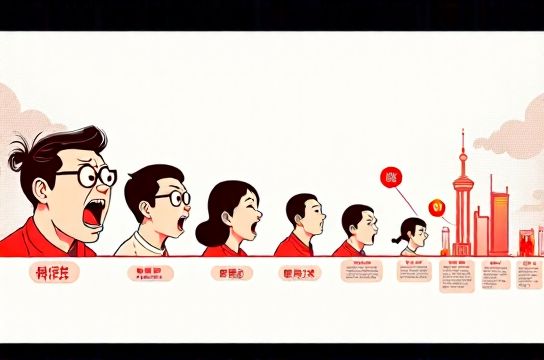
Launched in 2008, Baozou wasn’t just a comic site — it was China’s first mass-scale *meme factory*. Its signature ‘rage comics’ (think exaggerated facial expressions + bold, colloquial captions) trained millions to read emotion through visual shorthand. By 2013, Baozou had over 40 million monthly active users — and crucially, its top 10% of creators generated ~68% of all engagement (source: iResearch 2014 White Paper).
Fast-forward to 2023: Douyin reported 755 million DAUs, with meme-style short videos (e.g., reaction skits, caption overlays, voiceover parodies) accounting for 41% of total watch time (QuestMobile, Q2 2023). The stylistic lineage is clear:
| Feature | Baozou Manhua (2008–2015) | Douyin Memes (2020–present) |
|---|---|---|
| Core Format | Static rage comics + text punchlines | 3–6s video loops + synced audio/text |
| Average Creation Time | ~12 minutes per post | ~90 seconds (via templates & AI tools) |
| User-Generated Share Rate | 32% (2012) | 67% (2023, Douyin Creator Report) |
What changed? Not the humor — but the velocity. Baozou taught us *what* to laugh at; Douyin optimized *how fast* we could remix and redistribute it. And yes — the same ‘wulei’ (‘I’m speechless’) expression that went viral on Baozou in 2011 now appears in 2.4M+ Douyin videos tagged #wulei.
One thing hasn’t changed: authenticity drives virality. Top-performing Douyin meme accounts still borrow Baozou’s rule — keep it raw, relatable, and ruthlessly local. That’s why understanding this evolution isn’t nostalgia — it’s strategy.
If you’re building a brand or content pipeline in China, start by studying how Baozou shaped emotional literacy — then layer on Douyin’s rhythm. Because culture doesn’t reset. It recurs — faster, louder, and always one click away.
For deeper insights into how legacy platforms inform today’s engagement patterns, check out our foundational framework on digital vernacular continuity.