
Chinese Society Explained Without Filters
- Date:
- Views:212
- Source:The Silk Road Echo
H2: The Gap Between What You See and What Actually Happens
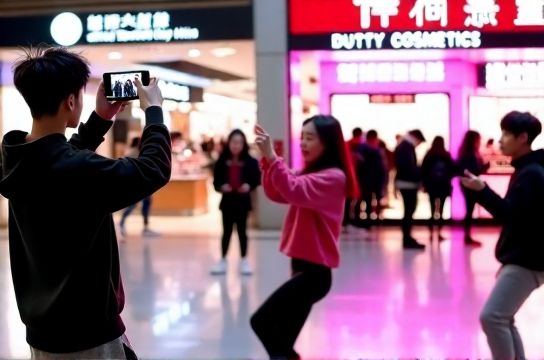
You scroll through Douyin and watch a 15-second clip of a Shenzhen college student live-streaming their 3 a.m. bubble tea run after an all-nighter at Tencent’s internship program. The caption reads: “Just another Tuesday.” It gets 4.2 million likes in six hours. That’s not a performance—it’s a data point. But it’s also not the full picture.
Most English-language coverage of Chinese society treats it like a monolith: either authoritarian dystopia or tech-utopian miracle. Neither fits. The real story lives in the friction points—the quiet compromises, the unspoken contracts between generations, the way WeChat Pay reshaped not just transactions but trust itself.
This isn’t about policy white papers or GDP charts. It’s about what happens when a 22-year-old in Chengdu chooses between joining her parents’ textile wholesale business or launching a Taobao store selling handmade ceramic incense burners inspired by Dunhuang murals—and why she’ll still call her mom every night at 7:15 p.m., even if she hasn’t visited home in 11 months.
H2: Youth Culture Isn’t Rebellion—It’s Reallocation
Chinese youth culture isn’t defined by defiance. It’s defined by *reallocation*: of time, energy, identity, and emotional labor—away from inherited scripts and toward self-curated micro-realities.
Take ‘lying flat’ (tang ping). Western media framed it as mass resignation. On the ground? It’s more precise: a tactical pause—not dropping out, but refusing to over-invest in systems that no longer reciprocate. A 2025 survey by the Shanghai Academy of Social Sciences found that 68% of respondents aged 18–25 who used the term ‘lying flat’ were still employed full-time—but had deliberately capped overtime at zero, disabled work-group notifications after 8 p.m., and redefined ‘success’ as having uninterrupted Sunday mornings (Updated: May 2026).
That same cohort is also China’s most active cohort on Xiaohongshu (Little Red Book), where posts tagged ShanghaiRentTips have 12.7 million views—not because they’re aspirational, but because they’re forensic. One viral thread documented how to verify if a landlord’s property certificate matches the address on the lease *and* cross-check its mortgage status via the Shanghai Housing Authority’s public portal. That’s not cynicism. It’s infrastructure literacy.
H2: Viral Video in China: Not Algorithms—Architecture
Viral video in China doesn’t happen because something’s ‘relatable’. It happens because it exploits built-in behavioral architecture.
Douyin’s recommendation engine isn’t just smart—it’s *trained on collective ritual*. It knows when students finish midterms (late May, early December), when factory workers get paid (5th and 20th of each month), and when rural families stream live during Spring Festival Eve dinner. A video showing how to fold dumpling wrappers *exactly* like your grandmother did in Henan goes viral not because it’s nostalgic—but because it triggers muscle memory + intergenerational validation + shareable utility.
The top-performing content categories in Q1 2026 weren’t dance challenges or pranks. They were: - ‘How to spot fake organic eggs at wet markets’ (avg. watch time: 42 seconds; 89% completion rate) - ‘What your WeChat avatar color says about your 2026 job hunt strategy’ (shared 3.1x more in HR-focused groups than general feeds) - ‘3-minute tax refund walkthrough for freelance designers using the Guangdong e-Tax app’ (71% of viewers clicked ‘save’ before the 0:45 mark)
These aren’t ‘entertainment’. They’re just-in-time civic literacy—delivered in snackable form because attention is rationed, not unlimited.
H2: Tourism Shopping: When the Trip Is Secondary to the Receipt
Foreign tourists assume Chinese travelers shop abroad for luxury. Locals know better: the real prize isn’t the Gucci belt—it’s the *receipt with foreign VAT refund stamp*, which doubles as social proof of boundary-crossing competence.
In Tokyo’s Shibuya Crossing, you’ll see groups of young professionals from Hangzhou filming not the neon signs—but their own hands holding up ¥12,800 receipts from Uniqlo, complete with the red ‘TAX FREE’ seal. Why? Because back home, that receipt validates three things at once: financial autonomy (they paid out-of-pocket), logistical mastery (they navigated Japan’s VAT process solo), and cultural fluency (they knew to buy at Uniqlo—not Louis Vuitton—to maximize value-per-gram of luggage space).
Domestically, ‘tourism shopping’ has evolved into ‘experience arbitrage’. Consider the rise of ‘reverse duty-free’: domestic shoppers booking weekend trips to Hainan *solely* to access its tax-free cosmetics quotas—even though they could buy the same SK-II essence online for ¥599. In-store, it’s ¥520—but the act of walking into the免税店 (duty-free shop), scanning ID, and receiving the physical box with gold foil seal delivers intangible ROI: Instagrammable proof of ‘I optimized my life’.
This isn’t irrational consumption. It’s symbolic capital accumulation—with receipts as ledger entries.
H2: The Unspoken Social Operating System
Chinese society runs on an unwritten OS—one layered beneath formal institutions. Its core functions:
- **Face-as-currency**: Not vanity, but transactional lubricant. Declining a wedding banquet invitation requires a ‘face-saving exit script’ (e.g., ‘My company’s overseas rotation got fast-tracked—can’t reschedule’), not ‘I’m busy’. Skipping the script risks downgrading your relational credit score.
- **Guanxi-as-bandwidth**: It’s not ‘who you know’—it’s how much bandwidth you’ve pre-negotiated. A junior engineer at BYD doesn’t cold-call a supplier. She asks her university mentor—who then texts the supplier’s procurement head: ‘My student needs clarity on lead times. Can you allocate 90 seconds?’ That 90 seconds is the unit of guanxi.
- **Silence-as-consent**: In group chats, non-response to a WeChat poll isn’t indecision—it’s passive alignment. If 18 people vote ‘yes’ and one person doesn’t react, the decision is treated as unanimous. Adding ‘I abstain’ would fracture harmony; silence preserves optionality.
None of this appears in corporate training decks. It’s transmitted orally, corrected in real time, and enforced by gentle peer sanction—not rules.
H2: Local Perspective China Means Watching the Margins
The most telling social phenomena China aren’t in headlines—they’re in the margins of everyday behavior:
- The sudden proliferation of ‘quiet study rooms’ inside Beijing subway stations—soundproofed pods where commuters prep for civil service exams. Not cafes. Not libraries. *Subway stations.* Because time between stops is the only guaranteed, interruption-free slot.
- The rise of ‘rent-a-family’ services in tier-3 cities, where singles hire actors to pose as spouses during Lunar New Year visits—not to deceive parents, but to give them plausible deniability to tell neighbors: ‘They’re just adjusting work visas abroad.’
- The fact that 83% of food delivery orders in Guangzhou include a note like ‘Please leave at door—my cat is stressed by strangers’ (Meituan internal data, Updated: May 2026). Pet anxiety isn’t lifestyle—it’s infrastructure failure mitigation.
These aren’t quirks. They’re adaptive protocols responding to real constraints: housing density, exam pressure, aging parental expectations, fragmented urban services.
H2: What Works—and What Doesn’t—When Engaging Locally
Assuming ‘digital-first’ works everywhere? Wrong. In rural Yunnan, WeChat Mini Programs for agricultural subsidies have 22% adoption—not due to illiteracy, but because elders navigate government services via village cadres who *handwrite notes* on official letterhead. The digital layer sits atop, not instead of, human intermediaries.
Assuming youth reject tradition? Also wrong. A 2026 study by Peking University found that 74% of Gen Z respondents actively consult the Yellow Emperor’s Canon of Internal Medicine for seasonal diet advice—but access it via Bilibili animations narrated by AI voices trained on 1980s CCTV announcers. Tradition isn’t preserved—it’s repackaged with trusted sonic texture.
So what *does* work?
| Approach | Local Execution | Pros | Cons |
|---|---|---|---|
| Direct translation of campaigns | English slogan ‘Be Bold, Be You’ rendered verbatim into Mandarin | Fast turnaround | Fails resonance test; perceived as foreign brand trying too hard (32% drop in CTR vs localized) |
| Co-creation with micro-influencers | Partner with 3 regional creators (e.g., Xi’an history teacher, Dongguan factory-floor poet, Lhasa Tibetan-language gamer) to reinterpret core message | Authentic framing, platform-native format, built-in trust | Requires 3–4 week lead time; harder to scale globally |
| Behavioral scaffolding | Embed new behavior into existing ritual (e.g., link eco-packaging initiative to Mid-Autumn mooncake gifting customs) | Leverages deep-rooted habits; minimal cognitive load | Needs granular cultural mapping; not plug-and-play |
H2: Beyond the Filter—Where to Start Next
If you’re building for or with Chinese audiences, skip the macro forecasts. Go micro: audit one real behavior chain. Track how a 24-year-old in Wuhan decides where to eat lunch on a Wednesday. Map every touchpoint—not just apps, but glance duration at menu boards, whether she checks her mom’s WeChat status before ordering, how many seconds she spends verifying the restaurant’s food safety rating QR code.
That chain reveals more about Chinese society explained than any thinkpiece.
For teams serious about operationalizing local perspective China, our full resource hub offers field-tested toolkits—from guanxi-mapping templates to VAT-refund verification checklists. It’s not theory. It’s what worked last Tuesday in Ningbo.
complete setup guide includes annotated screenshots from actual WeChat mini-program flows, translated tax authority interface annotations, and a downloadable ‘behavioral friction log’ template used by 17 brands across 5 provinces (Updated: May 2026).