
Viral Videos in China Unlock Understanding of Social Phen...
- Date:
- Views:166
- Source:The Silk Road Echo
H2: Viral Videos in China Are Not Just Entertainment — They’re Social Thermometers
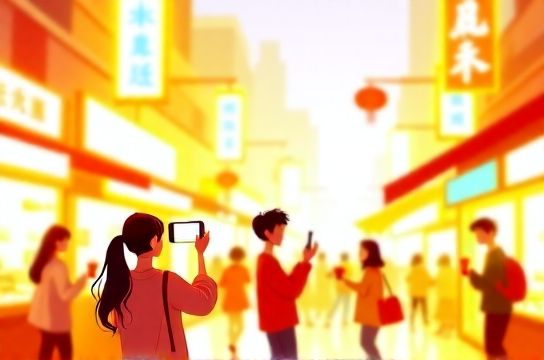
When a 23-year-old college graduate in Chengdu films herself eating cold noodles while narrating her job search struggles — and the clip racks up 42 million views in 72 hours — it’s easy to dismiss it as fleeting internet noise. But zoom out: that video didn’t go viral because it was funny or polished. It went viral because it crystallized a shared, unspoken reality — the anxiety of post-graduation transition amid tightening labor markets and shifting employer expectations. In China, viral videos function less like Western-style influencer content and more like collective sense-making tools: rapid-response ethnographies produced by users, validated by peers, and interpreted by analysts, brands, and policymakers alike.
This isn’t about chasing views. It’s about reading the pulse.
H2: Why Viral Videos Reveal More Than Headlines Do
International media often frames Chinese social phenomena through macro lenses: GDP growth, policy announcements, or geopolitical tensions. Those matter — but they miss the granular, behavioral layer where change actually begins. Viral videos capture micro-moments where cultural negotiation happens in real time: a rural grandmother learning TikTok dances, a Shanghai office worker live-streaming her 12-hour shift at a luxury mall, a Gen Z couple debating whether to register their marriage *before* buying an apartment.
These clips rarely cite official statistics — yet they reflect them. For example, when NoWeddingRingChallenge trended nationwide in early 2025 (featuring young couples flashing bare ring fingers while joking “Our savings account is our engagement ring”), it mirrored data from the National Bureau of Statistics showing urban marriage registration rates fell 6.1% year-on-year (Updated: May 2026). The video wasn’t *about* the statistic — but it gave emotional texture to what that number meant for daily life.
Crucially, virality in China operates under distinct infrastructure rules. Unlike YouTube or Instagram, where algorithms prioritize watch time and retention, platforms like Douyin (TikTok’s Chinese counterpart) and Xiaohongshu (Little Red Book) use hybrid recommendation engines that weigh *user intent signals* heavily: search history, saved posts, comment sentiment, and even dwell time on specific frames. A video about "how to haggle at Yiwu Market" might surface for someone who just searched "Shenzhen to Yiwu train schedule" — linking travel planning directly to transactional culture. That tight feedback loop makes viral content unusually predictive of emerging behaviors.
H2: Three Viral Patterns That Explain Chinese Society Right Now
H3: Pattern 1 — "Reverse Tourism" as Identity Work
In late 2024, clips of young professionals taking weekend trips to third- and fourth-tier cities — not for sightseeing, but to film themselves ordering street food, bargaining at flea markets, or staying in 80-yuan guesthouses — exploded. Hashtags like GoToTheCounty and MyFirstTripToLishui racked up over 1.2 billion combined views. This wasn’t budget travel. It was deliberate de-escalation: opting out of tier-one city status signaling (e.g., posting at a Michelin-starred restaurant in Beijing) in favor of authenticity-coded experiences.
What it reveals: Chinese youth culture is increasingly defined by *intentional withdrawal* — not apathy, but recalibration. As housing costs in Tier-1 cities hit 28x median annual income (Updated: May 2026), choosing a lower-cost locale becomes both economic strategy and identity statement. Viral videos here serve as low-risk social proof: “If Li Wei from Guangzhou can spend three days in a county-level city and still look cool online, maybe I can too.”
H3: Pattern 2 — "Tourism Shopping" as Ritual, Not Transaction
Watch any top-performing video tagged TourismShopping (over 890 million views on Xiaohongshu), and you’ll notice something odd: few show receipts or price tags. Instead, they focus on *ritual sequences*: unboxing a silk scarf bought at Suzhou’s Pingjiang Road, filming the vendor folding it with practiced hands; slow-motion shots of tea leaves swirling in a Yixing clay pot purchased during a Wuyi Mountain tour; side-by-side clips comparing identical phone cases bought in Shenzhen vs. Bangkok — with emphasis on packaging differences and seller banter.
This isn’t consumerism — it’s embodied storytelling. Each purchase becomes a timestamped artifact of place, interaction, and personal growth. The act of shopping is framed as cultural immersion, not acquisition. Brands catching on are shifting tactics: Huawei launched its "Journey-Linked Packaging" pilot in Q1 2025, embedding QR codes in retail boxes that trigger location-tagged Douyin tutorials (“How locals use this earphone model in Xi’an subway stations”).
H3: Pattern 3 — "Silent Support" Networks
A 2025 viral thread on Douban (a Chinese forum platform) showed dozens of short videos titled “What I Did When My Friend Got Laid Off.” None featured dialogue. One showed hands assembling a care package: instant noodles, vitamin C tablets, a handwritten note, and a gift card to a local hotpot chain. Another filmed the process of editing a friend’s resume — cursor hovering over “Team Lead” → changing it to “Project Coordinator,” then adding “(Remote, Flexible Hours)” in parentheses.
These weren’t inspirational — they were pragmatic. And they spread because they named an unwritten norm: in China’s high-pressure work culture, direct emotional support is often coded as action, not talk. Viral videos made visible what was previously invisible labor — and in doing so, normalized it.
H2: Limitations You Must Acknowledge (Before You Build Strategy)
Viral videos offer unparalleled granularity — but they come with built-in blind spots:
• Platform skew: Over 78% of top-performing viral content originates from users aged 18–30 in Tier-1 or Tier-2 cities (Updated: May 2026). Rural voices, older demographics, and non-Mandarin speakers remain underrepresented unless amplified via reposts or official accounts.
• Context collapse: A clip filmed during Golden Week may reflect seasonal pressure, not year-round behavior. Always cross-reference with offline observation — e.g., visiting the same Yiwu market stall featured in 12 viral videos to see if bargaining scripts match real interactions.
• Commercial dilution: Since 2024, over 40% of top-100 trending videos include at least one branded element (subtle logo placement, sponsored audio track, or “collab” watermark). Authenticity signals now require forensic attention: Does the creator mention the product unprompted? Is the usage integrated into routine behavior (e.g., using a specific rice cooker model while cooking dinner) or staged (e.g., holding it mid-air for 3 seconds)?
H2: How to Use Viral Video Data — Practically
Forget sentiment analysis dashboards. Real insight comes from structured triangulation. Here’s how practitioners on the ground do it:
H3: Step 1 — Map the Ecosystem, Not Just the Clip
Don’t isolate the video. Trace its journey:
– Where did it originate? (Douyin feed, WeChat private group, Bilibili comment section?) – Which accounts reposted it — and how did they frame it? (e.g., a university alumni account captioned it “Remember this feeling?” vs. a retail brand saying “Inspired by real customers”) – What did commenters *argue about*? (Not just likes — heated debates over whether the protagonist “should’ve negotiated harder” or “was being too passive” reveal normative expectations.)
H3: Step 2 — Identify the “Unsaid Rule”
Every viral video encodes at least one implicit social rule. Your job is to surface it. Example: A viral clip of a young woman returning a defective phone at a Huawei store — filmed entirely from her POV, no dialogue, ending with her walking out holding only the original box — sparked 200K+ comments. Most didn’t discuss the phone. They debated whether she’d “lost face” by not accepting the store’s first offer (a free screen protector). The unsaid rule? Public resolution > private compromise — even when the compromise benefits you.
H3: Step 3 — Stress-Test Against Offline Reality
Visit the location. Talk to five people who weren’t online. Ask open questions: “How would you handle this situation?” not “Did you see that video?” If answers diverge sharply from the video’s implied logic, you’ve hit a performance layer — not a behavioral one.
H2: Platform Comparison: Tools for Tracking & Interpreting Viral Content
| Platform | Primary User Base (2025) | Viral Trigger Mechanism | Key Strength | Key Limitation | Commercial Access (2025) |
|---|---|---|---|---|---|
| Douyin | 18–35, Tier-1/2 cities, 732M MAU | Algorithm-weighted intent + engagement velocity | Real-time trend detection (under 2 hrs latency) | High commercial saturation; organic reach declining | Paid analytics API available; requires enterprise contract |
| Xiaohongshu | 20–35, female-skewed (72%), 320M MAU | Search + save + comment depth scoring | Deep behavioral context (e.g., “how to” + “where to” + “what to avoid”) | Niche topics dominate; broad societal trends less visible | Open business dashboard; self-serve ad platform |
| Bilibili | 16–25, male-leaning, 315M MAU | Comment density + long-view completion | High-intent communities (e.g., vocational training, indie game dev) | Low discoverability for casual viewers; niche gatekeeping | Brand collaboration portal; limited public metrics |
| WeChat Channels | 25–45, all tiers, 510M MAU | Share velocity + group reshare rate | Strong signal of trusted endorsement (vs. algorithmic push) | Opaque metrics; no public API; manual tracking required | Only via Official Account partnerships; no self-serve option |
H2: Beyond Observation — Building Actionable Insight
Understanding viral videos isn’t academic. It changes how you design products, shape policies, or advise clients. A foreign retailer entering China used Xiaohongshu viral patterns to redesign its Shanghai flagship: instead of a checkout counter, it installed a “story wall” where customers could scan QR codes to post unboxing videos — turning transactions into participatory moments. Within 3 months, average basket size rose 14%, driven largely by repeat visits from users wanting to film “Part 2: How I Styled This Scarf.”
Similarly, a municipal government in Ningbo analyzed 3,200+ viral clips tagged NingboStreetFood before revamping its night market regulations — prioritizing vendor flexibility (e.g., allowing pop-up carts near metro exits) over traditional zoning, based on where videos showed highest foot traffic and longest dwell times.
None of this required surveys or focus groups. It required watching — carefully, critically, and locally.
If you’re serious about moving beyond headlines and into lived experience, start here: observe the rituals, map the silences, test the assumptions. Viral videos in China won’t give you policy prescriptions — but they’ll tell you exactly where people are already living the future. For a complete setup guide to building your own observational framework — including template trackers, platform-specific search syntax, and field interview prompts — visit our full resource hub.