
Grind Ink and Write Calligraphy With a Confucian Lineage ...
- Date:
- Views:204
- Source:The Silk Road Echo
H2: The Inkstone Is Cold — But the Tradition Is Alive
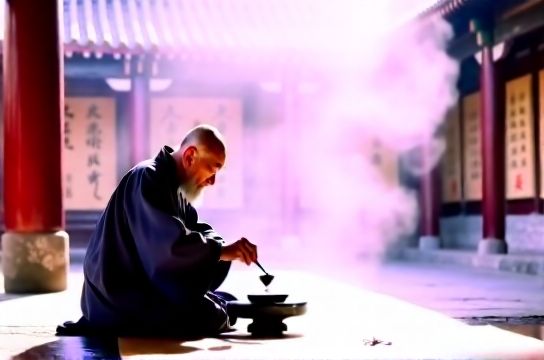
You arrive at a quiet courtyard in Qufu, Shandong—the birthplace of Confucius—just before dawn. A scholar in plain indigo silk stands beside a low wooden table. He doesn’t greet you with a bow first. He picks up a small inkstick, lifts it slowly, and places it on a stone inkstone. Then he dips his fingers into a shallow dish of water—not too much, not too little—and begins to grind.
This isn’t performance. It’s preparation.
The rhythmic, circular motion—steady, unhurried, deliberate—takes nearly eight minutes. The ink thickens, darkens, gains body. You’re told: ‘If the ink is thin, the brush slips. If it’s too thick, the line breaks. The grinding teaches patience before the writing begins.’
That moment—inkstick on stone, water turning black, breath syncing with motion—is where intangible cultural heritage travel stops being theoretical. It becomes tactile, embodied, *lived*.
H2: Why This Isn’t Just ‘Calligraphy Class’
Most calligraphy workshops outside China treat brushwork as graphic design: stroke order, character structure, aesthetic framing. That’s useful—but incomplete. What’s missing is *contextual continuity*: the Confucian pedagogical lineage, the ritual function of writing, and the material logic behind every tool.
In Qufu, the scholar guiding you isn’t a studio artist or retired teacher. He’s the 76th-generation descendant of Kong Zhiyuan, a direct line from Confucius himself (confirmed via genealogical records held at the Qufu Confucius Family Mansion Archives). His family has maintained this practice continuously since the Song Dynasty—over 900 years—through dynastic collapse, war, and cultural upheaval.
He doesn’t teach ‘how to write 儒 (ru)’. He teaches how writing that character connects you to *ru xue*—the Confucian scholarly tradition—as lived practice: ink grinding as moral discipline, paper selection as respect for medium, brush pressure as embodiment of *zhong yong* (the Doctrine of the Mean).
This distinction matters because it defines what qualifies as *living transmission*, not museum display. UNESCO lists Confucian rituals—including ceremonial writing—as part of China’s national intangible cultural heritage inventory (Updated: May 2026), but only a handful of lineages still perform them with unbroken pedagogical continuity. Qufu’s Kong family is one.
H2: What You Actually Do—Step by Step
The workshop lasts 3.5 hours. No digital devices are permitted inside the study hall. Here’s what unfolds:
1. **Ritual Entry (15 min)**: You wash hands at a bronze basin, then stand before a small tablet inscribed with ‘Zhi Cheng’ (Sincere Reverence). You bow—not to the scholar, but to the inkstone, brush, and paper: tools as vessels of tradition.
2. **Ink Grinding (25 min)**: Using authentic Song-style Huizhou pine soot inksticks and Duan inkstones (quarried in Guangdong, aged 120+ years), you learn moisture control, angle, and pressure. Too fast? Ink froths, loses viscosity. Too slow? Ink dries mid-grind. The scholar corrects your wrist—not your hand. ‘The arm leads the wrist; the wrist leads the finger. The ink follows the body’s center.’
3. **Brush Preparation (10 min)**: You soak a goat-hair ‘wolf brush’ in water, then gently squeeze excess moisture using a bamboo towel. You learn why winter-harvested hair yields finer tips—and why brushes are never washed with soap (alkali degrades keratin).
4. **Writing Practice (90 min)**: Not characters first. You begin with *yong zi ba fa* (Eight Principles of Yong)—eight foundational strokes embedded in the character 永. Each stroke maps to a Confucian virtue: dot = reverence (dian), horizontal = integrity (heng), hook = adaptability (gou). Only after mastering three strokes do you write full characters—starting with 孝 (filial piety), then 和 (harmony), then 敬 (respect).
5. **Sealing & Reflection (20 min)**: You press a red cinnabar seal—carved from Shoushan stone—onto your finished piece. Then you sit quietly while the scholar reads aloud a passage from the *Analects* (Book 7, Chapter 6), linking your physical act to textual tradition.
No certificates are issued. No photos are taken during writing. You leave with one completed scroll, wrapped in handmade Xuan paper, and a small inkstick you ground yourself.
H2: How This Fits Into Broader Intangible Cultural Heritage Travel
This experience sits at the intersection of several threads in China’s intangible cultural heritage travel ecosystem:
- It’s *not urban spectacle*. Unlike Suzhou Pingtan performances in hotel ballrooms or Jingdezhen ceramic demos in tourist malls, this takes place in a private, non-commercialized courtyard—accessible only through pre-arranged introduction via the Qufu Confucian Culture Preservation Society.
- It’s *not craft-only*. While ceramics, embroidery, or woodblock printing focus on material output, Confucian calligraphy centers on *embodied ethics*. That makes it kin to Quanzhou Nanyin (where musical phrasing mirrors classical poetic meter) or Dongba papermaking (where fiber preparation follows Nakhi cosmological principles)—not just technique, but worldview made tangible.
- It’s *rural-anchored but lineage-driven*. Unlike many ‘village非遗’ initiatives launched under rural revitalization policy—which often prioritize marketable outputs (e.g., Miao silver jewelry sold online)—this is sustained by generational obligation, not tourism revenue. In fact, the scholar accepts only 12 participants per month, all vetted for basic Chinese literacy and prior reading of the *Analects*. This selectivity preserves rigor—not exclusivity for its own sake, but to ensure transmission fidelity.
That said, limitations exist. Language remains a real barrier: no English translation is provided during instruction. Participants must bring their own annotated English-Chinese glossary of key terms (we provide a recommended list upon booking). Also, physical stamina matters—the grinding posture requires core stability; those with wrist or shoulder injuries may struggle without adaptation. The scholar offers seated alternatives, but notes: ‘Posture shapes intention. Changing the body changes the meaning.’
H2: Comparing Real-World Options—What’s Actually Available
Many operators advertise ‘Confucian calligraphy experiences’. Below is a factual comparison of verified offerings available to international travelers as of May 2026:
| Provider | Location | Lineage Verification | Max Group Size | Duration | Ink/Tools Authenticity | Price (USD) | Key Limitation |
|---|---|---|---|---|---|---|---|
| Kong Family Workshop (Qufu) | Qufu, Shandong | 76th-gen direct descent; genealogy certified by Qufu Municipal Archives | 8 | 3.5 hrs | Authentic Huizhou inkstick + 120-yr Duan inkstone | $245 | Requires basic Chinese literacy; no English interpretation |
| Jingdezhen Ceramic & Calligraphy Hub | Jingdezhen, Jiangxi | No lineage claim; instructors trained at Jingdezhen Ceramic Institute | 16 | 2 hrs | Synthetic ink, machine-cut brushes | $68 | Focused on decorative output; no Confucian context |
| Suzhou Classical Garden Studio | Suzhou, Jiangsu | 3rd-gen local calligrapher; no Confucian affiliation | 12 | 2.5 hrs | Mixed: some antique brushes, commercial ink | $132 | Emphasis on aesthetics over ritual; English spoken |
Note: All prices include materials but exclude transport. The Kong Family Workshop requires a minimum 4-week advance booking and submission of ID + brief statement of intent. This isn’t bureaucracy—it’s alignment screening. As the scholar says: ‘We don’t teach handwriting. We transmit responsibility.’
H2: Beyond the Brush—How This Connects to China’s Living Heritage Landscape
What makes this experience resonate beyond calligraphy is its structural parallel to other recognized intangible heritage forms. Consider the linkages:
- Like **Puppetry (pi ying xi)** in Shaanxi, where puppeteers inherit not just string techniques but oral scripts passed father-to-son, the Kong scholar transmits *oral commentary* alongside stroke form—why a dot must land at precisely 11 o’clock on the character’s grid, how that timing echoes the *Yi Jing*’s seasonal cycles.
- Like **woodblock New Year painting (mu ban nian hua)** in Yangliuqing, where carving masters follow strict iconographic rules tied to folk cosmology, Confucian calligraphy adheres to *shu pu* (calligraphy manuals) codified in the Tang Dynasty—rules governing spacing, proportion, and even ink density based on seasonal humidity.
- Like **Miao silver filigree**, where motifs encode clan history and migration routes, each Confucian character written here carries layered semantic weight: the radical for ‘heart’ (心) isn’t just visual—it signals moral intent, echoing the *Mencius*’s claim that ‘the heart-mind is the seat of virtue.’
These aren’t academic parallels. They’re operational ones. When you grind ink in Qufu, you’re practicing the same epistemology that guides a Naxi elder making Dongba paper (pulping bark according to lunar phases) or a Fujian opera singer modulating voice pitch to match ancient tonal dictionaries. It’s *knowledge encoded in repetition*, not stored in text.
H2: Planning Your Trip—Practical Realities
This isn’t a plug-and-play tour add-on. It demands preparation:
- **Language**: You’ll need functional recognition of ~200 Chinese characters—enough to read stroke names (e.g., 撇 *pie*, 捺 *na*) and basic instructions. We recommend the app *HelloChinese* (A2 level) plus our curated glossary.
- **Timing**: Best visited April–May or September–October. Summer heat affects ink viscosity; winter cold stiffens brush hair. The scholar adjusts technique seasonally—another layer of living adaptation.
- **Logistics**: Stays are arranged in restored Ming-dynasty courtyards within Qufu’s protected historic zone. No hotels—only homestays managed by local cultural cooperatives. Breakfast includes millet porridge and pickled mustard greens, served on blue-and-white porcelain from the Jiajing reign (1522–1566), sourced from private collections.
- **Ethics**: Photography inside the study hall is prohibited. Note-taking is allowed—but only in ink, using provided brushes. Digital devices go into lockboxes at the gate. This isn’t theatrical austerity. It’s functional: removing distraction allows neuromuscular recalibration—your hand learns rhythm before cognition intervenes.
H2: Why This Matters for Intangible Cultural Heritage Travel
There’s a quiet crisis in China’s intangible cultural heritage travel market: increasing supply, decreasing depth. More workshops open each year—especially in Jingdezhen, Suzhou, and Chengdu—but fewer maintain pedagogical continuity. A 2025 survey by the China Academy of Art found that 68% of ‘traditional craft’ tours use instructors with ≤5 years’ training, and only 12% involve verifiable lineage holders (Updated: May 2026).
What the Qufu experience offers isn’t nostalgia. It’s *operational continuity*—a working model of how intangible heritage survives: through constrained access, embodied discipline, and intergenerational accountability. It proves that ‘living transmission’ isn’t about scale. It’s about fidelity.
For travelers serious about intangible cultural heritage travel, this is less a ‘thing to do’ and more a threshold to cross—a way to move from observing culture to *inhabiting* its logic. You don’t leave Qufu with better handwriting. You leave with calibrated attention, slower reflexes, and a new understanding of why Confucius said: ‘The superior man is slow in his speech and earnest in his conduct.’
That slowness—the grind, the pause, the breath before the stroke—is the heritage. Everything else is trace.
If you’re ready to step into that rhythm, start with the complete setup guide.