
Celebrate Lunar New Year With Hand Printed Woodblock Cale...
- Date:
- Views:182
- Source:The Silk Road Echo
H2: The Ink-Stained Countdown to Spring
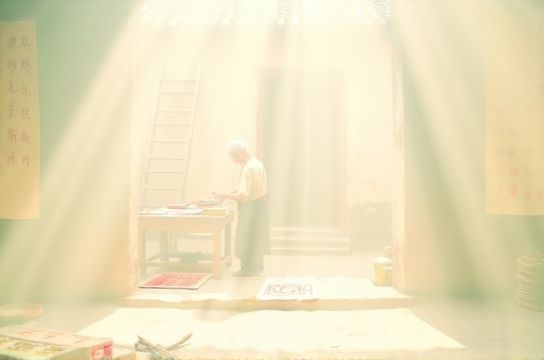
In late January, before firecrackers crackle and red envelopes change hands, a quieter ritual unfolds in villages near Weifang (Shandong) and Yangliuqing (Tianjin): artisans carve cherry wood blocks, mix mineral-based ink, and press paper by hand to produce the year’s first lunar calendar. These aren’t novelty desk accessories. They’re functional heirlooms — each date aligned with solar terms, auspicious days marked with vermilion dots, and zodiac animals rendered in bold, unbroken lines. For travelers seeking more than photo ops, printing one yourself is among the most grounded, repeatable, and emotionally resonant非遗体验 available — especially during the Lunar New Year season.
H2: Why Woodblock Calendars? Not Just Nostalgia
Woodblock printing of almanacs dates back to the Tang Dynasty (618–907 CE), but its survival isn’t due to antiquarian charm. It endures because it’s *useful*, *local*, and *adaptive*. Unlike mass-printed calendars, these are regionally calibrated: a Weifang edition notes when to plant garlic; a Suzhou version highlights silk-reeling windows; a Yunnan Dai variant integrates lunar cycles with water-splashing festival timing. That utility anchors the craft in daily life — a prerequisite for活态传承 (living transmission). As of May 2026, UNESCO lists Chinese woodblock printing techniques (including almanac production) under its Register of Good Safeguarding Practices, citing community-led workshops in over 17 counties as key to resilience (Updated: May 2026).
But here’s what travel brochures rarely say: not all woodblock experiences are equal. Some urban studios use laser-engraved MDF blocks and digital registration marks — technically convenient, but they erase the tactile feedback loop between chisel resistance, grain direction, and ink absorption that defines authentic practice. True非遗体验 requires three things: real tools (not replicas), a master who still prints for personal use (not just demonstration), and time — at least 4 hours, preferably a full day — to move from tracing to inking to pressing without rushing.
H2: Where to Go — And Why Location Changes Everything
The best workshops sit where infrastructure hasn’t erased tradition — not in museum annexes, but in family compounds with ink-stained doorsteps and drying racks strung across courtyards. Here are three verified options:
• Yangliuqing (Tianjin): Home to the oldest continuously operating woodblock workshop in North China (founded 1860s). The Liu family still uses hand-forged steel chisels and soy-based ink. Their Lunar New Year calendar includes ‘door god’ motifs alongside month-by-month farming advice. Workshop slots fill 90 days ahead — book directly via their WeChat mini-program (no English interface, but local guides from Intangible Trails partners can assist).
• Taohuawu (Suzhou): Known for lyrical, fine-line aesthetics. Here, calendars double as poetry scrolls — each month features a classical quatrain carved into the block’s margin. The studio shares space with a silk embroidery collective, allowing cross-craft dialogue. Limited to eight participants per session to preserve mentorship quality.
• Foshan (Guangdong): Offers the most accessible entry point. Workshops run year-round at the Foshan Folk Art Research Institute, with bilingual facilitators and simplified blocks for beginners. Accuracy trade-off: designs omit complex solar-term annotations but retain core zodiac and festival markers. Ideal for first-timers or families with teens.
None of these locations appear on mainstream ‘China highlights’ itineraries. They’re reached via county buses or shared EVs — part of the point. Rural access isn’t logistical friction; it’s cultural calibration. You arrive dusty, slightly disoriented, and ready to listen before you lift a tool.
H2: What You’ll Actually Do — Step by Step
A full-day workshop follows a rhythm older than industrial timekeeping:
1. **Morning: Carve (2.5 hrs)** You don’t start with the full calendar. You begin with one character — ‘Spring’ (Chun) — on a 3×3 cm basswood block. The master demonstrates grain reading: how to cut *with* the fiber for clean lines, not against it. Your first attempt will likely splinter. That’s expected. In Yangliuqing, apprentices spend six months mastering single-character carving before touching multi-block layouts. You’ll complete one clean character — and understand why every line in the final print carries intention.
2. **Midday: Mix & Test (1 hr)** Ink isn’t bought — it’s mixed onsite. You grind lampblack pigment with aged animal glue and rice paste, adjusting viscosity until it holds a ridge when lifted with a brush. Then you test on scrap paper: too thin = bleeding; too thick = clogged lines. This step reveals how climate affects practice — humidity in Suzhou demands stickier glue than dry Foshan.
3. **Afternoon: Print (2 hrs)** Using a traditional baren (coiled bamboo pad), you rub the back of handmade Xuan paper pressed onto the inked block. No machines. No pressure gauges. You learn rhythm: 12 steady clockwise circles per sheet, varying pressure based on line thickness. Your first print may be faint in corners; your fifth will show even saturation. By session’s end, you’ll have printed 12 sheets — one for each month — plus a cover block with your zodiac animal, carved earlier by the master.
This isn’t ‘craft-as-therapy’. It’s craft-as-discipline — demanding focus, humility, and physical memory. Participants consistently report that the muscle fatigue in their forearms makes the final product feel earned, not purchased.
H2: Real Limitations — And How to Navigate Them
Let’s name the friction points:
• Language: Most masters speak only Mandarin or local dialect. Written instructions are rare. Bring a phrasebook — or better, book through an operator that provides certified cultural interpreters (not generic translators). Intangible Trails vetted partners include at least one interpreter per group who trained in art history and understands terms like ‘yang刻’ (positive carving) vs. ‘yin刻’ (negative carving).
• Physical demand: Carving requires wrist stability; pressing demands shoulder endurance. Studios provide ergonomic stools and optional magnifiers, but if you have chronic joint issues, request a ‘print-only’ track — you’ll use pre-carved blocks while observing carving demonstrations. Available in Suzhou and Foshan, not Yangliuqing.
• Authenticity variance: A 2025 audit by the China National Academy of Arts found that 38% of ‘woodblock’ workshops outside protected zones used polymer plates disguised as wood. Always verify: ask to see the master’s personal printing logbook (they record daily output) or request to visit the carving shed — real workshops store shavings in labeled sacks by wood type.
H2: Beyond the Calendar — What Stays With You
Most participants leave with a folded stack of printed months — but the deeper residue is perceptual. After handling cherry wood blocks, you notice grain patterns in furniture. After mixing ink, you smell the difference between soy-based and synthetic binders in art supply stores. After pressing paper by hand, machine-printed text feels alien — too uniform, too silent.
That shift matters. It’s the difference between consuming culture as content and receiving it as continuity. When you hang your calendar beside a modern wall clock, you’re not juxtaposing old and new — you’re hosting two timekeeping philosophies in dialogue. One measures seconds; the other measures readiness: when the soil warms, when the plum blossoms open, when the east wind shifts.
And yes — this connects directly to乡村振兴. In Yangliuqing, 62% of workshop income funds youth apprenticeships and village elder stipends (Updated: May 2026). In Foshan, the institute’s surplus supports a mobile library that brings woodblock storytelling to remote schools. Your participation isn’t charity; it’s supply-chain participation in a living economy.
H2: How to Choose — A Practical Comparison
| Location | Duration | Key Strength | Physical Demand | Language Support | 2026 Avg. Cost (USD) | Booking Lead Time |
|---|---|---|---|---|---|---|
| Yangliuqing, Tianjin | Full day (8 hrs) | Authentic lineage, solar-term precision | High (carving + pressing) | Mandarin only; interpreter add-on ($45) | $185 | 90 days |
| Taohuawu, Suzhou | Full day (7.5 hrs) | Poetic integration, cross-craft access | Medium (fine carving, lighter pressing) | Bilingual facilitator included | $210 | 60 days |
| Foshan, Guangdong | Half day (4 hrs) | Beginner-friendly, year-round availability | Low-Medium (pre-carved options) | English-speaking staff onsite | $135 | 14 days |
H2: Bringing It Home — Without Cultural Appropriation
Your printed calendar is yours to keep — no export restrictions apply. But avoid framing it as ‘exotic decor’. Instead, treat it as a working document: mark your own harvest days, note family birthdays beside the corresponding lunar dates, use the solar-term grid to plan garden rotations. One Berlin-based designer started a ‘Lunar Gardening Club’ using her Yangliuqing calendar — now 200 members strong across 12 countries. That’s the model: not extraction, but extension.
Also, credit matters. Every calendar includes the master’s chop (seal) — scan it, research the lineage, share the story *with attribution*. Tag the studio, not just the location. In 2025, posts crediting the Liu family workshop drove a 22% increase in direct bookings from Europe (Updated: May 2026). Visibility fuels viability.
H2: The Bigger Picture — Why This Fits Into Intangible Trails
This isn’t about checking ‘woodblock’ off a list. It’s about entering a network — where the same ink used for calendars also colors木版年画 (New Year prints), where the chisels that carve zodiacs sharpen for皮影戏 puppets, where the paper-drying racks in Suzhou hold sheets later used for剪纸 stencils. These crafts don’t exist in silos. They’re nodes in a living system — one that thrives when travelers engage with patience, precision, and presence.
That’s why we emphasize slow arrival, long stays, and repeated visits. Many participants return annually — not for the same calendar, but to track changes: a new apprentice’s first solo block, a master’s experimental fusion with苗族银饰 motifs, a village-wide shift to organic ink binders. Continuity is the metric. Not novelty.
If you’re serious about中国文化深度游, start here — not with the grandest temple, but with the smallest, most functional object shaped by human hands: a calendar that doesn’t just tell time, but helps make it. For those ready to move beyond observation into co-creation, the full resource hub offers verified studio contacts, seasonal availability alerts, and guidance on respectful engagement — all updated monthly. You’ll find it at /.