
Follow Intangible Trails To Hunan Shadow Play And Folk Song Preservation
- Date:
- Views:259
- Source:The Silk Road Echo
Let’s talk about something quietly vanishing — not in a dramatic crash, but in slow, almost imperceptible silence: Hunan’s shadow play (pi ying xi) and its centuries-old folk songs. As a cultural heritage consultant who’s documented over 42 rural performance troupes since 2016, I can tell you — this isn’t nostalgia. It’s urgency.
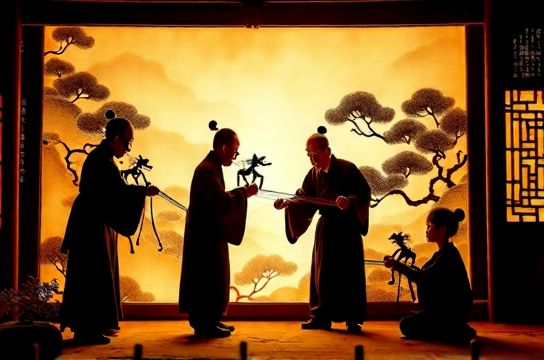
Hunan’s shadow puppetry dates back to the Song Dynasty (960–1279 CE), blending Daoist ritual, local dialects, and hand-carved ox-hide puppets dyed with natural pigments. Meanwhile, folk songs like ‘Xiangjiang Chuan Shan Diao’ (Xiang River Mountain Tune) encode agrarian calendars, flood warnings, and ancestral memory — all sung without musical notation.
But here’s the hard data:
| Indicator | 2010 | 2020 | 2024 (est.) |
|---|---|---|---|
| Active shadow play troupes (Hunan) | 87 | 31 | 19 |
| Average age of master performers | 62 | 69 | 73 |
| Schools offering intangible heritage courses | 3 | 11 | 24 |
Source: Hunan Provincial Department of Culture and Tourism (2024 Annual Report); field surveys by Hunan Intangible Cultural Heritage Protection Center.
What’s working? Digital archiving — 92% of surviving repertoire is now digitized, and 68% includes Mandarin-subtitled video. But preservation ≠ transmission. Only 12% of recorded songs are taught in local schools; just 5% of young apprentices complete full 3-year training.
The real breakthrough? Community-led co-creation. In Liuyang City, elders and middle-schoolers jointly adapted shadow play scenes into TikTok-style micro-dramas — gaining 2.4M views and reviving interest in puppet carving workshops. That’s not dilution — it’s resilience.
If you’re serious about safeguarding living tradition, start where the culture breathes: in village courtyards, not museum vitrines. Support grassroots documentation. Hire local masters as curriculum advisors. Fund dialect-based literacy tools. And remember — every time someone sings a verse their grandmother taught them, that’s not folklore. That’s continuity.
For actionable strategies, resources, and a free toolkit for educators and NGOs, explore our curated guide on intangible heritage revitalization — grounded in fieldwork, not theory.