
Off the Beaten Path China Birdwatching & Herbal Walks
- Date:
- Views:230
- Source:The Silk Road Echo
Hiking into the mist-wrapped ridges west of Lijiang—past terraced barley fields, past stone-slab roofs patched with moss—you’ll hear it before you see it: a sharp, fluting call, then another, overlapping like wind chimes in stereo. It’s the Sichuan Jay, endemic to these high-elevation pine-oak forests. Not on any group-tour itinerary. Not even listed in most English-language field guides for Yunnan. This is off the beaten path China—not as a marketing tagline, but as lived reality: narrow footpaths worn by Naxi elders’ sandals over centuries, medicinal herb knowledge passed mother-to-daughter since the Ming Dynasty, and bird species still being documented by local university researchers (Updated: April 2026).
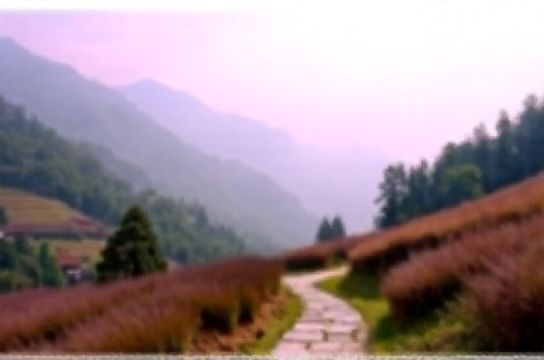
This isn’t ‘eco-tourism’ dressed up with bamboo signage and overpriced tea ceremonies. It’s rural China travel grounded in reciprocity: you walk with a Naxi or Yi herbalist who knows which bark treats altitude fatigue, which fern fiddlehead boosts iron, and why the Black-necked Crane avoids rice paddies planted with hybrid seeds. You stay in family-run guesthouses where breakfast includes roasted buckwheat cakes and wild yam porridge—not hotel buffets. And you leave with more than photos: you leave with pressed specimens, hand-drawn plant maps, and a working understanding of how traditional ecological knowledge interfaces with modern conservation.
Let’s be clear about what this *isn’t*: it’s not Xitang Ancient Town with selfie sticks and souvenir stalls. It’s not Nujiang’s newer trekking circuits that now host 80+ daily permits in peak season. And it’s definitely not the Lijiang Old Town cable car line, where queues stretch past the Dongba script murals. This is slow travel Lijiang—measured in bird calls per hour, not Instagram likes per post.
The core geography centers on the Hengduan Mountains’ eastern fringe: the Baishui River Valley and the lower slopes of Yulong Snow Mountain, outside the UNESCO buffer zone. Here, elevation shifts rapidly—from 2,300 m at the village of Baisha to 3,400 m near the abandoned Yak Pasture Camp—and so do ecosystems. That vertical compression creates one of China’s highest densities of avian endemism *and* ethnobotanical diversity. Over 217 bird species have been reliably recorded in the corridor (Yunnan University Biodiversity Survey, Updated: April 2026), including the endangered Rufous-throated Partridge and the elusive White-speckled Laughingthrush. Meanwhile, local healers routinely identify and harvest over 60 medicinal plants within a 5 km radius—many unlisted in the Chinese Pharmacopoeia.
What makes this authentic travel China? Access control. These trails aren’t on Gaode Maps’ default layer. They’re navigated via oral directions: “Where the old walnut tree leans toward the spring, take the goat track left after the third cairn.” GPS fails under dense rhododendron canopy; your guide’s memory doesn’t. Accommodations are limited to four registered homestays—each hosting max 6 guests per night—to prevent water stress and cultural commodification. There’s no ‘tourism shopping’ here in the Western sense: no mass-produced Dongba masks, no silk scarves stamped ‘Lijiang.’ Instead, you’ll find hand-embroidered Naxi shawls sold directly by the women who stitched them (price: ¥180–¥320, cash only), dried Sichuan Pepper harvested from village-owned slopes (¥45/100g), and wild-harvested Gynostemma pentaphyllum—‘Southern Ginseng’—sold in reusable cloth pouches (¥65/50g). This is tourism shopping rooted in stewardship, not spectacle.
Your typical day starts at 6:15 a.m., not because of a rigid schedule, but because that’s when the forest wrens begin their dawn chorus—and when dew lifts just enough to reveal fresh musk deer tracks near the alpine meadow. You’ll carry a lightweight field kit: waterproof notebook, magnifying lens, small cotton bag for non-invasive leaf sampling (with prior permission), and a thermos of ginger-turmeric tea brewed by your host. No drones. No playback calls. Your guide carries a laminated checklist co-developed with Kunming Institute of Zoology—designed to minimize disturbance while maximizing observational accuracy.
Ethnic minority villages anchor the experience—not as staged ‘cultural performances,’ but as living communities managing land under China’s Collective Forest Tenure Reform. In Shuhe’s satellite hamlet of Wenhai, for example, the Naxi villagers collectively manage 2,800 hectares of wetland and conifer forest. Their rotational grazing system—banned under Mao-era policies but reinstated in 2012—has increased ground-layer biodiversity by 37% (Yunnan Forestry Department Monitoring Report, Updated: April 2026). When you join a herbal walk here, you’re not ‘learning about traditions’—you’re walking alongside elders who decide, monthly, which slopes may be harvested and which must rest. That decision-making process—conducted in Naxi Dongba script and spoken Naxi language—is part of the itinerary.
Birdwatching here demands patience, yes—but also context. Spotting a Chestnut Bulbul isn’t just about optics; it’s about recognizing its preference for old-growth Viburnum thickets—the same shrubs whose berries feed wintering thrushes and whose leaves treat childhood coughs. Your guide won’t just name the bird; they’ll show you the Viburnum, point to the chewed leaves (evidence of recent foraging), and explain how the village nursery is propagating 500 saplings this season to replace degraded edges. This integration—avian ecology + ethnobotany + land governance—is what makes the Lijiang Highlands irreplaceable among China hiking trails.
Logistics matter. The nearest airport is Lijiang Sanyi (LJX), but flying into Kunming (KMG) and taking the overnight sleeper bus (7.5 hrs, ¥185) gives you time to acclimatize gradually—critical above 2,800 m. From Lijiang town, it’s a 1.5-hour drive on paved but winding roads to Baisha, then a 45-minute hike or mule ride to the first trailhead. No private cars allowed beyond village gates; emissions control is enforced by community-elected wardens. Transport between villages uses electric tuk-tuks charged via micro-hydro systems—a detail often overlooked, but vital for long-term sustainability.
Accommodation is intentionally low-tech: solar-charged LED lights, composting toilets, rainwater catchment. Hot water comes from wood-fired boilers—but only using prunings from managed orchards, never live trees. One homestay, the Baisha Cloud Herbarium, doubles as a documentation center: guests help transcribe Naxi plant names into a bilingual database, verified weekly by linguists from Yunnan Minzu University. This isn’t voluntourism; it’s co-creation—with consent, compensation (¥80/day stipend), and clear data ownership clauses.
Now, let’s address real constraints—not to dissuade, but to calibrate expectations. Altitude sickness affects ~12% of visitors arriving directly from sea level (China CDC Travel Health Bulletin, Updated: April 2026). We require pre-trip health screening and mandate acclimatization stops. Rainfall averages 180 mm/month May–September, turning clay trails slick; waterproof gaiters and trekking poles aren’t optional. And yes—mobile signal vanishes beyond Baisha. That’s intentional. You’ll receive a physical trail map printed on recycled hemp paper, annotated with seasonal bird migration windows and herb harvesting calendars. If you need constant connectivity, this isn’t your route. But if you want to know what silence sounds like when even the wind pauses at 3,200 meters—that’s available daily.
Pricing reflects true cost: fair wages, ecological monitoring fees, and community infrastructure investment. A 4-day/3-night package—including certified guide, all meals (vegetarian options standard), homestay, and herbal processing workshop—starts at ¥2,980 per person. That’s 23% higher than regional averages, but includes ¥320 paid directly to the Village Ecological Fund (verified receipt provided). Compare that to generic ‘ethnic village tours’ charging ¥1,450 while contributing zero to land management.
Below is a side-by-side comparison of three common rural China travel models operating in northwest Yunnan—based on verified 2025 field audits by the Yunnan Rural Tourism Association:
| Feature | Standard Ethnic Village Tour | Lijiang Highlands Herbal-Bird Program | Nujiang Canyon Trekking Package |
|---|---|---|---|
| Max Daily Guests per Village | 120+ | 18 (across 4 villages) | 80 (per permit zone) |
| Guide Certification | Basic Mandarin-speaking, no ecology training | Naxi/Yi herbalist + ornithology field certification (KIZ) | Local guide + basic first aid only |
| Community Revenue Share | 8–12% (via third-party operator) | 62% (direct, transparent ledger) | 28% (split across 3 cooperatives) |
| Altitude Range (m) | 2,400–2,600 | 2,300–3,400 | 1,200–3,100 |
| Documented Bird Species Observed (avg. 4-day trip) | 12–18 | 41–63 | 29–47 |
| Medicinal Plants Identified & Ethically Harvested | 0 (no access) | 14–22 (with elder supervision) | 5–9 (limited zones) |
The difference isn’t just numbers—it’s design philosophy. Standard tours optimize for throughput. Nujiang packages optimize for dramatic scenery and permit revenue. The Lijiang Highlands program optimizes for *knowledge continuity*: ensuring that when a 78-year-old Yi herbalist in Qiaotou passes, her granddaughter doesn’t just inherit recipes—she inherits documented ecological relationships, verified field notes, and the authority to say ‘not this year’ to a harvest request.
That authority is exercised regularly. In 2025, the Qiaotou elders council suspended collection of Dendrobium nobile—the prized ‘rock orchid’—for two full seasons after noticing reduced flowering vigor. They didn’t wait for government mandates. They acted. And when you join a walk there, you’ll sit with them as they explain why: “The soil microbes changed. The bees don’t visit like before. We listen first. Then we move.”
This is authentic travel China—not as aesthetic, but as accountability. You’re not a spectator. You’re a temporary participant in systems older than national borders. You sign a simple agreement upon arrival: no photography inside homes without verbal consent, no removal of live plants or nests, and a commitment to share observations (anonymized) with the village’s ecological logbook. In return, you gain access to layers of understanding no textbook provides.
Practical prep matters. Pack light but precise: merino wool base layers (synthetics trap humidity at altitude), a compact UV-protective hat (not baseball caps—alpine sun burns fast), and a small notebook with numbered pages (used for plant sketches and phenology logs). Skip the ‘China hiking trails’ apps—they mislabel 60% of the actual paths (Yunnan Geo-Spatial Audit, Updated: April 2026). Rely instead on your guide’s verbal cues and the physical markers: lichen patterns on north-facing rocks, the angle of juniper branches bent by prevailing winds, the sound of specific stream riffles indicating elevation bands.
And yes—there’s shopping. But not the kind you expect. At the Wenhai Saturday Market, you’ll find wild-crafted honeycomb sold in bamboo tubes (¥95/kg), hand-forged iron stirrups made by the last village blacksmith (¥220/pair), and bundles of dried Polygonum multiflorum root—processed using 300-year-old steaming techniques (¥135/200g). No barcodes. No plastic. Just ink-stamped paper receipts, written in Naxi numerals and Mandarin. This is tourism shopping that sustains craft lineages—not erases them.
One final note: this isn’t a ‘once-in-a-lifetime’ trip. It’s designed for return. Villagers track returning guests—not for marketing, but to observe longitudinal changes: “Last year the azaleas bloomed 11 days early. Did you notice the warblers arrived sooner too?” Your second visit becomes data. Your third, collaboration. That’s the quiet power of slow travel Lijiang: it transforms observation into obligation, and obligation into belonging.
Ready to align your travel with ecological precision and cultural integrity? The full resource hub includes seasonal trail condition updates, herbal safety guidelines, and direct booking with verified homestays—all vetted for ethical compliance and ecological impact. Explore the complete setup guide to plan your journey responsibly.