
Authentic Travel China Village Walks in Nujiang Gorges
- Date:
- Views:273
- Source:The Silk Road Echo
Hiking into the Nujiang Gorges isn’t like walking the stone lanes of Xitang Ancient Town or sipping tea in a Lijiang courtyard café. Here, the trail narrows to a footpath carved by generations of Lisu porters, the air smells of woodsmoke and wild ginger, and your lunch arrives on a hand-carved walnut-wood platter — not a porcelain plate stamped with a dragon motif. This is authentic travel China at its most grounded: no staged performances, no souvenir stalls selling factory-made ‘ethnic’ scarves, and certainly no Wi-Fi dead zones that feel curated for Instagram. Just real people, real terrain, and rhythms set by monsoon rains and harvest cycles.
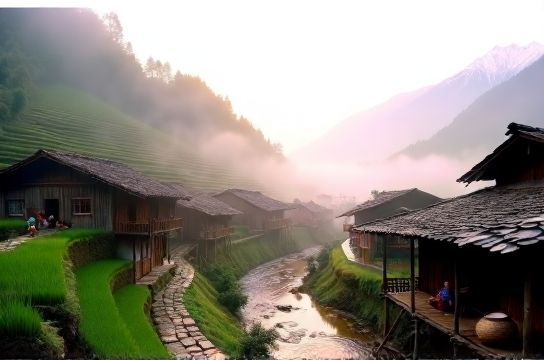
Nujiang Lisu Autonomous Prefecture — tucked along China’s western Yunnan border with Myanmar — remains one of the last large-scale, accessible regions where ethnic minority villages operate largely outside mainstream tourism infrastructure. Less than 120,000 international visitors entered Nujiang in 2025 (Updated: April 2026), compared to over 28 million in Yunnan province overall. That’s not because it’s inaccessible — the G318 extension now links Kunming to Fugong in under 10 hours — but because access alone doesn’t equal readiness. Most villages lack English signage, digital payment systems, or even consistent electricity. Which is precisely why this corner of rural China travel delivers what so many seek but rarely find: continuity, not spectacle.
Why Nujiang? Not Just Another 'Off the Beaten Path China' Buzzword
Let’s be clear: ‘off the beaten path China’ is often code for ‘harder to reach, less comfortable, and poorly documented’. But Nujiang earns the label differently. Its remoteness isn’t accidental — it’s geological. The Nu River slices through the Hengduan Mountains along one of Earth’s deepest gorges (average depth: 2,000 meters; max verified: 3,740m near Bingzhongluo). Steep slopes, seasonal landslides, and narrow river corridors have historically limited road expansion. As a result, over 70% of Nujiang’s 256 administrative villages remain reachable only by foot, mule track, or seasonal ferry — not tour buses.
More importantly, Nujiang hosts four officially recognized ethnic minorities whose cultural practices remain actively lived, not reenacted: Lisu (62% of Nujiang’s population), Nu (21%), Bai, and Tibetan. Unlike more touristed areas where ‘ethnic minority villages’ have become commercialized enclaves — think rows of identical guesthouses selling mass-printed batik — Nujiang’s villages retain functional social structures: communal granaries still store millet for drought years; shaman-led rituals mark planting seasons; and oral epics like the Lisu Mu Lao La are recited during winter evenings, not performed for tips.
That said, authenticity here isn’t frictionless. You won’t find bilingual menus or QR-code museum guides. A village elder may welcome you with a cup of home-brewed corn wine — then pause, puzzled, when you ask for the ‘Wi-Fi password’. That’s not resistance. It’s context. And it’s precisely what makes rural China travel here meaningful: engagement requires humility, translation apps help but aren’t enough, and learning a few Lisu phrases (“Mee la?” = “How are you?”, “Ngo yu” = “Thank you”) signals respect far more than any gift basket.
Village Walks That Go Deeper Than Scenery
Forget ‘scenic viewpoints’. In Nujiang, the walk itself is the destination — and the guide is usually someone who’s walked it since childhood.
Start in **Dimaluo**, a Lisu village clinging to a mid-slope terrace above the Nu River. No hotels, no ATMs — just 87 households, a Catholic church built in 1921 (one of the oldest in Yunnan), and a tradition of polyphonic singing passed down through female lineages. Your walk begins before dawn, following women carrying bamboo baskets filled with firewood and medicinal herbs up switchbacks lined with wild magnolia and Himalayan yew. They’re not performing. They’re working. You’re invited — not as a spectator, but as temporary apprentice: learn to identify Du Zhong bark (used for joint pain), carry a 15kg load for 200 meters (you’ll sweat, they’ll smile), and share breakfast of roasted buckwheat cakes and fermented soybean paste.
From Dimaluo, descend west toward **Bingzhongluo**, where the Nu River bends sharply north — earning the area its nickname ‘First Bend of Nujiang’. Here, three ethnic groups (Lisu, Nu, Tibetan) live within 5km, each maintaining distinct dialects, dress codes, and agricultural calendars. A 2-day loop trail connects their hamlets: start with Nu elders weaving rattan baskets in Zhaduo, join Lisu farmers transplanting rice seedlings in Qiajia, then share butter tea and yak-milk cheese with Tibetan herders near the glacial-fed Shuimogou Valley. No fixed itinerary — timing follows weather, livestock movement, and family obligations. If a Nu grandmother needs help repairing her chicken coop, the walk pauses. That’s not delay. It’s the point.
Local Cuisine: Where ‘Farm-to-Table’ Means ‘Forest-to-Bowl’
Nujiang’s food system operates on principles Western chefs pay consultants to mimic: hyper-seasonal, zero-waste, and deeply place-based. There are no ‘signature dishes’ — just daily adaptations to what’s available, preserved, or fermenting.
Breakfast in a Lisu household might be La Mi: boiled highland barley mixed with wild nettle leaves, dried pork fat, and chili-infused walnut oil. Lunch could be smoked goat stew cooked in a hollowed-out log over open flame, served with sour bamboo shoot pickle made from shoots gathered that morning. Dinner? Often Zha Cai — not the Sichuan-style mustard tuber, but Nu-style fermented watercress, buried underground for 45 days in clay jars sealed with pine resin.
What makes this more than culinary tourism is participation. You don’t just taste — you prep. In Bingzhongluo’s Nu village of **Gawu**, families invite guests to pound glutinous rice for Yi Ba (sticky rice cakes) using wooden mortars worn smooth by centuries of use. In Dimaluo, Lisu teens teach visitors how to roast chestnuts over embers while telling origin stories about the chestnut tree spirit Ka Lo. These aren’t cooking classes. They’re knowledge transfers — and yes, you’ll burn your fingers. That’s part of the curriculum.
Importantly, there’s no ‘tourist menu’. You eat what the family eats — which means occasional surprises: fermented fish paste (pungent, rich, acquired), roasted insect larvae (crunchy, nutty, protein-dense), or raw river trout marinated in wild citrus and mountain pepper. Refusing isn’t rude — but explaining *why* you decline (e.g., dietary restriction, not ‘I don’t like it’) keeps the exchange respectful. And if you do try the larvae? You’ll likely get offered seconds — and a grin that says, ‘You’re starting to understand.’
China Hiking Trails With Real Stakes — and Real Rewards
Nujiang’s trails aren’t graded like European GR routes. They’re named after purpose: ‘The Salt Road’, ‘The Tea Mule Path’, ‘The Shaman’s Ascent’. Their difficulty isn’t measured in elevation gain alone — it’s in decision points: Do you cross the river here, or wait for the ferry? Is that mudslide fresh, or stabilized? Does the cloud cover mean rain in 20 minutes — and should you seek shelter before the trail turns slick?
The most practical introduction is the **Fugong–Dimaluo Ridge Trail**, a 32km, two-day traverse linking the county seat to the upper Lisu valley. Unlike crowded sections of the Tiger Leaping Gorge trail, this route sees fewer than 50 independent hikers per month (Updated: April 2026). It climbs steadily from 1,500m to 2,800m, passing through subtropical forest, then rhododendron scrub, then alpine meadows where yaks graze beside prayer flags strung by local monks. Accommodation? One family-run guesthouse in Dimaluo (with compost toilet and solar-charged lanterns) and two shepherd huts used seasonally — available only if the herder is present and consents.
Critical note: This is not solo-hike territory without preparation. Landslide risk peaks July–September; GPS signal drops below 2,200m due to canyon depth; and emergency response (helicopter evacuation, etc.) requires coordination with local forestry bureau — not an app. That’s why reputable local operators like Nujiang Cultural Trails Cooperative require pre-trip orientation covering basic Lisu phrases, first-aid herb identification (e.g., She Xiang for wound disinfection), and mutual aid protocols. They also enforce a strict ‘no drone’ policy — not for privacy, but because buzzing machines spook livestock and disrupt ritual drumming.
What to Buy — and What Not To
Tourism shopping in Nujiang operates on a radically different economy. Forget malls or ‘ethnic craft markets’. What’s available is made, grown, or gathered — and priced according to labor, not markup.
Acceptable purchases: • Handwoven Lisu hemp cloth (dyed with indigo and walnut husk) — ~¥180/meter, takes 3 weeks to produce • Wild-crafted Yun Ling mushrooms (dried porcini analogs) — ¥120/500g, harvested sustainably under village co-op license • Nu-style rattan baskets — ¥95–¥220 depending on size and weave density; proceeds fund village school supplies
Avoid: • Anything labeled ‘Tibetan silver’ — genuine Nujiang Tibetan jewelry uses recycled copper and local lead-free tin, not imported alloys • ‘Antique’ drums or masks — these are active ritual objects, not decor. Replicas exist, but only when commissioned by the village shaman • Pre-packaged ‘minority spice blends’ — authentic seasoning is site-specific: Dimaluo uses wild Sichuan pepper; Bingzhongluo relies on fermented black beans and mountain mint
This isn’t pedantry. It’s ethics. When you buy a basket, you’re paying for the rattan gatherer’s day-long trek into the gorge, the weaver’s 12-hour workday, and the cooperative’s 5% reinvestment into youth language preservation programs. That’s rural China travel with accountability — not extraction.
Planning Logistics: Realistic Expectations, Not Brochure Promises
Getting there requires accepting trade-offs. Flying to Kunming, then taking an overnight bus to Fugong (10 hrs) is cheapest (~¥220). Driving via G318 adds flexibility but demands a 4WD vehicle — and a local driver familiar with landslide-prone stretches near Liuku. Domestic flights to Nujiang’s new Lushui Airport (opened late 2025) cut travel time significantly but remain limited: only 3 weekly flights from Kunming (¥680–¥1,120 round-trip, subject to cancellation during monsoon).
Accommodation ranges from homestays (¥80–¥150/night, shared bathroom, meals included) to the newly opened Bingzhongluo Eco-Lodge (¥320/night, solar power, bilingual staff, 100% wastewater recycling). Book ahead — especially May–June and September–October — but know that ‘booking’ here means confirming via WeChat voice note with the host’s daughter, not clicking ‘reserve’ on Booking.com.
Health considerations matter. Altitude sickness is rare below 3,000m, but gastrointestinal adjustments are common. Bring electrolyte tablets, not just probiotics — local water sources vary in mineral content, and boiling doesn’t remove all tannins from stream-fed wells. Also pack biodegradable soap: many villages rely on river water for washing, and synthetic detergents harm aquatic insect populations critical to the food chain.
Comparing Nujiang Village Walk Options
| Trail Name | Length & Duration | Key Villages | Physical Demand | Pros | Cons | Best For |
|---|---|---|---|---|---|---|
| Fugong–Dimaluo Ridge Trail | 32 km / 2 days | Fugong, Qiajia, Dimaluo | Moderate–Strenuous (1,300m ascent) | Established homestay network, strong Lisu cultural immersion, reliable seasonal access | Limited shade on upper ridge, no cell service past Qiajia | First-time Nujiang visitors seeking balance of challenge and support |
| Bingzhongluo Three Ethnic Loop | 24 km / 2–3 days | Zhaduo (Nu), Qiajia (Lisu), Shuimogou (Tibetan) | Moderate (600m ascent, river crossings) | Multi-ethnic exposure, active agricultural participation, strongest food focus | Requires flexible scheduling around harvest/festival dates, ferry dependency | Culinary travelers and cultural documentarians |
| Shaluli Snow Mountain Approach | 48 km / 4 days | Gawu, Baima, remote Nu hamlets | Strenuous (2,100m ascent, glacier proximity) | Deepest wilderness access, highest chance of spotting red pandas or musk deer, shaman-guided segments | Permit required (issued only through Nujiang Forestry Bureau), no formal lodging, medical evacuation extremely limited | Experienced mountaineers and anthropologists with prior Nujiang experience |
The Slow Travel Imperative
Nujiang doesn’t reward speed. Rushing from Dimaluo to Bingzhongluo in one day defeats the purpose — you’ll miss the elder teaching kids to carve wooden spoons, the shared silence during afternoon rain, the way laughter echoes differently off granite than limestone. This is slow travel lijiang redefined: not luxury lounging, but deep temporal alignment. It means staying in one village for 4 nights instead of ‘doing’ three. It means helping repair a leaking irrigation channel — and learning why the bend in the bamboo pipe matters for water pressure. It means accepting that ‘getting there’ is less important than understanding how ‘there’ sustains itself.
That mindset shift is why so many return — not for photos, but for perspective. One Berlin-based architect came for hiking trails, stayed to help design a rainwater catchment system for a school in Zhaduo, and now coordinates annual volunteer builds. A Tokyo teacher brought her students to study oral storytelling methods — and ended up co-authoring a bilingual Lisu literacy primer. These aren’t exceptions. They’re the emerging norm for travelers who treat Nujiang not as a destination, but as a relationship.
If you’re ready to move beyond checklist tourism — to trade convenience for connection, efficiency for empathy — then Nujiang offers something increasingly rare: space to recalibrate. Not every meal will be delicious. Not every trail will be dry. But every interaction carries weight — and every basket you buy helps keep a language, a seed variety, a song alive.
For those ready to begin that recalibration, the full resource hub includes vetted local guides, seasonal availability calendars, and ethical purchasing guidelines — all updated monthly. Start your planning journey at /.