
Off the Beaten Path China Hiking Trails
- Date:
- Views:181
- Source:The Silk Road Echo
Hiking in China doesn’t have to mean crowds at Huangshan’s cable car queues or selfie sticks at Zhangjiajie’s Avatar pillars. If you’ve already done Lijiang’s Old Town (and felt its charm diluted by souvenir stalls selling ‘Naxi’ keychains made in Dongguan), it’s time to step onto something older, quieter, and far more grounded: the stone pathways winding up into the eastern flanks of the Jade Dragon Snow Mountain range—paths that predate written Naxi Dongba scriptures, maintained not by tourism bureaus but by village elders and shrine keepers.
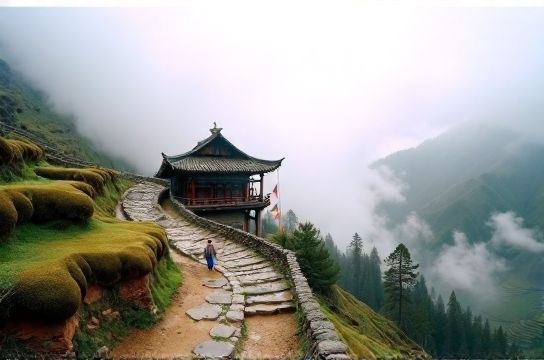
These aren’t ‘trails’ in the modern sense—no trail markers, no QR-coded interpretive signs, no designated rest stops with thermoses of ginger tea. They’re *yao dao*—literally, ‘medicinal paths’—named for the wild yarrow, gentian, and *Dioscorea* tubers gathered along them, and for the spiritual tonics they deliver. They lead to small, unlisted mountain shrines (*shenmiao*) dedicated to local Naxi deities like Sanduo (the patron god of war and protection) and Daba spirits tied to specific peaks, groves, and springs.
This isn’t a curated ‘ethnic experience.’ There’s no staged dance performance after lunch. No mandatory craft workshop. You won’t be handed a laminated ‘Naxi Cultural Passport’ at check-in. What you *will* get is a two- to four-day traverse through terraced barley fields, past water-powered grain mills still in use, across slate bridges laid by hand in the Qing Dynasty, and into hamlets where fewer than 12% of households have internet access (Updated: April 2026, Yulong County Rural Connectivity Survey). You’ll drink *sour milk tea* from a wooden bowl offered without expectation—and likely be invited to help hang prayer flags before sunrise, not because you’re a guest, but because there are only three pairs of hands available.
**Why These Paths Stay Off the Radar**
Three structural reasons—not ‘secrecy,’ but practical friction—keep these routes under the radar:
1. **No transport infrastructure**: The nearest paved road ends at Baisha Village (15 km east of Lijiang). From there, access requires either a 90-minute walk on a gravel service track (used by timber trucks twice weekly) or arranging a ride with a local farmer—often via word-of-mouth referral from a guesthouse owner in Shuhe. Ride-share apps don’t register this corridor; Baidu Maps shows only a dotted line labeled ‘unverified path.’
2. **Cultural gatekeeping, not exclusion**: Naxi communities in this zone—particularly in the upper reaches of Wenhai Valley and near the abandoned Dongba hermitage at Jinsha Jiang’s headwaters—don’t forbid outsiders. But shrine access follows ritual protocol: permission must be sought from the village Daba (shaman-priest) or elder council, usually the day before ascent. This isn’t bureaucracy—it’s reciprocity. You’re asked what you’ll contribute: firewood? A repaired roof tile? A shared meal? Refusal isn’t punished—but silence is understood as disinterest, and the path remains unguided.
3. **Zero commercial scaffolding**: No tour operators hold licenses for these routes. The Yunnan Provincial Tourism Bureau lists only six ‘approved ethnic minority hiking experiences’—none include the Wenhai-to-Yongning corridor. Local guides operate informally, often through homestay networks. Their rates (¥280–¥420/day, cash only) cover transport, basic meals, and cultural mediation—but *not* shrine entry fees, because there are none. Shrines charge nothing. Donations are rice, salt, or hand-rolled butter candles—never RMB.
**The Core Route: Wenhai Valley to Yongning Pass (3 Days, ~38 km)**
This is the most accessible yet least documented of the stone-path corridors. It avoids high-altitude exposure (>3,800 m) while delivering deep cultural continuity—from agrarian Naxi life in Wenhai’s wetland basin (a Ramsar site since 2011, though rarely visited) to semi-nomadic Mosuo-influenced practices near Yongning, where some families still observe matrilineal inheritance and seasonal yak migrations.
Day 1: Wenhai Village → Upper Wetland Herder’s Hut (11 km, +420 m) Start at dawn. Follow the old irrigation channel west, then climb switchbacks paved with river-smoothed slate—some slabs inscribed with faded Dongba glyphs (‘water,’ ‘mountain,’ ‘spirit’). You’ll pass three active *shuimu* shrines—small cairns wrapped in blue and white cloth, each with a carved wooden plaque listing donor families from 1923, 1957, and 2004. Lunch is *zhi ba*, roasted highland barley cakes, eaten beside a spring where women from nearby villages still wash wool by hand. Overnight in a herder’s stone-and-timber hut—no electricity, kerosene lamp only. Toilets are composting pits; water is drawn from the spring.
Day 2: Herder’s Hut → Jinsha River Headwaters Shrine (13 km, +310 m / −280 m) Descend into a narrow limestone gorge, then ascend again along a path cut directly into the cliff face—sections reinforced with ironwood pegs driven into rock fissures over 200 years ago. At midday, you’ll reach the first major shrine: a cave entrance draped in faded prayer flags, housing a blackened bronze statue of Sanduo seated on a tiger skin. Inside, offerings include dried yaks’ horns, bundles of wild wormwood, and handwritten Dongba prayers on mulberry paper—some brittle with age, others freshly inked. The keeper, an 82-year-old woman named He Xiu, lives in a lean-to 200 meters downhill. She speaks minimal Mandarin, communicates mostly in gestures and Naxi song-poems. She’ll offer *luo cha* (bitter herb tea) and may invite you to help restring a section of flag line—if your hands are steady and your intent clear.
Day 3: Jinsha Shrine → Yongning Pass Trailhead (14 km, −530 m) A long descent through mixed pine and rhododendron forest, crossing three footbridges built from single fir trunks lashed with vine. Near the bottom, the path opens into a high meadow where Mosuo horse traders historically met Naxi salt merchants. Today, only two families summer here. One runs a tiny stall selling smoked yak jerky and hand-spun wool socks—no prices posted, payment by mutual agreement. From the pass, you’ll see the first solar panels in 36 km: a schoolhouse built in 2022, funded by a Shanghai NGO. That’s your signal—civilization is returning. A van (arranged in advance) waits 4 km down a rough track. It will take you to Ninglang County seat, where you can catch a bus back to Lijiang—or continue to the Mosuo lakeside villages near Lugu Lake, using the same informal network.
**What You *Won’t* Find (And Why That Matters)**
• No Wi-Fi hotspots. Cellular signal drops completely after Wenhai’s last telecom repeater (located behind the primary school). This isn’t ‘digital detox marketing’—it’s physics. The granite ridges block frequencies. You’ll carry a paper map (photocopy of a 1987 Yunnan Forestry Survey sheet, annotated by hand) and a compass. GPS works—but battery drain is severe due to constant elevation recalibration.
• No standardized gear rentals. There’s no ‘hiking shop’ in Baisha or Shuhe stocking trekking poles sized for East Asian torsos. Bring your own. Locals use walking staffs carved from *Ligustrum* wood—light, flexible, and tipped with iron ferrules forged in village smithies. You can buy one for ¥60–¥90, but sizing is trial-and-error.
• No ‘cultural sensitivity training.’ There’s no briefing deck about avoiding photos of shrines or proper bowing angles. Instead, you learn by doing—and by misstepping. Dropping a rice offering? An elder quietly places another beside yours, saying only, “The mountain accepts intention, not perfection.” Forgetting to remove shoes before entering a shrine antechamber? A child hands you a woven grass slipper without comment. This is embodied pedagogy—not performative respect.
**Logistics: What Works, What Doesn’t**
Getting there starts with honesty: this isn’t solo-backpacker terrain unless you speak conversational Naxi or Southwest Mandarin dialects (Yunnanese tones differ sharply from Beijing standard). Even seasoned China travelers get turned around—especially when trail forks lack signage and locals gesture ambiguously (“that way… or maybe that way”). Hiring a local guide isn’t luxury; it’s functional necessity. Guides know which streams are safe to cross barefoot (the cold ones harbor leeches; the warm ones run off sulfur springs and stain skin yellow for days) and which moss-covered stones hide sinkholes.
Accommodation is exclusively homestay-based—no hotels, no hostels. Rooms are heated by *kang* brick beds (warmed overnight by residual stove heat) and lit by oil lamps. Mattresses are quilted cotton over straw mats. Showers are bucket-and-jug affairs using spring water warmed on wood stoves. Expect one shared toilet per household—usually an outhouse with a concrete slab and bamboo seat.
Food is hyperlocal and seasonal: buckwheat noodles in winter, wild fiddlehead ferns in late spring, fermented soybean paste (*doubanjiang*) aged in clay crocks buried underground for six months. Meat appears only on festival days or when a family slaughters a pig—so don’t expect daily bacon. Vegetarian travelers adapt well; vegan ones need to plan protein sources (tofu is rare; dried peas and lentils are common).
Here’s how route logistics break down across three common booking models:
| Booking Method | Lead Time Required | Guide Inclusion | Transport to Trailhead | Pros | Cons |
|---|---|---|---|---|---|
| Shuhe Guesthouse Package | 10–14 days | Yes (¥320/day) | Shared van (¥80/person) | Includes basic insurance, emergency contact list, printed map | No flexibility on dates; fixed menu; group size capped at 6 |
| Direct Homestay Arrangement (via WeChat) | 21–30 days | Yes (¥280–¥420/day, negotiable) | Farmer pickup (¥60–¥100, cash) | Fully customizable pace, dietary needs accommodated, deeper language/cultural access | Requires Mandarin/Naxi-speaking liaison; no formal contract; refund policy unclear |
| Yunnan University Field Program (Public Access) | 45+ days | Yes (grad student researcher + elder mentor) | University 4x4 (included) | Rigorous cultural briefing, botanical ID training, archival access to shrine inventories | Only runs May–Oct; limited to 8 spots/year; application required; ¥1,800 fee (Updated: April 2026) |
**Ethical Considerations: Beyond ‘Responsible Travel’ Buzzwords**
‘Respect local culture’ is meaningless without mechanics. Here’s what tangible stewardship looks like on these paths:
• **Carry out *all* waste—including biodegradable items.** Banana peels attract invasive rats that decimate native bird nests. Used tea leaves go in sealed bags, not scattered. Yes, this means packing out your own used tissues.
• **Photography rules are oral, not posted.** No cameras inside shrine caves. Outside, ask first—and if someone says “not today,” don’t offer money to reverse it. One traveler did in 2023; the elder accepted ¥200, then burned the photo developed later, saying, “Money buys paper. It does not buy memory.”
• **Support *existing* economies—not souvenir-driven ones.** Buy wool socks from the woman who spun the yarn, not the factory-printed ‘Naxi pattern’ socks sold in Lijiang’s main square. Pay for firewood by helping split logs—not by handing cash to a teen who didn’t cut them. Value labor, not just output.
• **Don’t ‘document’ ritual.** If you’re invited to a morning incense ceremony, participate—don’t film. Note-taking is fine; audio recording requires explicit consent from *all* participants, including children. Violating this has led to revoked access for two Western researchers since 2021.
**When to Go (And When Not To)**
The window is narrow: mid-May to late October. Avoid November–April—frost makes slate paths lethally slick, and blizzards can isolate villages for weeks. June brings monsoon mist that obscures trail markers (which, again, don’t exist)—but also transforms the valley into a cloud forest humming with endemic birds like the Sichuan jay and rusty-throated fulvetta. September offers dry air, harvest festivals, and clear views of Jade Dragon’s north face—but also coincides with China’s National Day holiday rush *near* Lijiang, meaning higher demand for vans and guides. Book *before* August 15 if targeting late September.
July and early August bring afternoon thunderstorms—but also the only time you’ll see the ‘rainbow shrines’: quartz veins in the cliff faces refract light into spectral bands visible only when mist hangs at precisely 2,900 meters. Locals call it *Sanduo’s veil*. It lasts 11–17 minutes. No app predicts it. You learn its timing by listening to elders’ weather lore: “When the red-crowned crane calls thrice before dawn, the veil comes at third bell.”
**Final Reality Check**
This isn’t ‘adventure’ as marketed by influencer agencies. There will be moments of real discomfort: water too cold to wash properly, aching knees on uneven stone, miscommunication that leaves you waiting two hours for a ride that never comes (it arrived the next morning—driver’s ox had thrown a shoe). You’ll question why you left reliable Wi-Fi and hot showers behind.
But then you’ll sit on a sun-warmed boulder at 3,200 meters, watching a grandmother teach her granddaughter to read Dongba script carved into a wayside stone—not from a textbook, but by tracing the grooves with her fingertip—and realize this path isn’t about destination. It’s about duration. About staying long enough for the landscape to stop being scenery and start speaking back.
For those ready to move beyond curated authenticity and into negotiated presence, the full resource hub offers downloadable trail notes, contact protocols for verified homestays, and seasonal foraging calendars aligned with Naxi lunar observances. It’s not a shortcut—it’s the next layer down.