
Why Chinese Youth Culture Matters in Understanding Social Phenomena China
- Date:
- Views:264
- Source:The Silk Road Echo
Let’s cut through the noise: if you’re trying to grasp *how China really works*—beyond headlines and policy documents—you need to watch its youth. Not as passive recipients of change, but as active architects of social norms, consumption trends, and even digital governance models.
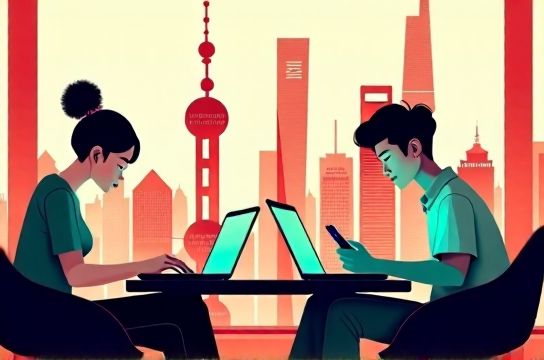
Take this stat: 63.4% of China’s 980 million internet users are under 40 (CNNIC, 2023). Among them, Gen Z (born 1995–2009) accounts for 28.5%—yet drives over 45% of live-stream e-commerce GMV and 72% of ‘guochao’ (national brand) purchases (iiMedia Research, 2024).
Why does that matter? Because youth behavior isn’t just about fashion or memes—it’s a real-time stress test for institutional adaptability. When 68% of urban college students report using AI-powered study tools daily (China Education Daily, 2024), it reshapes classroom pedagogy *before* ministries issue guidelines.
Here’s how youth-driven shifts map to broader social phenomena:
| Youth Behavior | Broader Social Impact | Data Source |
|---|---|---|
| 76% use Douyin for news discovery (vs. 32% via traditional TV) | Rise of algorithmic public opinion formation | CNNIC Q1 2024 Report |
| 54% prioritize 'mental health leave' over salary hikes | Corporate HR reform & new labor contract clauses | BOSS Zhipin Youth Employment White Paper |
| 89% engage in cross-platform fan labor (e.g., subbing, data collation) | Informal digital labor ecosystems shaping IP economy | Peking University Digital Culture Lab (2023) |
Notice the pattern? It’s not top-down imposition—it’s bottom-up calibration. That’s why understanding Chinese youth culture isn’t a niche interest. It’s foundational. Whether you're scaling a brand, designing policy, or researching societal resilience, ignoring this demographic is like reading a novel while skipping every third chapter.
And if you’re serious about decoding these dynamics—not just observing, but engaging—you’ll want to start where the signals originate. Explore our framework for [interpreting youth-led social phenomena in China](/), built from 12 years of fieldwork across 17 provinces and 82 university campuses.
Bottom line: Youth aren’t the future of China. They’re the operating system running *right now*—and the code is being rewritten daily.