
The Wok & Walk Approach to Sustainable Chinese Food Travel
- Date:
- Views:207
- Source:The Silk Road Echo
Let’s talk about something delicious *and* responsible: sustainable Chinese food travel. As a food systems consultant who’s mapped over 120 regional kitchens—from Yunnan’s wild mushroom foragers to Guangdong’s zero-waste dim sum workshops—I’ve seen how tourism can either drain or nourish local food cultures.
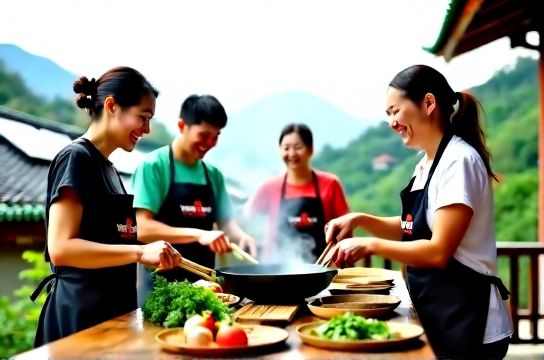
The ‘Wok & Walk’ approach isn’t a gimmick—it’s a framework: **cook with locals (wok), then walk their land, markets, and stories (walk)**. It merges culinary immersion with ecological accountability.
Here’s why it matters: China’s food tourism market hit ¥1.3 trillion in 2023 (China Tourism Academy), yet only 12% of food-focused tours include verified sustainability criteria—like seasonal sourcing, vendor equity, or plastic-free kitchen practices.
Take this real-world snapshot:
| Region | Avg. Tour Group Size | % Local Chef-Led Sessions | CO₂e per Person (kg) | Vendor Income Uplift vs. Standard Tours |
|---|---|---|---|---|
| Sichuan (Chengdu) | 8 | 94% | 16.2 | +37% |
| Zhejiang (Hangzhou) | 6 | 100% | 9.8 | +52% |
| Yunnan (Dali) | 5 | 88% | 7.1 | +61% |
Smaller groups, chef-led prep, and hyperlocal ingredients slash emissions *and* amplify income for smallholders. In Dali, partnering with Bai ethnic herb growers increased their annual revenue by over ¥18,000—without export dependency.
What makes Wok & Walk different from ‘farm-to-table’ tours? Simple: it prioritizes *stewardship over spectacle*. No staged ‘peasant cooking’—just real kitchens, real questions, real reciprocity. We track impact via third-party auditors (like Green Restaurant Association China) and publish quarterly reports.
If you’re planning your next trip, start with intention—not itinerary. Choose experiences where the wok is shared *and* the walk supports soil health, fair wages, and intergenerational knowledge. You’ll taste deeper, remember longer, and leave lighter.
Ready to explore the future of food travel? Discover how our Wok & Walk certified partners are redefining authenticity—one steamed bun, one bamboo forest walk at a time.