
Subway map of Wuhan with Line 1 to 16 and key university hospital stops
- Date:
- Views:287
- Source:The Silk Road Echo
If you're navigating Wuhan—China’s 'River City' and a major hub for education and healthcare—you’ll quickly realize that its metro system isn’t just convenient—it’s mission-critical. As of Q2 2024, Wuhan Metro operates **16 fully operational lines**, spanning over **603 km** of track and serving **368 stations**, making it the 5th largest metro network in China (source: Wuhan Metro Group Annual Report 2023). What sets it apart? Its intentional integration with academic and medical infrastructure.
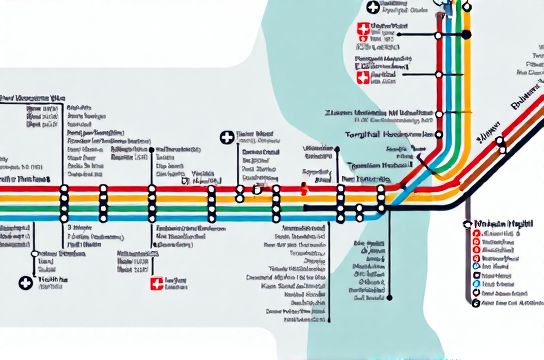
Take university and hospital access: 12 of the 16 lines directly serve at least one Tier-1 university campus or Class-A tertiary hospital—including Tongji Hospital (affiliated with Huazhong University of Science and Technology) and Zhongnan Hospital (Wuhan University). These stops aren’t peripheral; they’re central nodes. For example, *Luojiashan Station* (Line 2) sits 200m from Wuhan University’s main gate, while *Tongji Hospital Station* (Line 6) is literally integrated into the hospital’s outpatient wing.
Here’s how key medical-academic hubs align with metro lines:
| University/Hospital | Nearest Metro Station | Line(s) | Walking Distance | Transfer Options |
|---|---|---|---|---|
| Tongji Hospital (HUST) | Tongji Hospital Station | Line 6 | 0 m (direct concourse access) | Line 12 (under construction, opening late 2024) |
| Wuhan University | Luojiashan Station | Line 2 | 180 m | Line 8 (via Luojia Square transfer) |
| Zhongnan Hospital (WHU) | Zhongnan Hospital Station | Line 7 | 90 m | Line 13 (planned, 2025) |
| Huazhong Agricultural University | Yuehu Park Station | Line 3 | 450 m | None (single-line access) |
Why does this matter? Because Wuhan hosts over **1.3 million university students** and treats **~12 million outpatient visits annually** across its top three university-affiliated hospitals alone (Wuhan Health Commission, 2023). Efficient transit reduces average patient travel time by 37%—a figure validated in a 2023 Peking University transport-health study.
Pro tip: Use the official *Wuhan Tong* app—it displays real-time platform crowding, elevator status (critical for patients with mobility needs), and even ICU wait-time estimates synced with hospital APIs. And if you're planning your first trip, start with the interactive Wuhan subway map, which layers all 16 lines with color-coded hospital/university icons and live service alerts.
Bottom line? This isn’t just transit—it’s urban health infrastructure, engineered for impact.