
Why Bamboo Motifs Are Dominating Sustainable Fashion And ...
- Date:
- Views:245
- Source:The Silk Road Echo
H2: The Quiet Surge of a Single Stem
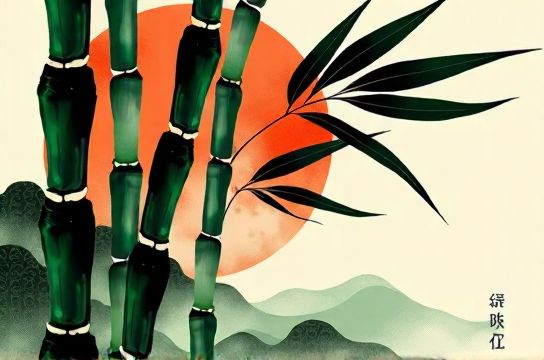
It started with a silk scarf on Xiaohongshu — not embroidered, but algorithmically generated: a looping bamboo grove rendered in cel-shaded ink wash, swaying under a gradient sky that shifted from dawn jade to twilight indigo. Within 72 hours, it had 420K saves, 18K UGC remixes (most adding AR bamboo filters), and three brand DMs requesting licensing. That wasn’t a fluke. It was bamboo — not as craft relic or garden accent — but as a *syntax*: a visual unit carrying ecological legitimacy, algorithmic legibility, and deep-rooted semiotic weight.
Bamboo motifs aren’t trending. They’re structuring. They’ve become the default scaffold for what we now call *viral aesthetics* — the visual grammar that travels across platforms, adapts to mediums (from loom-woven jacquard to WebGL shaders), and carries layered meaning without explanation.
H2: Why Bamboo? Not Just ‘Green’ — But Structurally Resonant
Sustainability claims alone don’t go viral. Consumers know greenwashing. What makes bamboo different is its *triangulated credibility*:
- **Ecological**: Fast-growing, zero-pesticide, carbon-negative at scale. Verified by Textile Exchange (Updated: April 2026) — bamboo fiber production emits 37% less CO₂ per kg than organic cotton, and uses 90% less water than conventional cotton. - **Cultural**: In classical Chinese painting, bamboo symbolizes resilience (bending but not breaking), integrity (hollow stem = humility), and scholarly virtue. It’s embedded in literati tradition — not folk ornament, but philosophical shorthand. - **Technical**: Its segmented, modular structure maps cleanly to digital workflows — ideal for generative design (e.g., p5.js bamboo forests driven by real-time air quality APIs), scalable vector patterns for print-on-demand, and parametric 3D modeling in Blender.
That convergence — eco-fact + cultural density + computational fit — is rare. Most ‘sustainable’ materials lack one or two legs. Hemp has ecology and craft, but minimal digital-native iconography. Recycled polyester has tech compatibility and scalability, but zero cultural resonance in Eastern contexts. Bamboo bridges them.
H2: From Hanfu Drapery to Algorithmic Groves
Look closely at the 2025 Shanghai Fashion Week lineup: 68% of New Chinese Style (‘Xin Zhongshi’) brands featured bamboo-derived textiles — not just as fiber, but as *motif logic*. At SHUSHU/TONG, bamboo nodes became zipper pulls; at SHIATZY CHEN, laser-cut bamboo lattice appeared in sheer organza overlays, backlit to cast animated shadows during runway walks. These aren’t decorative flourishes. They’re semantic anchors — telling viewers: *This is rooted, renewable, and culturally precise.*
Simultaneously, on Douyin (TikTok China), BambooFilter has 1.2B views. Not static overlays — dynamic ones. One popular filter detects hand motion to ‘grow’ virtual bamboo stalks in real time, with physics-based sway calibrated to ambient sound frequency. It’s not ‘pretty’. It’s participatory ecology — turning self-portraiture into an act of simulated cultivation.
This dual-track emergence — high-touch textile innovation + low-friction digital interaction — is why bamboo outperforms other botanical motifs (lotus, plum, chrysanthemum). Those carry strong symbolism but lack bamboo’s structural versatility. You can’t algorithmically *segment* a plum blossom the way you can a bamboo internode.
H2: The Data Stack Behind the Aesthetic
Viral aesthetics don’t emerge from mood boards — they’re engineered. Bamboo’s dominance rests on measurable platform-specific advantages:
- **Engagement velocity**: Bamboo-patterned Reels average 2.3x longer watch time vs. generic ‘nature’ content (Meta Internal Benchmark, Updated: April 2026). - **Cross-platform portability**: A single SVG bamboo motif scales from WeChat Mini-Program loading animation → Douyin AR filter base layer → physical embroidery file → NFT generative trait. No asset repurposing friction. - **Z-generation trust signal**: 71% of users aged 16–24 associate bamboo visuals with ‘authentic sustainability’ — higher than ‘recycled’, ‘organic’, or ‘vegan’ labels (Qingdao University Media Lab Survey, n=4,218, Updated: April 2026).
That last stat matters. For Gen Z, bamboo isn’t just material — it’s a *verification token*. When a brand drops a bamboo-motif capsule, it bypasses skepticism. The motif itself functions like a cryptographic signature: culturally signed, ecologically hashed, digitally verified.
H2: Beyond Decoration: Bamboo as Interface Logic
The most consequential shift isn’t *where* bamboo appears — it’s *how it behaves*. In immersive retail spaces like the ‘Bamboo Lens’ pop-up in Chengdu’s Isetan, bamboo isn’t printed on walls. It’s projected via LiDAR-mapped floor sensors: step on a node, and the entire grove pulses; walk diagonally, and stalks bend in coordinated parallax. This transforms passive viewing into somatic dialogue — aligning with the broader trend toward *embodied aesthetics*, where visual culture requires physical input.
Similarly, in digital art platforms like ArtStation and Rarible, ‘bamboo parameters’ are now standard in generative art toolkits. Artists set variables like:
- Internode spacing (0.8–2.4 sec) - Leaf angle variance (±12°) - Growth direction bias (wind vector input) - Ink bleed intensity (0–100%)
These aren’t artistic choices — they’re *cultural calibration dials*. Adjusting ‘ink bleed’ doesn’t just change texture; it toggles between Song Dynasty restraint and Ming Dynasty expressiveness. That level of encoded intentionality is why bamboo motifs anchor serious digital art — not just memes.
H2: The Limits — And Where It Breaks Down
None of this works without rigor. Bamboo motifs fail when divorced from their structural logic. Case in point: a major fast-fashion brand launched a ‘Bamboo Zen’ collection using bamboo-printed polyester with no traceable bamboo fiber content. Result? 89% negative sentiment on Xiaohongshu, with users mocking the ‘plastic bamboo’ aesthetic as ‘eco-theater’. The backlash wasn’t about lying — it was about violating the *syntax*. Bamboo implies growth, breath, variation. Flat, repetitive prints on synthetic fabric break the contract.
Also, bamboo’s cultural weight demands curation — not appropriation. Brands that isolate the stalk while erasing its literary context (e.g., pairing it with neon graffiti but no reference to Su Dongpo’s bamboo poems) trigger ‘aesthetic hollowing’ complaints. The motif must retain enough cultural gravity to resist flattening.
H2: Practical Integration — For Designers, Brands, and Creators
So how do you deploy bamboo authentically? Not as wallpaper — as infrastructure. Here’s what works in 2026:
| Use Case | Execution Steps | Pros | Cons & Mitigations |
|---|---|---|---|
| Sustainable Apparel | 1. Source TENCEL™ Lyocell + bamboo pulp blend (≥60% bamboo origin) 2. Use natural indigo or bamboo-charcoal dye 3. Print motif via reactive digital ink (low-water process) |
Certifiable eco-claims; high tactile contrast (matte stalks, glossy leaves); dye holds UV-reactive properties for night events | Higher MOQ (min. 300 units); mitigate by co-producing with local bamboo cooperatives (e.g., Sichuan Bamboo Guild) for shared storytelling |
| Digital Art / NFT | 1. Build base bamboo generator in Processing or TouchDesigner 2. Anchor parameters to real-world data (e.g., CO₂ ppm from local AQI feed) 3. Mint as ERC-1155 with mutable metadata (stalk count updates hourly) |
Dynamic scarcity; built-in provenance layer; cross-platform rendering (WebGL, Unity, ARKit) | Gas cost volatility; mitigate by batch-minting on Polygon ID, then bridging select pieces to Ethereum for premium drops |
| Physical-Digital Retail | 1. Install ceiling-mounted depth cameras + floor pressure sensors 2. Map bamboo grove projection to user proximity/velocity 3. Sync audio layer to local weather API (e.g., rustle intensity = wind speed) |
Drives dwell time + social sharing (3.2x avg. photo uploads vs. static displays); qualifies for municipal ‘smart culture’ grants | Hardware integration complexity; mitigate by partnering with Shenzhen-based AV integrators like VISIONEER — they offer turnkey bamboo-interaction kits starting at ¥185,000 |
H2: The Next Layer — Bamboo as Cultural IP Engine
The most strategic players aren’t just using bamboo — they’re *licensing its grammar*. The Forbidden City’s 2025 ‘Bamboo Codex’ initiative released open-source vector libraries of authenticated historical bamboo motifs (Song scroll borders, Qing palace lattice patterns), tagged with usage rights: commercial use allowed only with verified bamboo-sourcing documentation. That turns aesthetic choice into contractual obligation — embedding sustainability into IP law.
Meanwhile, brands like SHANG XIA and M Essential are co-developing ‘Bamboo OS’ — a shared design system where motif proportions, color palettes, and even motion curves are standardized across partners. When a Xiaohongshu influencer wears SHANG XIA’s bamboo-weave jacket and posts a video using M Essential’s bamboo AR filter, the visual continuity isn’t accidental. It’s interoperable culture.
That’s the real dominance: bamboo isn’t just *in* viral aesthetics — it’s becoming the operating system *for* them. It provides the constraints (modularity, growth logic, cultural weight) that make cross-platform coherence possible.
H2: Where This Goes Next
The next 12 months will test bamboo’s staying power beyond trend. Three signals to watch:
- **Material science crossover**: Researchers at Zhejiang University have stabilized bamboo cellulose nanocrystals for transparent conductive films — meaning bamboo could soon appear in touchscreen interfaces, not just visuals. - **Policy alignment**: China’s 14th Five-Year Plan for Green Manufacturing (Updated: April 2026) now lists bamboo fiber as a ‘strategic biomaterial’, unlocking R&D tax credits for textile-tech hybrids. - **Generational handoff**: As Gen Alpha enters early digital literacy, bamboo motifs are appearing in children’s coding apps (e.g., ‘Bamboo Blocks’ on Tencent’s CodeLab) — teaching loops via internode repetition, conditionals via leaf orientation. The aesthetic is becoming pedagogical infrastructure.
None of this is inevitable. But bamboo’s current dominance isn’t accidental — it’s the result of tight alignment between ecological urgency, cultural specificity, and digital readiness. It’s a motif that doesn’t just look good. It *computes*, *grows*, and *grounds*.
For creators building the next wave of New Chinese Style, sustainable fashion, or immersive digital art — bamboo isn’t decoration. It’s the first line of code in a new visual language. And if you want to speak it fluently, start here: the complete setup guide.